Uncategorized


Palestine Action Supreme Court Hearing Day 1 58

[UPDATE: this article is now complete; I published just the start yesterday.]

It was a remarkably mild early November morning at 6am as I left the Chelsea Cloisters hotel to get the tube to Westminster and the Supreme Court. I had been worried because I had forgotten to pack my thermal underwear.

I had queued overnight for the Assange hearings, the Salmond trial and the ICJ Genocide case – the latter in minus 5 degrees at The Hague – and thermals were an essential part of the kit. On the first night for the Assange hearings, at Woolwich Crown Court, I stood for seven hours in freezing drizzle with Patrick Henningsen and Randy Credico. Immediately that first day in court finished, I headed to Mountain Warehouse to buy a large, warm, waterproof jacket.

I found the one I wanted which was on sale, and tried it on. I then took it to the counter and explained to the young lady that it was labelled XXL, but I couldn’t get the zip to do up. She looked at me coolly and replied, “Fat people don’t climb mountains”.

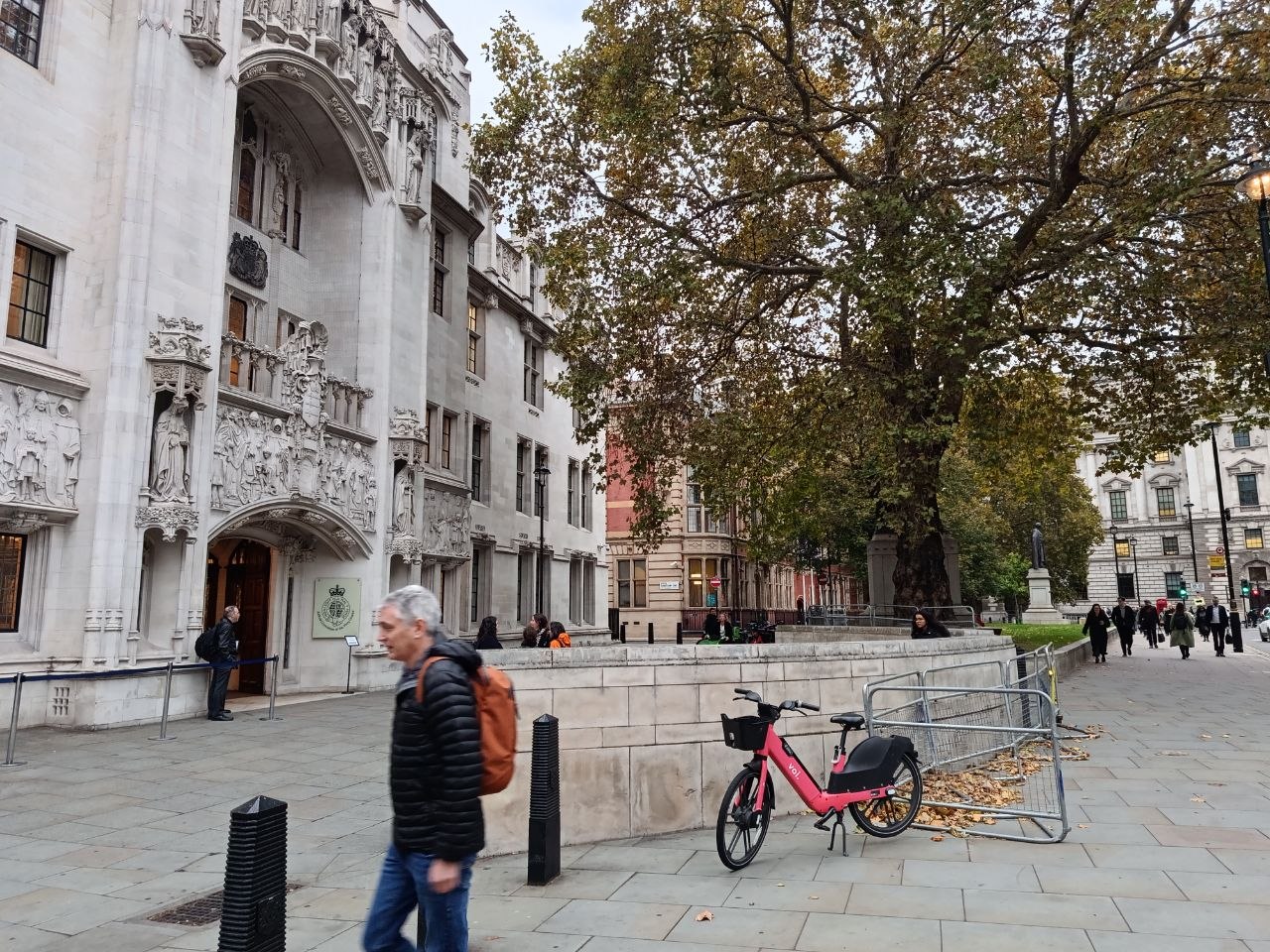
My ego somehow survived, and now as I approached the Supreme Court I saw the flashing orange lights of three trucks parked outside, and heard the ringing metallic sound of crews putting up metal crowd barriers around the building. I had slightly worried I was late for the queue, but there was only one tall young man sitting on the benches outside. He was a journalism student from City University, and neither of us having anything else to do, he interviewed me.

There were three men in sleeping bags along the front of the court building, one right across the door. We speculated as to whether they were part of the queue or simply homeless. As barriers were clamped into place behind us, we worried where the front of the queue was meant to be. I approached the man wearing a Hi-Vis jacket, who looked in charge. He had long hair and beard and a friendly open face. He wore a builder’s helmet, presumably in case the Supreme Court somehow fell on top of him.

“Do you know what the system is for installing these barriers?”, I asked.

“I’d be pretty bad at my job if I didn’t”, he replied.

I explained we were the queue. He laughed and said we were fine where we were. About five minutes later the crew left with two-and-three-quarter trucks still full of barriers, presumably to cordon off somewhere else. Their work was inexplicably pointless – they had pit barriers up against an existing wall, with others randomly dotted on the pavement, and left a thirty-yard gap anybody could walk past to the court on the west side.

I pointed out to Tony this seemed strangely pointless and he said its purpose might become clear later. It didn’t.
His name, incidentally, probably wasn’t Tony. I introduced myself but he didn’t volunteer a name so I didn’t press him.

At 7:30am a young lady arrived. She was pleasant and joined our conversation, but again did not give her name. She worked for a Westminster lobbying company, so I would assume was in the Israeli interest. It was 8:45am before a real queue began to gather. Public information had been that doors would open at 9am, and they did – but we were kept standing outside until after 10am.

There was then a great disappointment as an official arrived and told us no members of the public would be admitted to the courtroom. Court No. 1, he explained, has no public gallery and all the rows of benches would be fully occupied by the legal teams. The public would be allowed into an overspill Court No. 3, where screens were set up.

This was very annoying. It was also later plainly observable on the screens that the official explanation of no seats being available was untrue. Exactly the same thing had happened at the High Court hearing. I have no doubt that “security” was the motivation, and having designated Palestine Action supporters as terrorists, they were determined to treat any of the public interested in the case as potential terrorists.

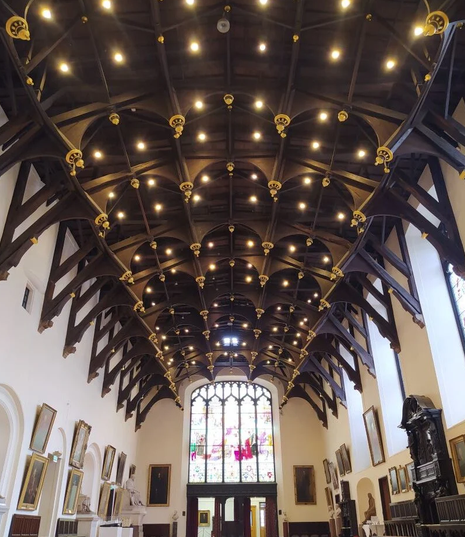
The building is a very late flowering of Victorian medieval revivalist architecture and was originally Middlesex County Council. When the Supreme Court was established a quarter century ago, it was converted to the purpose, the county of Middlesex itself having essentially already been abolished.

It is rather a good building, which is important as a close neighbour to Westminster Abbey. Unfortunately the principle of open justice had not been applied in its conversion to the creation of public galleries.

Today was the last gasp of the UK legal system in challenging the legality of the proscription of Palestine Action, in the case brought by its founder Huda Ammori. This judicial review had proceeded through the High Court, which found the proscription unlawful, and the Appeal Court, which found it lawful.

As the process went through these courts, the grounds for permitted appeal were whittled down until only one was allowed: whether the effect of the proscription on Article X and XI rights (freedom of speech and freedom of assembly) were disproportionate in terms of what was necessary to protect the public from the terrorist organisation.

Articles X and XI are from the European Convention on Human Rights, enshrined into UK law by the Human Rights Act.

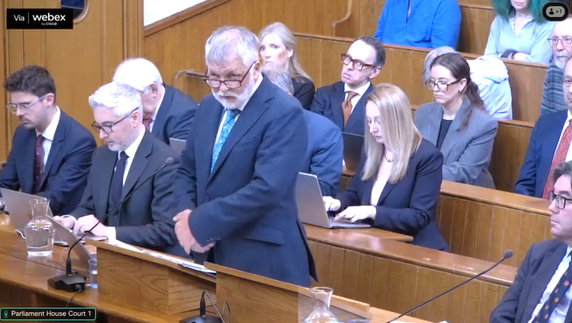
In the Supreme Court they do not wear old horsehair wigs and gowns, including the judges. This felt rather strange, as such costume had been worn at all the prior stages. The five judges were situated on a curved dais, with the lines of lawyers below them.
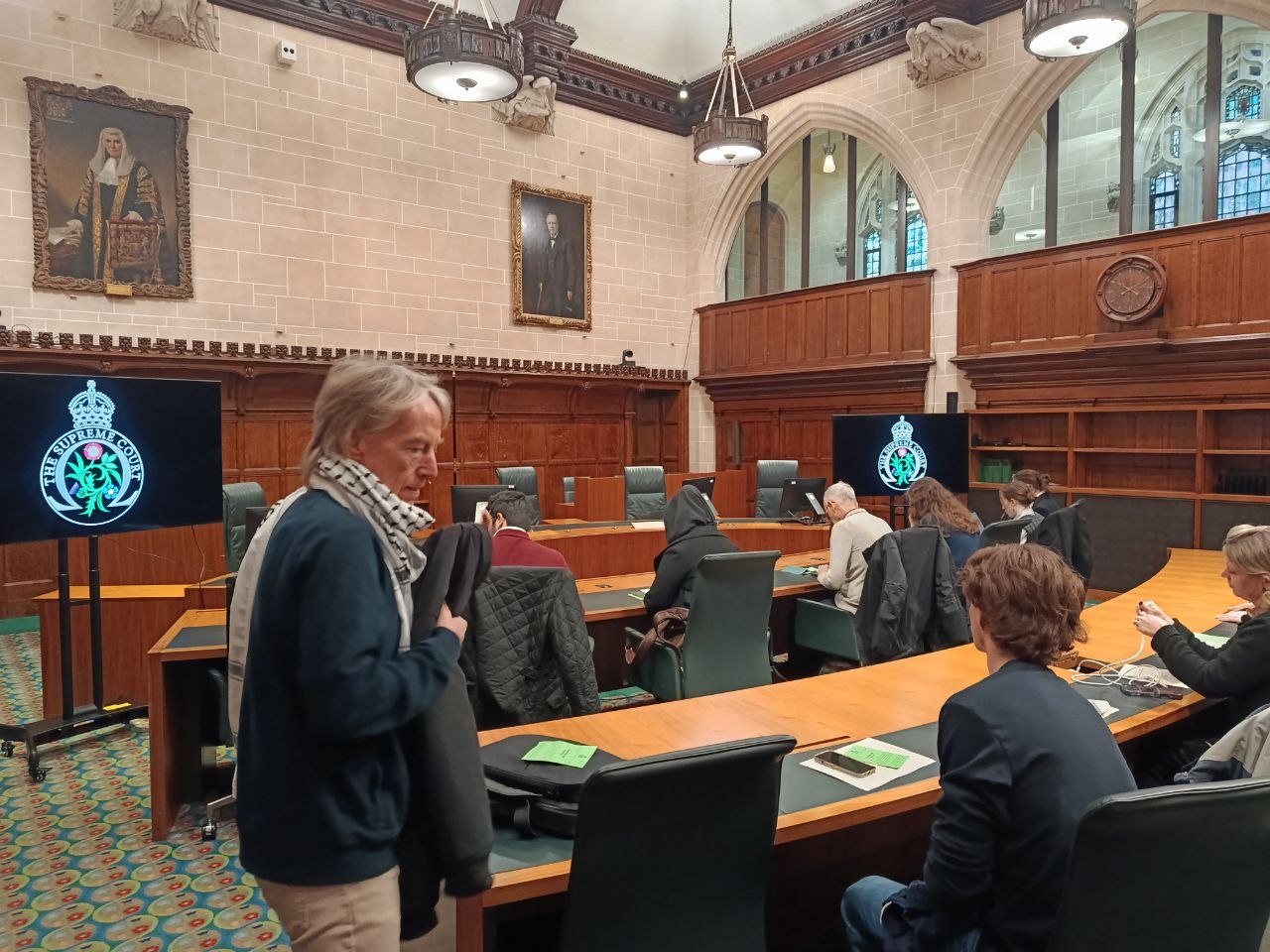
The public were only allowed in courtroom 3.

One problem with not being in the real courtroom was that, every time a judge spoke, the camera immediately cut to that judge in close up. The judges all looked extremely similar – white men aged about sixty in suits and ties. It was very difficult to tell in close-up which judge was which. Some of the identifications in this account are therefore almost certainly wrong, but not deliberate.

When you think about it, in our diverse society the difficulty of telling Supreme Court judges physically apart is a problem.

Raza Hussain KC opened for Huda Ammori. Raza seemed a much more imposing figure without his wig and gown, and spoke with a force and fluency that I had not really seen in full flow in the earlier hearings.

His first point may have been excellent but as the screens in Court No. 3 had no sound for the first five minutes I did not catch it. We therefore join him at point number 2.

2) Hussain said that Palestine Action was not a terrorist group, but a protest group that takes direct action. He said it could only be caught by stretching the outer limits of the definition of terrorism in the Terrorism Act, a definition which the Supreme Court had already described in an earlier case as “striking in its breadth”.

3) Hussain said that according to the Home Secretary herself, the vast majority of Palestine Action’s activities did not fall within the definition of terrorism. Only 3 actions out of 385 were so described. Yet these three were used to make all fall as terrorism.

4) Unlike other proscribed organisations, the objectives of Palestine Action were in line with the principles of liberal democracy. They simply wished to impede genocide and war crimes.

5) Contrary to the Appeal Court judgement, Palestine Action did fall within the tradition of other direct action groups, such as the suffragettes, and environmentalist and animal rights groups, which were not treated as terrorist.

6) Important civil society groups such as Amnesty, Liberty and PEN, and international organisations including UN Special Rapporteurs had expressed opposition to the proscription.

7) Proscription of Palestine Action had wider effects on public confidence in the proscription regime itself and in the Terrorism Act. There was public revulsion at the arrest of over 4,000 for supporting Palestine Action, many of them elderly and distinguished.

8) Proscription of Palestine Action was prone to upset the court’s judgements in many other compatibility cases over the years. (A compatibility case tests whether a law is compatible with the Human Rights Act.) The decision on proportionality of the effect on civil liberties must itself depend on whether the anterior exercise of the proscription power was proportionate to the alleged threat.

If an elderly and distinguished person arrested for expressing non-violent support for Palestine Action were to win a case against their arrest at the European Court of Human Rights in Strasbourg – he gave the example of an 81-year-old female Christian ex-magistrate arrested at a vigil at a Truro church – that could strike down all the Supreme Court’s previous decisions on Section 13 of the Terrorism Act (expressing support for a terrorist organisation) where other, real terrorist organisations were concerned.

This last was a very good argument I had never heard before, and one tailored to meet the sensibilities of a court with no interest in civil liberties. Maintaining this absurd proscription could ultimately result, by the law of unintended consequences, in more freedom of speech, not less.

Lord Sales now interrupted from the judicial bench to ask whether Hussain’s description of just three terrorist incidents included that at RAF Brize Norton.

Raza Hussain replied that incident did not meet the bar of terrorism. It should rather be seen in the light of the famous Margaret Jones case, which was not assessed by anybody to be terrorism. The anti-militarist tradition is not terrorist.

Lord Sales then asked whether the proportionality exercise should not be conducted by this court on the facts as of now, as opposed to the facts at the initial hearing. Hussain replied that Lord Justice Lewis had ruled at an earlier stage that material that had happened after the initial Divisional (High) Court ruling was not admissible. Lord Stephens asked why the Court of Appeal had made this ruling.

There was a hiatus as everybody in court went through sheaves of papers looking for the answer to this question, but nobody seemed able to find one.

Lord Sales asked why Hussain said Brize Norton was not a terrorist attack. Raza Hussain replied that it was the Secretary of State’s judgement it was not a terrorist attack. He suggested the government lawyers might explain that. Lord Sales said he was asking Hussain why he would say it was not terrorism. Hussain replied because of the limited amount of damage done, and because of the Jones case.

Lord Stephens then interjected that RAF planes had been damaged. Why was that not terrorism? Raza Hussain said that was a precise comparison to the Jones case, which was judged not to be terrorism. The Jones case involved attempted arson at RAF Fairford. The Brize Norton case was merely spraying paint.

Lord Briggs said that surely the seriousness of damage depended on what the paint was sprayed upon? There was a difference between spraying paint on a railing and spraying paint on a Van Gogh.

Lord Sales then asked why it was not for the Supreme Court, rather than the Secretary of State, to decide whether Brize Norton was terrorism?

James Eadie KC for the government intervened to say that the extent of the damage at Brize Norton was the disputed subject of a current criminal trial. But there were other factors to be considered in determining whether an incident was terrorism.

Lord Sales said Raza Hussain appeared to accept it was for this court to determine whether Brize Norton was terrorism.

Raza Hussain suggested that whether one individual act was characterised as terrorism was not determinative of the proportionality of the interference with Article X and XI rights. The definition of terrorism in UK legislation is very broad. The power to proscribe is very broad. The effects of proscription are very severe. The “guardrails” provided by the Convention rights were therefore very necessary.

He outlined the draconian powers of the act, in empowering the police to arrest people on suspicion of supporting Palestine Action, and criminalising speech which could lead somebody else to support Palestine Action, irrespective of whether that was the intention of the speaker.

Lord Stephens asked whether speaking against the proscription of Palestine Action, rather than in support of Palestine Action as such would be an offence. Raza Hussain replied that people are being arrested for doing exactly that.

Lord Sales asked whether, if he wrote a judgement opposing the proscription of Palestine Action, that would itself be an offence. Raza Hussain replied that on the ground people were being arrested for just opposing proscription, as well as those being arrested specifically for supporting Palestine Action.

Lord Briggs said that people opposing proscription were not necessarily supporting Palestine Action, and therefore there was no offence. Raza Hussain said that it was an offence under the Act to make a statement that gave rise to a suspicion of supporting Palestine Action. People opposing proscription were being arrested for that. These offences carried up to 14 years in jail.

Lord Reid said that if an academic published “I understand why Hamas (also a proscribed organisation) did what they did”, that would not be actionable.

Raza Hussain said people simply do not know what they may or may not say. There is no clear line. That is precisely the chilling effect on free speech.

Raza Hussain next moved on to say that he would address the findings of the Court of Appeal that Palestine Action was not in the tradition of civil disobedience groups and not non-violent. Hussain said this finding was an error of fact and ignored the evidence, including that contained in the various Home Office documents. The Court of Appeal’s characterisation of other movements was ahistorical. In particular it was simply untrue to say that the suffragettes only engaged in non-violent and overt campaigning.

His submission was that Palestine Action never advocated violence. He accepted that there had been a few isolated instances of violence, but these were not deliberate.

The context was important, and the context was the enormous suffering of the Palestinian people. The aims of Palestine Action were to prevent jus cogens breaches of international law by Israel, including war crimes, apartheid and genocide.

The Court of Appeal had stated that the complicity of Elbit Systems in Israeli war crimes “must be a matter of contention” but it was not in fact open to contention. Elbit describes itself as the backbone of the Israeli Defence Force. It is Israel’s main supplier of weapons.

The International Court of Justice had issued interim measures against Israel in the Genocide case. The International Criminal Court had issued warrants for both the Prime Minister of Israel and the former Defence Minister. These were indisputable facts.

An organisation such as Palestine Action with the aim of countering this illegality was clearly in the honourable tradition of British direct action.

There were many precedents, such as the Animal Liberation Front, Extinction Rebellion, Just Stop Oil as well as anti-hunting and anti-GM food groups, who used very similar tactics to Palestine Action and were not terrorist.

Lord Sales interrupted to say that this was not an admissible argument. Palestine Action’s ground that the proscription was unfairly discriminatory against Palestinians had been refused and permission to appeal on this point had been refused.

Raza Hussain continued that the tactics employed by Palestinian Action were commonplace. The Greenham Common women and Trident Ploughshares stood in the same tradition.

Lord Sales interrupted again to ask why this argument was different to a claim of discrimination, which was not allowed?

Lord Sales looks like an uglier version of Toby Young, which rather surprised me, as I had not realised that “Uglier than Toby Young” existed, even as a theoretical concept. He is very much from the Tony Blair stable and was a protégé of Tony Blair’s mate Lord Gerry Irvine KC.
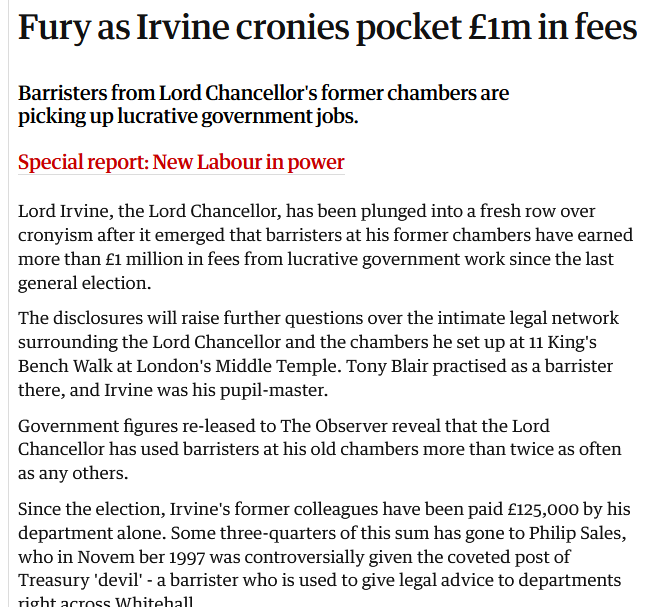
Sales represented the Blair government in opposing a judicial review into the decision to start the illegal invasion of Iraq, on the grounds that judges should not interfere in ministerial decisions on national security.

They say that true beauty emanates from inside, from the soul. Lord Sales proves that you can get true ugliness that way too.

Raza Hussain tried to plough on despite Sales’s interventions. The suffragettes had engaged in firebombing, arson and serious property damage. They planned such events in secret. But history viewed them as vindicated. This is because, like Palestine Action, they had a legitimate aim. Unlike other proscribed organisations the aims of Palestine Action in stopping genocide were entirely compatible with the ideals of a liberal democracy.

The aim of proscription was to prevent the actions described in Section 1 and Section 3 of the Terrorism Act. The necessity of the proscription must strike a fair balance with its impact on statutory Article X and XI rights. Was there need for proscription? Elbit’s property rights were protected by the full range of criminal law and not just by Sections 1 and 3.

The aim of proscription must be limited to preventing actions which fell under Sections 1 and 3, not to disrupting the vast majority of Palestine Action’s activities which did not meet the definition of terrorism. Proscription was being used to prevent acts which the government simply considered as irritant. In the proportionality exercise it must be considered that they are preventing Palestine Action’s activities as a whole, not just those which fell under Sections 1 and 3.

Raza Hussain then handed over to Henry Blaxland KC to tackle the Home Office claim of “an escalating pattern of violence”.

Henry Blaxland said that the question to be asked is whether the criminal law is equipped to deal with Palestine Action without proscription. The state should not prematurely exercise a power to prevent crime. Sweeping preventative powers were a fundamental change to the order of a liberal democracy.

There were many charges in the criminal law which could be and had been used against Palestine Action activities. These included criminal damage, burglary, aggravated burglary, assault and violent disorder.

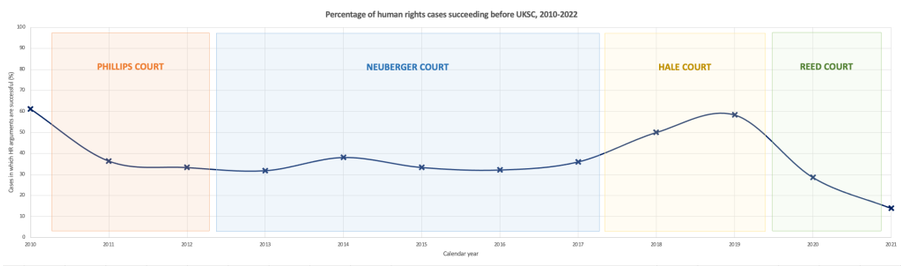
Lord Sales interrupted that criminal law might not prevail. You might not catch the criminal. If you did catch them then it might be difficult to prosecute and bring witnesses. The fundamental criticism of the Divisional (High) Court by the Court of Appeal was that they did not accord due respect to the constitutional position and democratic mandate of the Secretary of State in making this judgement.

Lord Stephens asked if the criminal law is sufficient deterrent. It may be like director disqualification when a company goes bankrupt – it was no real deterrent at all.

Blaxland continued that the proscription was an excessive reaction to a particular problem. They should look at the three cases on which the determination of terrorism was made.

Lord Stephens asked whether the three cases included Brize Norton. Blaxfield replied no, but he would come on to it.

In the Thales factory case in Scotland, six defendants had climbed onto the roof of the building and were supported by a crowd gathered outside. There was no attempt to escape and all six had pled guilty to breach of the peace. They received 12-month prison sentences, with one getting an extra 2 months.

This was not assessed as a terrorist action by the police at the time, nor by the Scottish Counter Terrorism Board (CONTEST). It was only later elevated to one of three instances of terrorism. But nobody was hurt.

The second “terrorism” case, the June 2024 action at the Instro Precision factory in Sandwich, Kent, was still being tried at the Old Bailey. In this action the protestors had been divided into black (covert) and red (overt) teams.

The black team had protested outside and provided a diversion before making good their escape, while the red team had entered the factory to cause damage and had intentionally been arrested. This was being tried under criminal law with charges of threatening behaviour, burglary, violent disorder and criminal damage.

The third case was at the Elbit factory at Filton, Bristol in August 2024. Here the black team trial was in progress and the red team trial had concluded. One security guard and one police officer had been injured.

This had been charged as aggravated burglary but all were acquitted of that. The charge of GBH with intent had also been acquitted. There was a conviction of GBH with no intent. The judge had found that the action had a “terrorist connection” which increased sentencing. Jail sentences were very substantial, of six to eight years.

Filton had been a watershed for Palestine Action. The arrests had been made under Section 21 of the Terrorism Act and all had been remanded in custody for 18 months before trial. This was not dependent upon proscription and was before proscription. It had changed how Palestine Action operated thereafter.

On the Appeal Court’s assessment that these were covert actions –

 • At Thales there was no attempt to avoid arrest.
 • At Instro Precision the black team evaded arrest but the red team had volunteered for arrest.
 • At Filton all were arrested and the Red Team had volunteered for arrest.

The actions were not covert. The point of the action was to gather publicity for their cause by volunteering for arrest.

Lord Stevens asked where could he see that they volunteered for arrest.

Blaxland replied this has been plain from the evidence at trial where they received substantial custodial sentences. That was the meaning of the designations “overt” and “covert”.

Lord Sales said that the Court of Appeal went well beyond the question of avoiding arrest. They spoke of Palestine Action’s hidden funding, its cell structure, and of Ms Ammori’s lack of transparency.

Henry Blaxland replied that Palestine Action was an open organisation. It had a website. It held Training Days and Open Days which anybody could attend.

Lord Sales responded that Palestine Action had a cell structure. Blaxland countered that when it came to the serious incidents on which reliance is placed, they volunteered themselves for arrest.

Lord Lloyd Jones asked about the injury to the police officer. Blaxland stated it was not intentional and it was subject to a criminal appeal. After Filton Palestine Action confined themselves to action which entailed only low level criminality.

Lord Stephens asked about Brize Norton. Blaxland replied that Brize Norton was the exception that proved the rule.

The proper comparator was with the Margaret Jones case. That action had involved actual damage to refuelling tankers, with an intention and equipment to damage aircraft by arson. The resulting sentences for the two defendants had been merely a curfew order and conditional discharge.

Lord Sales said that the Jones case was serious criminality. How did comparison to that help Blaxland’s case?

Blaxland replied that there had been no suggestion that the Jones case was terrorism.

Lord Stephens interjected that it plainly was terrorism. It involved serious damage to property.

Blaxland replied that there was no suggestion that the defendants in the Jones case should be described as terrorists or treated as terrorists.

Lord Sales said that the Jones case was prosecuted. This criminality was not tolerated.

Blaxland replied it was prosecuted, but not as terrorism. If he might move on with his argument, at Brize Norton, rather than arson, two aircraft had been sprayed with paint.

Lord Lloyd Jones asked which part of the aircraft? The idea was to disable the plane.

Henry Blaxland KC was plainly struggling. The judges were deliberately preventing him from articulating his argument. He is a criminal defence barrister and used to addressing juries, which are a cross section of the decent British public. Here his audience was much more difficult: four rather stupid, elderly white men hand-picked for their extreme right-wing opinions, plus Lord Briggs.

He explained that the agreed evidence was that these were refuelling aircraft which had been regularly deployed to RAF Akrotiri for operations in support of Israel. When damaged by paint they had been operationally replaced in 45 minutes. The incident could be dealt with by the ordinary criminal law.

Lord Stephens said that the ordinary criminal law did not deter them from damaging RAF planes.

Lord Lloyd Jones said that Brize Norton was a more serious incident as it affected national security.

Henry Blaxland said he must now speedily conclude (having lost most of his time with the judges speaking more than he did).

The activities of Palestine Action were within the reach of ordinary criminal law. There were several alternatives to proscription which did not entail wide impacts on freedom of speech and had never been properly considered.

 1) Conspiracy. This covered a wide range of organisational behaviours and could have been used.
 2) Encouragement and Incitement. It should have been very straightforward to detect and arrest people for holding Open Days and Training Days and publishing information online which encouraged people to break the law and taught them how to do it.
 3) The Online Safety Act covered the web activity.
 4) The Public Order Act – this had not been considered.
 5) Civil injunctions. The Court of Appeal had dismissed this point, but these had been effective against Just Stop Oil and the Campaign Against Animal Cruelty.

Lord Sales said that the decision on proscription was for Parliament and the Secretary of State to make.

Henry Blaxland went on: What were the effects of the unnecessary proscription? A wide impact on freedom of speech. On a point raised earlier, Blaxland could attest that people had been charged as supporting Palestine Action on the evidence that they campaigned against its proscription.

Far from depriving Palestine Action of the oxygen of publicity and destroying its brand, the proscription plainly had the opposite effect.

Henry Blaxland KC then handed back to Raza Hussain KC to conclude Palestine Action’s case.

Hussain said that the Margaret Jones case was the locus classicus for this kind of action. It stood in a long and noble history. The suffragettes had been vindicated by history. In a liberal democracy the police and prosecution should behave with restraint when faced with non-violent civil disobedience in a matter of conscience. Lord Hoffman had stated in the judgement:

My Lords, civil disobedience on conscientious grounds has a long and honourable history in this country. People who break the law to affirm their belief in the injustice of a law or government action are sometimes vindicated by history. The suffragettes are an example which comes immediately to mind. It is the mark of a civilised community that it can accommodate protests and demonstrations of this kind. But there are conventions which are generally accepted by the law-breakers on one side and the law-enforcers of the other. The protesters behave with a sense of proportion and do not cause excessive damage or inconvenience. And they vouch the sincerity of their beliefs by accepting the penalties imposed by the law. The police and prosecutors, on the other hand, behave with restraint and the magistrates impose sentences which take the conscientious motives of the protesters into account. The conditional discharges ordered by the magistrates in the case which came before them exemplifies their sensitivity to these conventions.

Lord Sales interjected that it is for parliament and the Secretary of State to make the decision on proscription. (This was the seventh time he had interrupted to make this exact same assertion. I have not noted all his repetitive interruptions.)

Raza Hussain continued that there had been a major impact from proscription. Thousands of people had been arrested for expressing their support for Palestine Action.

Lord Reed interrupted that this was the consequence of Section 12 of the Terrorism Act which the Secretary of State, who had the democratic mandate, had decided to bring into force by proscription and which had been approved by parliament.

Raza Hussain continued it was not only freedom of expression which had been constrained. It was an offence carrying up to 14 years in prison to arrange a meeting which might give rise to a suspicion that it was in support of Palestine Action. 14 years for arranging a meeting.

Palestine Action had produced educational materials about the Israeli arms trade in the UK. This freedom of expression was also being disrupted. Palestine Action had a genuine belief that in the context of the genocide taking place in Gaza, disruptive action was necessary.

If you even say that you support only Palestine Action’s low-level activities, those which did not meet the official definition of terrorism, you are still liable to 14 years in jail. The legislation makes plain your intention is irrelevant.

Thousands of people have now been arrested. Hundreds of thousands more people wished to speak out but their freedom of speech is curtailed because they could not afford to be arrested.

Freedom of speech and assembly are elevated rights and political speech and activity is at the top of elevated rights. This was being severely affected, while the legislation gave very extensive intrusive powers to police and other officials.

The deference given to the Home Secretary in matters affecting national security should be attenuated in this case. On the Home Office’s own documents, the threat from Palestine Action was to the property rights of Elbit and other companies. The FCDO assessed that their activities had no foreign policy knock-on effect. Their overall impact on the UK defence industry was assessed as low.

Raza Hussain accepted that some deference needed to be accorded to the Secretary of State in matters affecting national security. But this was not primary. It depended on the reasons invoked in the evidence available to the Secretary of State in making her decision. There was very little good evidence. The open documents revealed no detailed assessment of threat to national security. Not all national security risks are equal.

Lord Stephens said that it is for the Secretary of State to strike that balance and she is democratically elected.

Raza Hussain said that there was no evidence to show that the Secretary of State had evaluated the balance between the national security threat and the impact on civil liberties.

The Secretary of State may have available expertise on the national security background. But she does not have available expertise on the impact on civil liberties of proscription, nor had she sought expertise. No deference should be given to her in assessing the weight of the opposing basket in the balance to be struck.

That concluded the case for Huda Ammori (which the government lawyers were to refer to throughout as the case for Palestine Action). Sir James Eadie KC now stood to open the government’s response.

It is very important, given that the Burnham government has attempted to hide behind this court case as an independent arbiter of whether they will continue with the proscription of Palestine Action, to understand that every word spoken here by James Eadie is spoken on behalf of Shabana Mahmood and the government of Andy Burnham.

Sir James Eadie stated that the Court of Appeal had applied longstanding legal principles in a proper way. It had also restricted the extent of this appeal. It had excluded any challenge to the factual basis of the proscription. Palestine Action is an organisation concerned in terrorism. That is the factual basis from which this court must start.

Palestine Action intended to promote the use of violence. The court would consider whether any fresh proportionality exercise was even required. If the court chose to do such an exercise, it must rest upon the facts established by the lower courts.

The purpose of the Terrorism Act was to allow our society to exist and people to live without fear. Parliament had decided what activities constitute terrorism and serious damage to property was one.

Parliament had placed no constraints on the powers of the Secretary of State to proscribe terrorist organisations. It is for parliament to decide the consequences that follow on proscription. These were designed by parliament to be effective and to stifle and disrupt the organisation.

Parliament was alive to the fact that these are significant powers with significant effects, that is why the decision is by the Secretary of State but requires approval by parliament.

This is a case of socio-political importance, went on Sir James…

Lord Sales interrupted to agree, and said that was why the appeal court had made a fresh proportionality balance (which cancelled the victory of Palestine Action in the High Court).

Sir James agreed with Lord Sales. He said this was in effect a second appeal and it was important that appeal courts should take a similar view.

Lord Sales said yes, and subsequent appeal courts should look to agree.

Sir James evidently felt that Lord Sales was going a bit far in making the government’s case for him, and suggested that the permission to appeal process acted as a filter to decide on which issues the courts may differ, as they excluded many grounds on which the original case had been made.

Lord Sales said yes, but granting permission to appeal does not necessarily mean that a fresh view should be taken.

Sir James Eadie said that he agreed that in principle a second appellate court should seek to reach the same view as the first. However perhaps the court could follow the same procedure but reach a different conclusion. Important points of fact which had been accepted should however not be reopened.

Sales and Eadie continued this pointless cycle of mutual backslapping for another few rounds. I gave up and wrote “Sales Eadie blah blah blah” in my notebook. When I zoned in again, incredibly they were still doing the same thing.

Lord Sales said that the court should look again but give significant weight to the view of the appellate court. It was important to maintain appeal discipline.

Eadie said that before closing for the day, he had one further point to make, which was to draw the attention of the judges to the (infamous) sentencing remarks of Mr Justice Johnson in the Filton case.

With that we thankfully reached 4pm and adjourned for the day.

I have not noted every judicial intervention during the presentation of Huda Ammori’s case as there were well over one hundred.

It became very plain to me that this went beyond judicial testing of the strength of the case into active hostility designed to present the case from being developed, with elements of ridicule. It was extraordinary and very unpleasant. Lord Briggs was the only judge whose behaviour appeared to me professional, whatever his actual opinions.

The interruption was so extreme that the case against proscription was not fully developed and both KC’s were forced by the judges taking up their time to cut major parts of their presentations.

These are top KCs who in any normal circumstances can keep a time limit. Even with severe cuts, due to the judges they overran their allotted time of 3 hours and 45 minutes by 20 minutes. This means their final rebuttal will be cut from 30 minutes to just 10 minutes.

However, should Sir James Eadie take less than his allotted 2 hours and 45 minutes for the government case, then Raza Hussain could recover some of that lost time. The government will therefore seek to stretch out their rather thin arguments to the full time.

So you may think that the prolonged backscratching between Lord Sales and James Eadie was a pointless waste of time. No. It was a pointed waste of time.

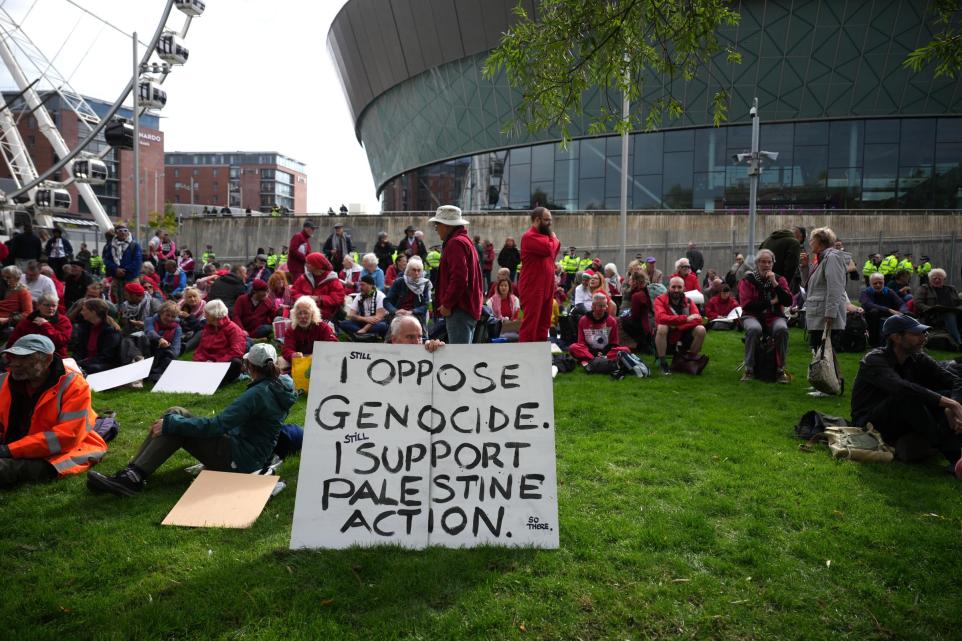
While the court was in session, over thirty people had been arrested outside the court for expressing support for Palestine Action. On leaving I gave a few interviews, then left with some friends including Matt O’Branain for a bite to eat and a pint in the nearby Westminster Arms. Matt wanted to record me singing his Palestine Action song which begins:

In the UK it is illegal to say, I support Palestine Action.

I told Matt I needed a pint before I sang in public. On arrival at the pub, Matt had vanished. I asked if anyone had seen him. I later discovered that Matt had been arrested just behind me and carted off by the police, for singing his song! I am afraid I was so intent on getting to the pub I had not noticed.

That was not the end of the strangeness. When I got back to Chelsea Cloisters I found that the door of my room had been forced open and the door jamb spilt apart in the process. Nothing had however been taken – there was still £180 in cash I had left on the table. I reported the break-in to the front desk, who said that the CCTV was managed by an external security company.

This could have been an interrupted burglary, but burglaries involving smashing doors in busy hotels are pretty rare. Obviously serious security services can enter a room undetectably. This seems more of a frighteners exercise.

Oh well, on to day 2.


—————————————–

Anybody is welcome to republish and reuse my work, including in translation.

My work has no funding at all except for your subscriptions. If you already subscribe, I would be grateful if you could check if your subscription is still active. Over 80% of my subscriptions lapse when debit or credit cards expire: the systems do not warn you.

Because some people wish an alternative to PayPal, I have set up additional new methods of subscription payment including Patreon account and a Substack account, if you wish to subscribe that way. The content will be the same as you get on this blog. Substack has the advantage of overcoming social media suppression by emailing you direct every time I post. You can, if you wish, subscribe free to Substack and use the email notifications as a trigger to come to this blog and read the articles for free.

I am determined to maintain free access for those who cannot afford a subscription.

Choose subscription amount from dropdown box:

Recurring Donations


PayPal address for one-off donations: [email protected]

Alternatively by bank transfer or standing order:

Account name
MURRAY CJ
Account number 3 2 1 5 0 9 6 2
Sort code 6 0 – 4 0 – 0 5
IBAN GB98NWBK60400532150962
BIC NWBKGB2L
Bank address NatWest, PO Box 414, 38 Strand, London, WC2H 5JB

Bitcoin: bc1q3sdm60rshynxtvfnkhhqjn83vk3e3nyw78cjx9
Ethereum/ERC-20: 0x764a6054783e86C321Cb8208442477d24834861a
 

View with comments

To The Supreme Court 39

I am in London at the UK Supreme Court for Huda Ammori’s appeal against the proscription of Palestine Action.

Three Jewish groups have been granted intervention rights by the Court (two of them pro-Genocide) but no Palestinian group.

One of the strongest grounds to contest the proscription was that it entails discrimination against Palestinians. That ground was dismissed at the permission stage and appeal on that ground has been denied throughout.

So tomorrow the Supreme Court will refuse to hear any argument on anti-Palestinian discrimination, a key part of the case, but will hear argument on alleged antisemitism – which was never in the case and has been brought in by the Court.

That, I think, is enough to tell you how this case is going to go.

There is in any event almost no chance of a win in the Supreme Court as presently constituted under the right-wing Lord Reed, who has made no secret that he does not believe the courts should contradict the Executive and has excluded from the court for the last eight years any judge who does not share this view – forgive my immodesty if I say that my article on this is absolutely essential reading.
I am not sure I will get into the court to report. As the petitioner in the parallel Scottish case which is sisted pending this decision, I applied to the Court that I need to be there to hear the arguments, and asked them to reserve me a seat in the gallery. I received a very dusty reply telling me to stay at home and watch the livestream. I shall try to arrive early to queue for the public gallery, but have been told there may be no seats allocated to the public.

If this appeal fails, the government will go ahead with its plans to process the 4,000 people facing terrorism charges for holding placards or wearing T-shirts supporting Palestine Action, through juryless kangaroo courts in batches of five, with 36 minutes allotted to each individual, including process and the prosecution case.

The UK is bringing more terrorist charges per capita than any other country in the world. The majority against aged pacifists. This is absolutely a choice by the Labour Friends of Israel government. Burnham does not have to do this. They do not have to fight the Supreme Court case tomorrow. The interests of the people are utterly subordinate in the UK state to the interests of the state of Israel.

We are still short of money for the Scottish leg of the judicial review. I am sorry to have to keep asking, but I have no choice. The legal bills currently exceed the amount raised to date, largely due to the government succeeding in having our legal crowdfunder closed down.

Other donation methods are currently still available even though the CrowdJustice route has been closed. Obviously we now need funds more than ever to carry on.

Alternatively by bank transfer:

Account name
MURRAY CJ
Account number 3 2 1 5 0 9 6 2
Sort code 6 0 – 4 0 – 0 5
IBAN GB98NWBK60400532150962
BIC NWBKGB2L
Bank address NatWest, PO Box 414, 38 Strand, London, WC2H 5JB

Or crypto:

Bitcoin: bc1q3sdm60rshynxtvfnkhhqjn83vk3e3nyw78cjx9
Ethereum/ERC-20: 0x764a6054783e86C321Cb8208442477d24834861a


View with comments

The Crisis In Poland 147

I was First Secretary at the British Embassy in Warsaw 1994-98. While that was a long time ago, I knew personally many of the people at the heart of the current crisis, such as Donald Tusk and Radek Sikorski.

1) The first thing to say about Poland is that the current crisis is unlikely to turn violent, certainly not in a sustained way. There will be a lot of yelling and name-calling and a lot of references to obscure old feuds and scandals, but Poland is not Ukraine or even France, and will muddle through as usual with some kind of woolly compromise to see us through the next few years.

General Jaruzelski, the last major leader under Communism, used to be the neighbour who shared the boundary fence at the bottom of my garden. He oversaw martial law and a secret service which was pretty vicious – but looking back with the perspective of history, the remarkable thing is not how much, but how little, violent repression was used against Solidarność in 1980 to 1983. Some 120 people were killed and thousands imprisoned, but for a revolution that triggered world-shaking political change that is remarkably restrained.

Then with Wałęsa in power as President, Jaruzelski used to go about Warsaw quite openly, and I would say “Dzień Dobry Panie Generale” to him in the mornings as he walked past my gate. Violence is not natural in Polish politics.

2) The second thing to understand is that Polish politics is split between the right and the nationalist right. The left is now almost insignificant – the mildly social-democratic Nowa Lewica is a small junior partner in Tusk’s governing coalition and polls about 8%. That is pretty well the only “left”. Elements of the governing Civic Coalition – such as Foreign Minister Radek Sikorski, are very right by British standards. Sikorski was in the Bullingdon Club with Osborne and Johnson and is a bit to the right of either on social or economic policy.

The opposition nationalist right are socially conservative and religious: abortion remains the touchstone defining issue, which directly relates to the current dispute about the Constitutional Tribunal. There is no significant economic division between the right and nationalist right, with the latter perhaps slightly more socially minded in matters like welfare spending.

It is a great mistake to try to shoehorn the divisions into a classic economic policy-related party alignment of left and right, or even into the liberal vs populist model. Poland is sui generis, a thing unto itself.

3) The crisis about the Constitutional Tribunal is Superficially Meta. It is about the composition of the Constitutional Tribunal rather than any case currently before the Court. But it has become the totem of the deep divisions in Polish society.

Poland has a hybrid system that is neither an executive presidency nor a parliamentary democracy. The power of legislative initiative lies with the Parliament (Sejm) and the Prime Minister appointed by the Sejm. But the President has an active power of veto and controls important appointments.

The Constitutional Tribunal ensures the constitution is properly followed and thus judges disputes between the President, Prime Minister and Sejm. The tribunal also ensures that the rights of citizens enshrined in the constitution are respected. It also – and this is a major difference from the UK where there is no such judicial power – ensures Polish legislation is compatible with international law and Poland’s treaty relations.

The most important recent decision of the Constitutional Tribunal was naturally on abortion, which it limited in 2020 by abolishing the health-related exemption which had provided for most abortions. The history of abortion in Poland is again very strange to a non-Pole. When I was in Poland in the mid-1990s it had both the highest rate per capita of Catholic church attendance in the world and arguably the highest abortion rate per capita in the world. It is a complex subject for another day.

4) As usual in Poland, both sides are entirely unreasonable. At the moment Poland has a PiS (nationalist right) President Nawrocki versus a right Civic Coalition Prime Minister Tusk. The longstanding problem with the Constitutional Tribunal is that its members must be appointed by the Sejm but sworn in by the President. When neither are prepared to compromise – as is frequently the case – this has led to impasse after impasse.

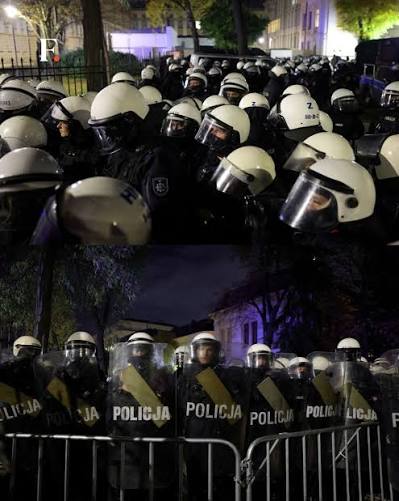
The immediate crisis began on 30 October 2026 when Judge Anna Korwin-Piotrowska — elected by the present Sejm majority but never sworn in by Nawrocki — ordered the suspension of Tribunal President Bogdan Święczkowski (a PiS appointee) and declared herself in charge. Tusk’s government then deployed riot police to secure the building in support of her move; Nawrocki abandoned a trip to Senegal to return, and PiS supporters gathered outside. Each side accused the other of a coup.

The conflict dates back to 2015 but every legacy media account I have seen gives a false account of how it started.

In 2015 the right Civic Platform government, a direct predecessor of Tusk’s coalition, knew it was losing power. It therefore sought to pack the Constitutional Tribunal. It appointed five new judges. Three of these fell due just before Civic Platform left power, but it also passed a law allowing it to appoint in advance two further judges whose terms fell due under the incoming PiS government. Civic Platform thus attempted to appoint five new judges, to attempt to limit the scope of the incoming PiS Sejm and Presidency.

The new PiS government immediately sought to cancel the appointment of all five new judges and appoint its own judges in their place. This was indeed of dubious legality. But in truth it was a reaction to a profoundly undemocratic action by Civic Platform to pack the court with its own supporters as it left power which, while it may have been legal, was outrageous.

The Constitutional Tribunal itself eventually decided that the first three Civic Platform judges were appointed legitimately, and that the next two Civic Platform judges whose appointments should have fallen due outwith that Sejm’s term were not legitimate. They therefore also approved two of the PiS judges.

This was an obviously correct decision which the politicians had been incapable of agreeing. But it was Civic Platform not PiS which first tried to fix the court, a point completely misrepresented in current legacy media accounts and by the European Commission.

Subsequently the PiS made further changes to the composition and powers of the Constitutional Tribunal, which were ruled illegal by the European Court of Justice, the judicial body of the European Union.

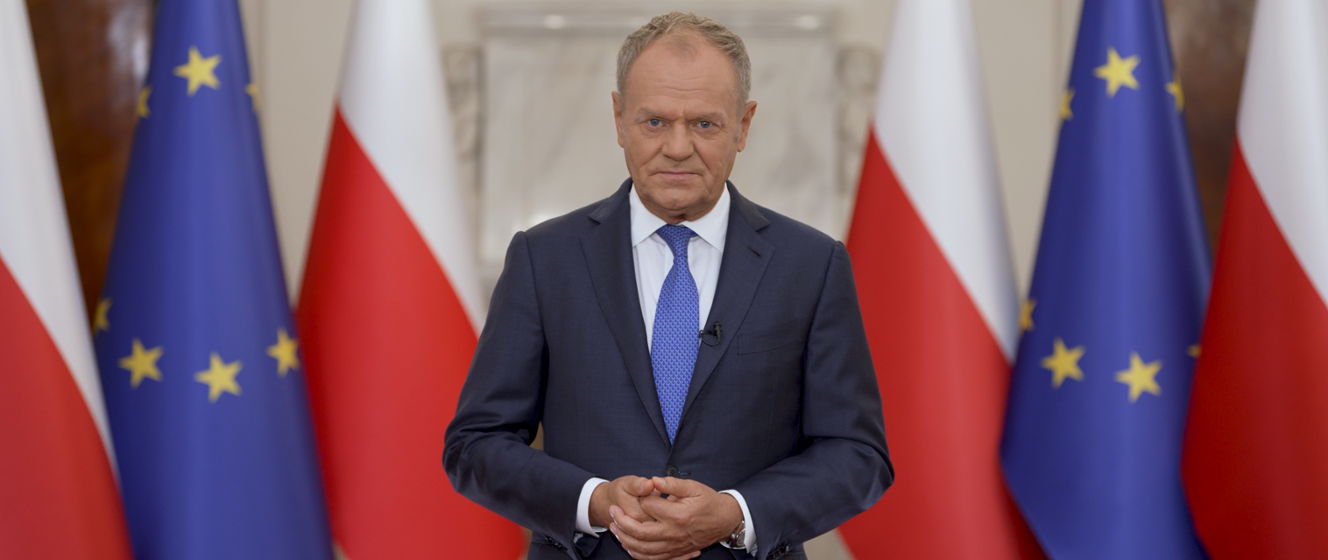
5) The EU is at the heart of the division. Donald Tusk himself has tried to spin the conflict this way. His address to the nation after his coup was made in front of a plethora of Polish and EU flags. He had repeatedly claimed over the previous two days that the PiS was seeking to take Poland out of the European Union. The PiS counter that Donald Tusk wishes to join the Euro, the European Central Bank and transfer Poland’s gold reserves to the EU (which the pre-coup Constitutional Tribunal would seek to block).

Both sides have a point. Donald Tusk would like to join the Euro, and frequently said so in the past – though joining the Euro does not actually entail transferring Poland’s substantial gold reserves. The PiS would like to leave the EU. But neither side currently has their inward desire as a stated official objective, because both positions are unpopular.

PiS President Nawrocki’s senior adviser on EU affairs is Jacek Saryusz-Wolski, a man with whom I worked closely on Polish EU accession. For decades in the national and European parliament he was the face of Polish EU enthusiasm. Saryusz-Wolski is however now deeply disillusioned that the EU of von der Leyen, Merz, Macron and Kallas is not the body he dreamt of. He views the present EU as deeply undemocratic and overbearing. He has, in short, gone through exactly the same transformation in his views on the EU as I have.

The EU was seen as central to Polish nationalist identity because it guaranteed Polish independence, which given Poland’s traumatic history of occupation and foreign domination was central. EU membership led to two decades of outstanding economic growth. But a number of factors have eroded the EU sheen with time. These include a fear of German domination, the EU’s social liberalism and the undemocratic nature of EU institutions.

When I knew them in the old days, I would have thought it impossible that Jacek Sarusz-Wolski would be on a Eurosceptic nationalist right while Radek Sikorski would be on an opposing Europhile right. The opposite was plainly the case back then. To understand the switching of allegiances you need to consider something Western legacy media is blithely ignoring: the centrality of Ukraine to current events in Poland.

6) Ukraine is central to this. Simply put, the nationalist right has had its fill of Zelensky, whereas Tusk is a devotee of the von der Leyen/Kallas/Merz war-hawk line.

For British people, Ukraine is another “far-away country of which we know nothing”. To Poles it is a neighbour, of which they know a very great deal indeed. Poland probably houses more Ukrainian refugees than any other state, both in absolute numbers and per capita. Part of the antipathy from the nationalist right is anti-immigrant resentment.

But Ukraine really is an extremely corrupt state, and the Poles understand this very well. Poles contribute to the vast sums which the EU has poured into the Zelensky regime, and Poles also have a close-up view of Ukrainian regime-aligned figures in supercars buying top-end properties. Ukrainians are the largest foreign buyers of Polish real estate. This is simply true.

Foreign Minister Radek Sikorski ended up on the Civic Coalition side of the equation, because his primary loyalty is, and always was, to NATO, as befits a member of the Bullingdon Club and husband of crazed Russophobe Anne Applebaum.

A combination of events in Ukraine and the advent of President Nawrocki have caused a shift of the nationalist right to a much more sceptical position on Ukraine. Nawrocki is of a younger generation of politician – he is 43 and was only 15 when I left Poland. But his entire professional career prior to becoming President was connected to World War II commemoration.

Zelensky had been given Poland’s highest award. The Order of the White Eagle. Nawrocki cancelled the award and made Zelensky return it, due to Ukrainian official commemoration of Nazi-allied figures and units who had participated in the massacres of Poles during World War II. Other senior Ukrainians also returned their Polish decorations. That is a pretty startling diplomatic split, hugely under-reported in the West.

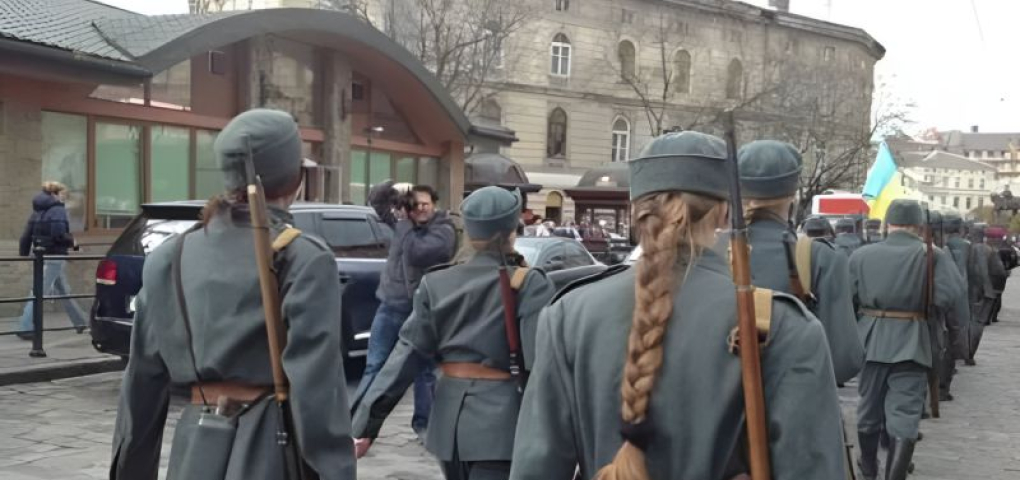
The most prestigious Ukrainian TV production at this moment is “Winged Lions”, a series about the Galician Division which was formed in the First World War to fight primarily against Poland. This was not only in the field against Poland as a second front in Poland’s defining national war against the Soviet Union in 1921, it was also the predecessor of the Galician Brigade of the Waffen SS – the continuing commemoration of which is a running sore between the two countries.

To add insult to injury the series is filmed in the former major Polish city of Lvov.

Naturally at time of war Ukrainian nationalism is running amok, and its insensitivity and – in Polish eyes – ingratitude towards Polish sensibility is a real problem.

Poland is itself a traumatised state. The Poles lost their state completely in the eighteenth century. Polish states re-emerged at times under French and Soviet domination; but I broadly accept that, apart from 1919 to 1939, a truly sovereign Polish state did not return until the 1990s.

Add to that the fact that until 1946 Western Ukraine was a part of Poland and integral to Polish identity. Lvov was a major centre of Polish architecture and culture. It is hard to find a fitting simile, but to Poles it is as though Canterbury and Norwich, Kent and East Anglia, were taken from the English by France in the 1940s.

There is no serious movement to reopen boundary questions, not least because so much of Poland was Germany until 1946. But the fact that the parts of Poland where the Ukrainians massacred tens of thousands of Polish civilians, are now Ukrainian territory, naturally has an impact on the Polish psyche.

7) This was an attempted coup. That is a fair description. All Hallows’ Eve is a massive thing in Poland. People return to their ancestral graves and light candles in red glass lanterns, keeping vigil. Families leave the cities and return to ancestral villages to do this. It is an official Catholic church festival, so naturally it is disproportionately PiS supporters who are occupied in this. Choosing the Friday a day before All Hallows’ Eve to move physically against the Constitutional Tribunal was clearly a deliberate tactical choice when the least resistance might be expected.

It also has the classic ingredient of a coup that President Nawrocki had just left the country on an official visit.

Nawrocki’s decisiveness in turning around the Presidential plane and returning to Warsaw, forcing his way through the cordon of riot police around the Constitutional Tribunal, has changed the situation on the ground towards him.

There is the fog that surrounds highly contested events in real time. It is widely claimed that Tusk attempted to have Nawrocki’s plane denied landing at Warsaw airport. It is hard to judge yet if this is true.

It is also widely claimed that major portions of the massed riot police Tusk put around the Constitutional Tribunal displayed no numbers and did not speak Polish. I am not inclined simply to dismiss this, because there are so many eyewitness reports, including from Polish MPs and MEPs.

Widely circulated footage allegedly showing German police convoys inside Poland is hotly disputed. Again a little time may be needed to determine the truth.

What does appear highly probable is that the European Commission had advance notice of the coup, because the speed with which they jumped in to support Tusk and Pietrowska’s takeover of the Constitutional Tribunal was remarkable, given the complexity of the situation. Personally I cannot see any argument whatsoever that Pietrowska’s action was legal.

8) I expect this to fizzle out. It may appear like the most massive bust-up, but I know many of these people and they all know each other. The bitterness does not really extend far into personal relationships.

Tusk probably expected to win control of the streets with his riot police and because his supporters are very much urban. A much higher proportion of the Polish population lives in rural areas than is the Western norm, and that is where the strength of the PiS lies. It is therefore much harder for the nationalist right quickly to mobilise an urban crowd than for Tusk’s right, even when it isn’t All Hallows’ Eve.

But PiS supporters did turn out to confront the riot police, whereas there has been a distinct lack of people pouring onto the streets to support Tusk.

So far it seems Tusk’s gambit has failed spectacularly. He is left in the position of appearing to have attempted to use physical force and the riot police, against the Tribunal and the President, on behalf of von der Leyen, Merz, and EU interests which are a cipher for Germany.

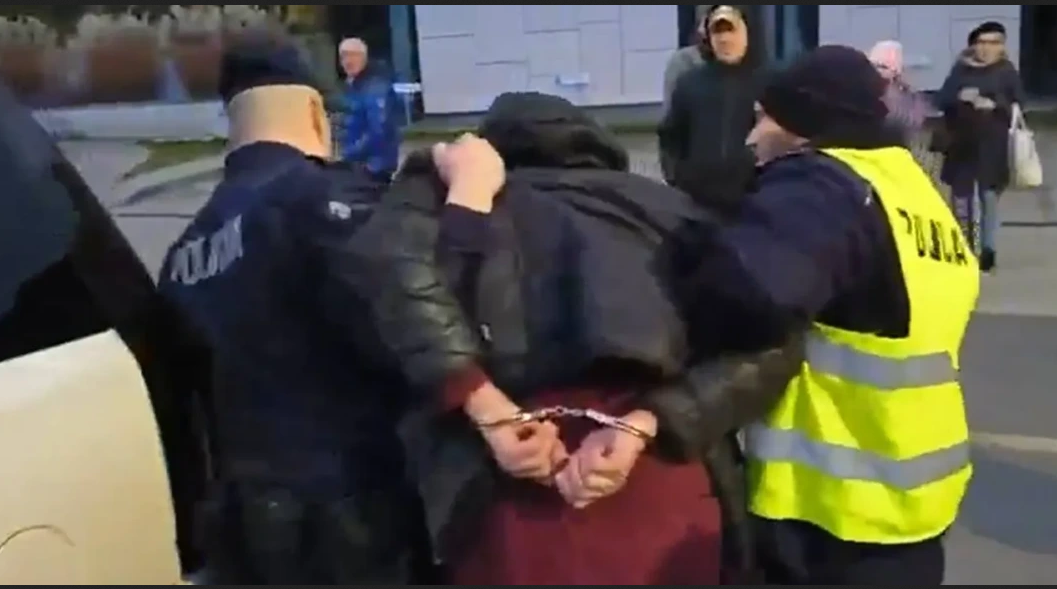
The videos of German police convoys add to this impression, irrespective of whether they are genuinely in Poland or not. The extraordinary footage of the police on All Saints’ Day leading away in handcuffs, from the grave of their two-year-old child, the husband of popular nationalist-right journalist Danuta Holecka, is an image that will haunt Tusk’s future. Nothing could be more shocking to Polish sensibility. The official explanation of a traffic violation is extraordinary. It could of course just have been apolitical and coincided with the capital’s events, but the damage is done (and anyway I doubt it).

The Constitutional Tribunal ruling from 2020 on abortion has been followed as law in Poland, irrespective of who has been in power and irrespective of what the European Court of Justice and European Court of Human Rights have said. So in spite of all the wrangling, it is not a dead institution.

We will see how the power struggle plays out. My expectation is that it will calm down, there will be long-running inquiries but nobody will go to jail. I do expect that Tusk, the EU and Zelensky are all weakened by this, and it has been a good weekend for the PiS.

When I was in Poland, I immersed myself in the culture and language, and spent time in every single region. I had learnt the Polish language, including at the Catholic University of Lublin and in Sopot. I believe I was the only Western diplomat to predict correctly that Kwaśniewski would defeat Wałęsa in the 1996 election. My Ambassador sent an urgent telegram to London to contradict my final campaign report because it said Kwaśniewski would win. I knew, because I had a real knowledge of provincial Poland that other Warsaw-focused Western diplomats lacked.

But while I have a deep love for Poland and its people, I very seldom write about its politics or its politicians – because frankly I find both exasperating. Polish poIitics consists almost entirely of unreasonable men with foolish opinions yelling at each other about points tangential to their real disagreements. I do hope that my explanation of current events is helpful to your own thoughts on the matter.


—————————————–

Anybody is welcome to republish and reuse my work, including in translation.

My work has no funding at all except for your subscriptions. If you already subscribe, I would be grateful if you could check if your subscription is still active. Over 80% of my subscriptions lapse when debit or credit cards expire: the systems do not warn you.

Because some people wish an alternative to PayPal, I have set up additional new methods of subscription payment including Patreon account and a Substack account, if you wish to subscribe that way. The content will be the same as you get on this blog. Substack has the advantage of overcoming social media suppression by emailing you direct every time I post. You can, if you wish, subscribe free to Substack and use the email notifications as a trigger to come to this blog and read the articles for free.

I am determined to maintain free access for those who cannot afford a subscription.

Choose subscription amount from dropdown box:

Recurring Donations


PayPal address for one-off donations: [email protected]

Alternatively by bank transfer or standing order:

Account name
MURRAY CJ
Account number 3 2 1 5 0 9 6 2
Sort code 6 0 – 4 0 – 0 5
IBAN GB98NWBK60400532150962
BIC NWBKGB2L
Bank address NatWest, PO Box 414, 38 Strand, London, WC2H 5JB

Bitcoin: bc1q3sdm60rshynxtvfnkhhqjn83vk3e3nyw78cjx9
Ethereum/ERC-20: 0x764a6054783e86C321Cb8208442477d24834861a


View with comments

This Cannot Last 272

Netanyahu is seeking to build a new coalition with Jewish “opposition” parties to ensure the continued exclusion of Arabs from government in Israel. It will be a long and convoluted process but I expect he will eventually succeed. In the meantime he remains in power.

Next week Trump will lose control of both Houses in Washington and face challenges to his executive power. Both Trump and Netanyahu will need a new war emergency to strengthen their domestic position.

I shall therefore be surprised if there is not a major US/Israeli assault on Iran by mid-November, to destroy Iran’s non-existent nuclear weapons (as opposed to Israel’s real ones).

This will have disastrous consequences for everybody involved. If Trumpenyahu seeks actually to topple the Iranian government it is going to require unprecedented levels of force, such as an invasion of many hundreds of thousands of ground troops or the deployment of a nuclear weapon. Merely resuming the murderous conventional bombing will have no more result than it did before. A spectacular event might be attempted such as the destruction of the oil facilities on Kharg Island, but the environmental consequences would be enormous and choke the Gulf States, while Iran’s retaliation would be massive and the economic impacts unquantifiable.

Trump and his circle have already seen the potential for vast fortunes to be made by insider trading and futures speculation in the on/off attacks on Iran we saw previously, but a return to limited and sporadic violence is not going to meet the scale of Trump and Netanyahu’s political necessity.

Personally, I have applied to go to Iran in early November to be able to report truthfully on the country and on what happens, as any attack will be accompanied by a major wave of anti-Iranian propaganda. I appreciate that this is dangerous, but I have a compulsive belief that those of us who see how dark the world is turning have a duty to stand up against invigorated Western Imperialism, which currently threatens a multi-front war that could blossom into World War III.

It is extraordinary that Zionists are claiming that, as Arab Israelis can vote, the Israeli elections disprove apartheid. The entire political discussion in Israel centres on how to form a coalition while keeping Arabs out of government.

In the entire history of Israel there have only been 2 Arab Muslim cabinet ministers. Both were very short-term and both were token “Minister Without Portfolio” – meaning they had no power over anything and crucially had zero Jewish personnel under them. The notion of any Arab Israeli ever instructing a Jewish Israeli is anathema to the racist mindset.

That is, if you are interested, 00.8% of all full ministers in the history of Israel have been Muslim Arabs, who comprise almost 20% of the population.

There have also been three Druze ministers over that 78 years.

Within the Knesset itself, Arab members have been repeatedly reviled, spat at, punched and entirely marginalised. The so-called Israeli “opposition” explicitly campaigned both for continuing the policy in Gaza (they did not call it Genocide by name but that is what they meant), and for excluding any Arabs from the Israeli government.

Zionism is plainly racism. It is proven beyond reasonable discussion on the above facts about exclusion of Arabs from government. Yet we have the entire political and media class in the UK attacking the English Green Party in a sustained onslaught for saying this simple truth. We also have schools in England being forced to teach uncritical support for Israel as a compulsory subject, based on a nonsense report by a committed Zionist, commissioned by a committed Zionist minister in hock to the Israeli lobby.

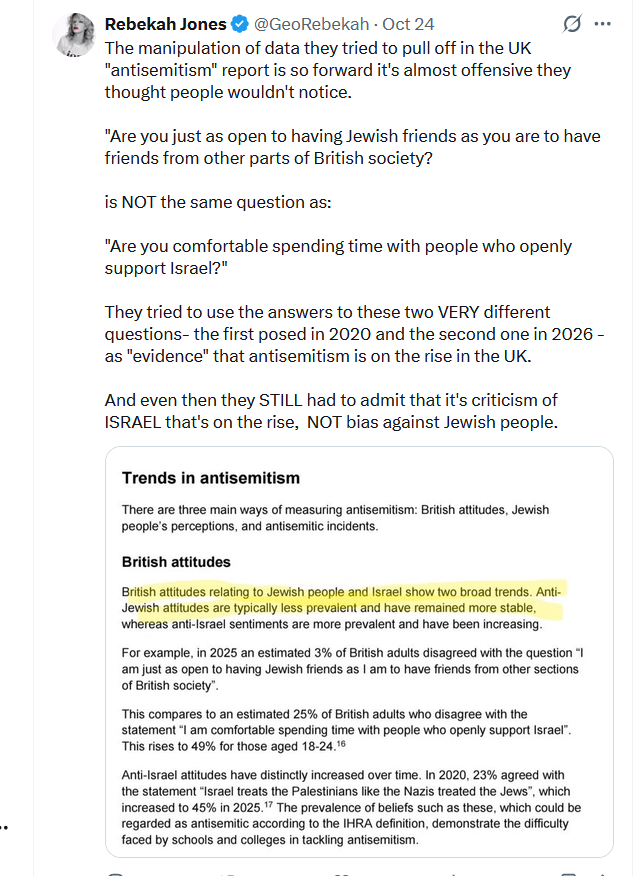
The report’s claim that 70% of Jewish schoolchildren had suffered antisemitism at school, based on the self-reporting of the personal experience of 29 sixth formers, has been widely ridiculed.

In general, even aside from the numerous self-faked instances involved in antisemitism reporting, it is essential the UK government stops accepting the self-reporting of Jewish victimhood without question or analysis. This is a privilege it accords to no other group.

I have reported over decades on the ludicrously inflated alarmist claims of the Community Security Trust of double-digit increases almost in antisemitic incidents every single year – often high double-digit increases – which if true would now amount to millions of incidents annually.

They include, for example, saying “Free Palestine” as an antisemitic incident if it is within the hearing of a Jewish person.

The Community Security Trust receive £21,000,000 annually in UK government money to safeguard the Jewish Community.

By contrast, the equivalent body for the Muslim community, the British Muslim Trust, receives £650,000. This is a “safe” Muslim organisation whose leadership group is replete with Orders of the British Empire. A more active Muslim body, Tell Mama, used to receive the grant but was closed down after a right-wing and Zionist campaign against it, on the grounds it was inflating anti-Muslim incidents.

For example, Andrew Gilligan published in an attack article in the Telegraph that only 7% of Tell Mama’s documented incidents involved physical violence against Muslims. Yet this is a higher percentage than ever found in the equivalent statistics from the Community Security Trust, whose grant is not only not cancelled but ever-increasing. Indeed every single criticism levelled by Gilligan at Tell Mama – criticisms which led to the cancellation of that group’s funding – is much more true of the Community Security Trust.

This part of the Bell report was particularly interesting.

I would have no problem at all sitting down to eat with a Jewish person, but I would have qualms about sitting down to eat with an open Zionist of any race – which is not to say I would not do it, but I would worry about how confrontational the meal might turn.

According to Bell that makes me an antisemite, and this is where his insistence that schools accept the IHRA definition, conflating antisemitism with criticism of Israel, is key.

Soft Zionists – those who wish the long-term genocide of the Palestinian people and theft of Palestinian land to proceed without too much outcry – had hoped for a change of face to lead the project – though the notion that Eisenkot, the architect of the Dahiya Doctrine of destruction of entire communities, is any less genocidal than Netanyahu is a nonsense.

Now Netanyahu is still there, and my bet is that Naftali Bennett or another “opposition” leader will join him on the basis of excluding Arabs from government.

I also strongly suspect that the increase in Arab representation will lead to the end of Palestinian representation in the Knesset, through a change to the voting system, the banning of parties or simple disenfranchisement. There is precedent: Israel formally considers occupied East Jerusalem a part of Israel proper, but the 400,000 Palestinian residents there do not have the vote. Jewish settlers there do have a vote.

There is every sign that the Burnham regime is even worse than the Starmer regime on Israel and the Middle East. Burnham has sent UK fighter jets to Saudi Arabia to support attacks on Ansar Allah and the Yemeni people. Burnham has capitulated in the effective closure of the UK Consulate General in East Jerusalem, and expulsion of British diplomats, without retaliation. Burnham has brought in no new sanctions against Israel and stopped no arms supplies. Trumpeted sanctions against illegal Israeli settlers in the West Bank were a lie – nothing has happened.

Above all, the persecution of supporters of Palestine Action continues unabated.

The government has no obligation to continue the case in the Supreme Court. To frame this as “letting the courts decide” or “obeying the rule of law” is sickening hypocrisy. The question is not whether the government has draconian powers in law, which will be accepted by the Supreme Court. The question is whether it was moral and correct to use them in this way.

It would, for example, be legal to abolish old-age pensions and invalidity benefits. If parliament voted for it, the Supreme Court would uphold it. The question is not if the Supreme Court will allow it, it is whether it is the right thing to do. Home Secretary Shabana Mahmood’s equation of Palestine Action activists with skinhead gangs who attack immigrants was appalling.

I believe that happily we have reached a turning point. It was hubris for Healey to make a £10 billion donation to the Nazi-friendly Ukrainian dictatorship in a budget which focused attention on the very real fall in living standards in the UK. Reaction across social media and in legacy media website comment threads has been overwhelmingly negative.

It has taken time for the wide gap between the public and the Establishment on the crimes of Israel to have a major effect, but I sense a change there too. Netanyahu has retained power, and the conviction of grannies and aged priests in the UK as terrorists is due to get fully underway in the New Year. Huge increases in already the World’s highest grid energy bills are going to happen at the same time.

The attacks on Iran and the Ukrainian destruction of Nord stream have had a massive combined effect on world energy prices. The people are not stupid; they understand this. It is also increasingly plain that the war agenda encompasses both the Middle East and Eastern Europe.

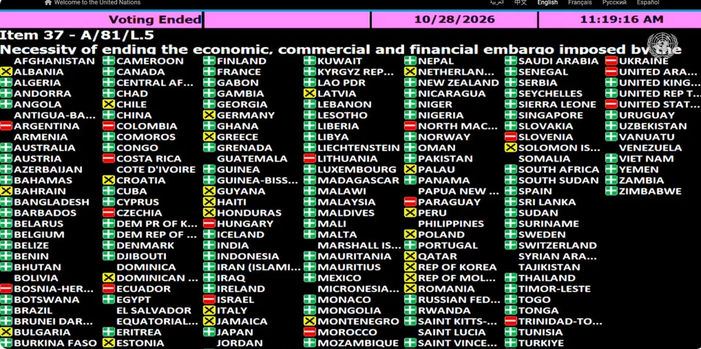
The Devil’s Coalition of USA, Ukraine and Israel led the resistance at the UN to the General Assembly vote condemning the illegal blockade of Cuba.

It feels as though events are moving at fast forward, hurtling us helter-skelter either towards the widespread war which Western “liberals” are advocating, or to the overthrow of neoliberalism. I do not currently see where we could land between those two alternatives.


—————————————–

Anybody is welcome to republish and reuse my work, including in translation.

My work has no funding at all except for your subscriptions. If you already subscribe, I would be grateful if you could check if your subscription is still active. Over 80% of my subscriptions lapse when debit or credit cards expire: the systems do not warn you.

Because some people wish an alternative to PayPal, I have set up additional new methods of subscription payment including Patreon account and a Substack account, if you wish to subscribe that way. The content will be the same as you get on this blog. Substack has the advantage of overcoming social media suppression by emailing you direct every time I post. You can, if you wish, subscribe free to Substack and use the email notifications as a trigger to come to this blog and read the articles for free.

I am determined to maintain free access for those who cannot afford a subscription.

Choose subscription amount from dropdown box:

Recurring Donations


PayPal address for one-off donations: [email protected]

Alternatively by bank transfer or standing order:

Account name
MURRAY CJ
Account number 3 2 1 5 0 9 6 2
Sort code 6 0 – 4 0 – 0 5
IBAN GB98NWBK60400532150962
BIC NWBKGB2L
Bank address NatWest, PO Box 414, 38 Strand, London, WC2H 5JB

Bitcoin: bc1q3sdm60rshynxtvfnkhhqjn83vk3e3nyw78cjx9
Ethereum/ERC-20: 0x764a6054783e86C321Cb8208442477d24834861a

View with comments

The Epidemic of Billionaires 411

It takes a lot to get tens of thousands of people to riot. For it to happen simultaneously across several countries points to a supranational underlying cause, as opposed to local grievance at an egregious state injustice. That the temporary collapse of authority and restraint will allow some opportunists to loot is an inevitable concomitant. That does not make theft the cause.

There is a reason that, in every western democracy during the last 20 years, neoliberal politicians have campaigned under the slogans “Hope”, “Change”, or their various synonyms and translations. It is because very highly paid PR consultants have told them that what the people lack, what the people need, what the people desperately crave, is hope and change. Riot and rebellion are acts of extremely high risk which are the resort of the otherwise hopeless.

When I was studying history, a core part of the curriculum was the cross-European revolutionary waves of 1830/1, 1847/8 and 1870/1, against which you can precisely pin dozens of cross-European events including the overthrow of Charles XII, the Hungarian Rebellion and the Paris Commune, and their pale reflections in the UK such as the Great Reform Act and Chartism.

We were, I think, told that these waves of rebellion coincided with poor harvests, which is true. It is only a decade or so ago I learnt that they also coincided precisely with the waves of cholera epidemic which swept across Europe into Central Asia. My point is merely to illustrate that it takes a great deal of pain and hopelessness to force people in the streets to attempt to defy their governments with physical force.

In his short but superb essay on the education protests that sparked rebellion in France, Thomas Piketty includes this devastating passage:

To justify the inadequacy of education funding, and in particular the decrease in spending per student, the government and its supporters argue that France cannot afford to invest more. They are making two reasoning errors. Public debt has indeed risen from 20% of GDP in 1970 to 120% today. But at the same time, private wealth has grown much more dramatically: It has gone from 300% to 600% of GDP, with extreme concentration among the wealthiest financial fortunes. In other words, France’s national wealth – the sum of private and public assets minus private and public debts – has never been so high, not only in absolute terms but also as a percentage of GDP (which itself has never been higher).

In other words, France has never been richer. The problem to solve is simply one of distribution.

Precisely the same is true in the UK. It has never been richer. The problem is of distribution. It is true across the Western world. The living standards and the prospects of betterment for ordinary people are in slow but apparently irreversible decline. This is indeed due to an epidemic sweeping the Western world. It is an epidemic of billionaires.

In the UK, just 50 families hoard more wealth than the poorest 50% of the population – over 36 million people. To pretend that this mindboggling inequality of wealth is beneficial, and in no way related to the prevalence of poverty, requires intellectual dishonesty of an extreme level. Yet it is the neoliberal orthodoxy of our times and subscribed to by all the major UK political parties.

As everybody knows, domestic fuel cost inflation in the UK has increased by 90% during the past four years. Inflation on food and rent has increased by over 25%. These inescapable necessities form a much higher proportion of the spending of the poor than they do of the wealthy, who benefit from lower costs of certain less necessary items that explain the official inflation measure being much lower than the lived experience of most people. This is an officially acknowledged, though little-published, reality.

The wars in Ukraine and Iran are directly responsible for much of the inflation. They are, however, a consequence of the concentration of wealth, not a separate factor. Billionaires make money from war. They make money from weapons and from lending to governments. They make money from military and security contracts. They make money from high hydrocarbon prices. They make money from asset value fluctuations between hot war and negotiation. Billionaires drive war.

The social democratic compact that underlay western democracy is fatally fractured. Public provision is despised, and eked out grudgingly where the politicians whom the billionaires control see it as absolutely unavoidable to keep the helots quiet.

Discontent is everywhere. It does not always show the same face, and some of those faces are ugly. But the current status quo cannot and will not stand, and there are faces and voices of courage and hope, many of which have been heard in Europe these last few days.


—————————————–

Anybody is welcome to republish and reuse my work, including in translation.

My work has no funding at all except for your subscriptions. If you already subscribe, I would be grateful if you could check if your subscription is still active. Over 80% of my subscriptions lapse when debit or credit cards expire: the systems do not warn you.

Because some people wish an alternative to PayPal, I have set up additional new methods of subscription payment including Patreon account and a Substack account, if you wish to subscribe that way. The content will be the same as you get on this blog. Substack has the advantage of overcoming social media suppression by emailing you direct every time I post. You can, if you wish, subscribe free to Substack and use the email notifications as a trigger to come to this blog and read the articles for free.

I am determined to maintain free access for those who cannot afford a subscription.

Choose subscription amount from dropdown box:

Recurring Donations


PayPal address for one-off donations: [email protected]

Alternatively by bank transfer or standing order:

Account name
MURRAY CJ
Account number 3 2 1 5 0 9 6 2
Sort code 6 0 – 4 0 – 0 5
IBAN GB98NWBK60400532150962
BIC NWBKGB2L
Bank address NatWest, PO Box 414, 38 Strand, London, WC2H 5JB

Bitcoin: bc1q3sdm60rshynxtvfnkhhqjn83vk3e3nyw78cjx9
Ethereum/ERC-20: 0x764a6054783e86C321Cb8208442477d24834861a

View with comments

The Unjust State 244

“Forget justice, it’s much too expensive and time consuming. Plus if you take the government to court, you will have to spend your own money, and we are saving you from that”.

That is a fair summary of the judgement by Lords Pentland and Troy and Lady Wise in our appeal against the suspension of the Scottish judicial review of the proscription of Palestine Action. Plus an underlying Unionist assumption that Scotland should abide by the decisions of the Court of Appeal of England and Wales and the London Supreme Court adjudicating an English case in English law.

[30] We are not persuaded that this decision was “plainly wrong” or that it was one that no reasonable Lord Ordinary could have reached. The Lord Ordinary has clearly had regard to the relevant factors: the securing of the speediest final determination against a background of minimisation of expense and appropriate use of court resources. The decision of the Supreme Court, although not binding on the courts in Scotland, will be highly persuasive, concerning as it will the validity of an Order which applies equally to all UK jurisdictions.

Full judgement here

There is a great irony here in that Scotland termed its own highest courts “The Supreme Courts” before the term was in use in English law, and these Scottish law lords were sitting in a building which has “The Supreme Courts” emblazoned across the front in bold gold letters. That same building was Scotland’s parliament in the days before Independence and houses the magnificent Parliament chamber with its extraordinary hammerbeam roof. It now has no function but to house portraits of fat self-satisfied justices, ranging from the Earl of Stair who planned the Massacre of Glencoe, to Lady Dorrian who imprisoned me for journalism and sought to limit trial by jury.

In their judgement Pentland et al acknowledge that the reason the Scottish judicial review has not happened was the delay caused by the UK government producing secret intelligence evidence, which we are not allowed to know, and for which special closed (a euphemism for secret) sessions had to be arranged:

28] It is regrettable that a year has passed since the petition was lodged, and some eight months since permission to proceed was granted, without a substantive hearing having taken place. There appear to have been two principal causes for the time taken (we find nothing to support the petitioner’s allegation that the UK Government has deliberately sought to obstruct an independent Scottish challenge). One of the causes was the procedure necessitated by the closed material application. The other was the interaction of the Scottish proceedings with decisions of the courts in Ammori. By the time the closed material procedure had run its course, the decision of the Court of Appeal was awaited. When the motion to sist with which this reclaiming motion is concerned was granted, the date of the expedited Supreme Court hearing was already known. All of these circumstances have had an effect on the timescale for determination of the petition.

The judgement therefore leaves the Scottish judicial review to continue after the Supreme Court judgement. It will look at the particularly Scottish arguments. There is a presumption in this judgement that it will not look at the freedom of speech and association arguments being considered by the Supreme Court in Ammori on the grounds that the Supreme Court decision will be “highly persuasive”.

But we are going to argue that there were matters not before the Supreme Court for consideration from the Ammori case. Principally there is our attack on the evidential basis for proscription, including so far only one out of 35 charges of violence against Palestine Action activists ending in conviction. That was not available information at the Ammori case as it had not yet happened, and subsequent appeals have only been on points of law. We have more unique material to add on the evidential grounds for proscription.

We will therefore be bringing a new basis to the weighting of the judgement of proportionality in considering the infringement of Article X and XI rights versus “national security”.

In addition we are going to be bringing the question of the duty to consult and lack of consultation with anybody at all in Scotland over a proscription which directly affects the Scottish government’s devolved powers over justice and policing.
The insistence of this Labour ‘Friends of Israel’ UK government on continuing with the proscription of Palestine Action – and the prosecution of almost 4,000 peaceful protestors as terrorists – gives the lie to the pretence of Burnham and Miliband to be different on Israel.

Miliband claimed it was not the intention to criminalise protestors. That is plainly a lie when that is the direct effect of the proscription they brought in, when they are proceeding with the prosecutions, and where they are proceeding with their defence of the proscription in the Supreme Court and Court of Session.

They also claimed they were going to bring in sanctions against illegal Israeli settlements, but they have done nothing. It is purely propaganda. They have allowed the Israeli government to effectively close the British Consulate General in Jerusalem and expel 14 UK diplomats and families, without any retaliatory action. They are joining in with the Saudi attack on Ansar Allah.

The grip of extreme Zionism on the political and media establishment remains so strong that, with their current attack on the English Greens, they are attempting to reimpose the requirement to accept the existence of an apartheid, genocidal entity as a necessary condition of societal respectability.

We may not have shifted the Establishment to do more than pretend to have changed nuance, but we have won the battle of public opinion. That is the value of these continued battles which expose the Establishment – be they judges, editors or politicians – for what they are.

We need help urgently as our legal bills currently exceed the amount of money raised. I have put in money myself but I am now wiped out. Our state opponents have had our crowdfunder closed down, which is disgusting in the middle of a legal case, but reflects the world in 2026.

Other donation methods are currently still available even though the CrowdJustice route has been closed. Obviously we now need funds more than ever to carry on.

Alternatively by bank transfer:

Account name
MURRAY CJ
Account number 3 2 1 5 0 9 6 2
Sort code 6 0 – 4 0 – 0 5
IBAN GB98NWBK60400532150962
BIC NWBKGB2L
Bank address NatWest, PO Box 414, 38 Strand, London, WC2H 5JB

Or crypto:

Bitcoin: bc1q3sdm60rshynxtvfnkhhqjn83vk3e3nyw78cjx9
Ethereum/ERC-20: 0x764a6054783e86C321Cb8208442477d24834861a


View with comments

Does the Act of Union Still Apply? 139

Tomorrow at 10am we get the judgement in our appeal against the suspension of the Scottish judicial review of the proscription of Palestine Action. We cannot have won as the appeal – held by “urgent process” – was intended to allow a judicial review before the Supreme Court meets in the Ammori case on 4 November. That was possible if the court had decided immediately. The delay of over a fortnight already answers the question.

That is of a piece with the approach of the courts throughout, which has been to collude with the UK government in endless procedural delay to kick the Scottish judicial review into the long grass. It is now over a year since we petitioned for judicial review, and although permission was granted it has never been heard.

The civil liberties of Scots are being grossly oppressed in Scotland, as many have been arrested for holding placards or wearing T shirts. We are supposed to be entitled to remedy from our own Scottish courts.

Article XIX of the Act of Union states that

“That the Court of Session or College of Justice do after the union and notwithstanding thereof, remain in all time coming within Scotland, as it is now constituted by the laws of that Kingdom, and that all inferior courts within the said limits do remain subordinate, as they are now, to the supreme courts of justice within the same, in all time coming; and that no causes in Scotland be cognizable by the courts of chancery, queen’s bench, common pleas, or by any court in Westminster Hall; and that the said Courts or any other of the like nature after the Union shall have no power to cognosce, review or alter the acts or sentences of the judicatures within Scotland, or stop the execution of the same.”

When we were given permission for judicial review, Lord Young ruled:

“I am satisfied that it is appropriate to grant permission for this judicial review to proceed in Scotland notwithstanding the existence of English proceedings which are at a more advanced stage. As a matter of principle, a petitioner who has standing and whose petition sets out arguments of sufficient merit to satisfy s27B(2)(b) of the 1988 Act should not be refused permission because of the existence of parallel proceedings in another UK jurisdiction. The petitioner claims that his legal rights have been illegally circumscribed by the 2025 Order.

He is entitled to look to the courts of his place of residence for a determination of that complaint. The cases of Cherry v Advocate General 2020 SC 37 and R (Miller) v Prime Minister [2019] EWHC 2381 support the petitioner’s argument that there is nothing inherently objectionable with proceedings on the same issue progressing through different jurisdictions within the UK at the same time. There is no suggestion that these proceedings are being advanced for an improper or abusive purpose such as a campaign to swamp the respondent with a multitude of proceedings. The possibility that any substantive hearing in this petition will require the adoption of closed material procedure is not a factor of any weight to the issue of permission. The necessary arrangements will be put in place if the closed material procedure is required.”

This is absolutely correct and compatible with the Treaty of Union. What is totally incompatible with either this ruling or with the Treaty of Union is Lord Young’s later decisions repeatedly to suspend the Scottish judicial review until after the English courts decide the issue, and the Supreme Court decides the English case.

This is the point many do not understand:

A Supreme Court ruling on an English case like the Ammori judicial review does not determine the position in Scotland. The Supreme Court can only decide the position in English law because only English law is before it. This is not controversial or contested as a constitutional point. But de facto the Scottish courts have always been content simply to accept English rulings, because the rights of Scotland under the Treaty of Union have never been respected in practice, in almost every area.

The Cherry and Miller cases were a breakthrough because they established that parallel judicial reviews can take place in England and Scotland and have equal weight before the Supreme Court. In that case the Scottish Court of Session ruled that Boris Johnson’s prorogation of parliament to implement Brexit was illegal. The English High Court said the courts could not intervene.

The Supreme Court looked at both judgements and agreed with the Scottish court, in a ruling binding in both England and Scotland because it considered both English and Scots law.

That is what we were trying to replicate over the proscription of Palestine Action, but we have been thwarted by the most pernicious Lawfare by the UK government, pursuing delay after delay, abetted by the cowardly Lord Young who ran away from and reversed his initial permission in the face of government pressure. He granted suspension after suspension, retreating into a rationale that a Scottish judicial review would be expensive and a drain on judicial resources.

We obtained an appeal by “urgent process” against the suspension. That appeal by “urgent process” was heard on 25 September. The judges appeared unsympathetic to us in the extreme. At the conclusion Lord Pentland said the three judges would reconvene in half an hour to give their judgement.

From the demeanour of the judges throughout the hearing, our legal team was convinced the judgement would go completely against us, as was I. To our surprise when they came back after half an hour they said they need longer to think, and they would bring in their judgement in a few days, specifically noting the urgency of the case.

I like to think that they are finding it really difficult to draft something that explains why they are abandoning the Treaty of Union. The right of a Scot to have the case heard by a Scottish court when their liberty is infringed by the Executive is not something that can be simply tossed away, without careful special pleading. Equally they have to explain why they are abandoning Cherry/Miller.

The whole handling of this case, and the deference being shown to the decisions of English courts, is yet more evidence that this pretended Union is a farce. We are a colony. It is time to move urgently for Independence.

We need help urgently as our legal bills currently exceed the amount of money raised. I have put in money myself but I am now wiped out. Our state opponents have had our crowdfunder closed down, which is disgusting in the middle of a legal case, but reflects the world in 2026.

Other donation methods are currently still available even though the crowdjustice route has been closed. Obviously we now need funds more than ever to carry on.

Alternatively by bank transfer:

Account name
MURRAY CJ
Account number 3 2 1 5 0 9 6 2
Sort code 6 0 – 4 0 – 0 5
IBAN GB98NWBK60400532150962
BIC NWBKGB2L
Bank address NatWest, PO Box 414, 38 Strand, London, WC2H 5JB

Or crypto:

Bitcoin: bc1q3sdm60rshynxtvfnkhhqjn83vk3e3nyw78cjx9
Ethereum/ERC-20: 0x764a6054783e86C321Cb8208442477d24834861a


View with comments

Fatuous False Flags 736

Rather than abandoning the plainly nuts Fairford narrative, Burnham and his government are doubling down on the claim it is an Iranian terror plot.

It remains quite possible the men were indeed fuel thieves, simply stealing fuel from farms. They appear to have been equipped for fuel theft and all they were carrying was petrol. It is worth a footnote that there is a very real history of US military personnel, and indeed British personnel, selling military fuel from bases. Stolen red diesel meant for HMS Bulwark fuelled fairground rides throughout England, which I think is rather lovely. But if the Fairford Five were fuel thieves, farms are more probable as the target.

We should pause here to acknowledge that USAF Fairford is falsely designated RAF Fairford, itself a propaganda lie, just like “RAF Lakenheath” or “RAF Mildenhall”. The UK is full of US military bases, on which US law applies. (My birth certificate gives my father’s occupation as “Clerk USAF”. He was employed at Mildenhall at the time).

It is a classic example of state propaganda that the petrol discovered in the Fairford vans was described by counter terror police as a potential accelerant for a bomb.

Well yes, petrol is that. It has however, rather more obvious uses too. The same technique was used at the height of the War on Terror propaganda in the Great Easter Bomb Plot, that never was. Police rounded up and arrested many young Muslims across the Manchester region, which was front-page news. They were all later released without charge.

But at the time of arrest the police announced they had found a potential bomb-making ingredient in a kitchen.

Well, they had. It was a bag of sugar. Sugar is indeed a potential bomb-making ingredient. Yet most of us have a bag in the kitchen. At least it did not take the police ten days to find the bag of sugar in the kitchen, unlike when they searched Charlie Rowley’s flat for a vial of novichok, and it took them ten days to “find” a bottle of perfume sitting on the kitchen counter.

For Fairford, on balance I think a false flag gone wrong is a little more likely than just fuel thieves. We know the men had no bombs and no guns, which makes the terrorist narrative rather hard for the government to sustain. But if they were patsies set up in a false flag, there would be plenty of things already on the base that go bang which could have been used to create the “terrorist incident” around them.

Two key points make me think this was a false flag. Firstly the lady farmer who called 999 was adamant there were more men that the five arrested and bailed. The others would have been the spycops – agents provocateurs – who would have been quietly spirited away from the scene. That also fits with the released information that it was one of the men who phoned in a warning about the “attack”.

It looks to me like a false flag spectacular had been planned, with US involvement as claimed by Trump and possibly Israeli knowledge as claimed by Netanyahu. This operation by the security services was viewed as over the pay grade of local police (who might be inconveniently honest) who were not in the picture. It all went horribly wrong for the government when an alert local farmer called the local police, and when a participant also called it in. That could have been one of the recruited “terrorists” who got cold feet, or one of the agents panicked they had lost contact with their line of command.

The use of recruited patsies to carry out false flags is now better understood. I have been writing about it since before the Newburgh bomb plot which was a particularly egregious example. In the United States there has been more awareness of and reaction to agent provocateur incited plots than in the UK.

For anyone sceptical, here is a summary of Newburgh:

In May 2009 the FBI arrested four poor men from Newburgh, New York, and announced it had foiled a plot to bomb two synagogues in the Bronx and shoot down military planes at Stewart Air National Guard base. The plot, the targets, the inert bombs and the disabled Stinger missile were all supplied by the Bureau. The recruiter was Shahed Hussain, a Pakistani fraudster who had become an informant to avoid deportation after a driving-licence scam. Paid nearly $100,000, he spent more than a year fishing at a Newburgh mosque, posing as a wealthy Jaish-e-Mohammed agent, before latching onto James Cromitie, a Walmart stocker and petty drug dealer.

Hussain offered heavenly reward and as much as $250,000. Cromitie brought in three others: Onta Williams, David Williams and Laguerre Payen. Hussain drove them across a state line to inspect the fake weapons, which federalised the charges and carried a 25-year minimum. They were convicted in 2010.

The sentencing judge, Colleen McMahon, said she believed beyond a shadow of a doubt that there would have been no crime except that the government instigated it, planned it and brought it to fruition. In 2023 she ordered the release of three of them, calling it an FBI-orchestrated conspiracy and writing that the real lead conspirator was the United States. She freed Cromitie in 2024 on the same basis, describing him as a small-time grifter with no history of violence and Hussain as a villain who had lured him with promises of both heavenly and earthly rewards.

The Golders Green ambulances arson was a classic of this false flag genre. Four young Muslims were recruited, in this case online rather than in person, by someone they never saw who was almost certainly a Mossad agent. They were offered money to attack the ambulances, which they did. The attack is then blamed on Iran through a claim on a Telegram channel on behalf of an “Iranian organisation”, Harakat Ashab al-Yamin al-Islamia, which is a Mossad fabrication.

HAYI first became known to the world through simultaneous press releases on 16 March by five Israeli government outlets in Israel, US and UK (including BICOM) and an article by the Israeli front “Foundation for Defending Democracy”. The FDD’s Nick Stewart travels with Kushner and Witkoff as part of the US negotiating team on the Middle East.

There are numerous reasons for doubting the real existence of HAYI. None of its material is in Farsi. All of its “attacks” have been minor arson attacks on pointless targets that hurt nobody. The grammar, calligraphy and imagery of its materials are all wrong.

The UK state itself has now debunked some of the Mossad HAYI narrative. On 29 April, when Essa Suleiman stabbed three men, the entire media blocked out the first Muslim victim and claimed an antisemitic terrorist attack on the two in Golders Green. The HAYI Mossad run “Iranian” Telegram channel immediately put out a statement claiming responsibility for the attack. But yesterday police and prosecution were forced to drop the claim it was a terrorist attack at all. The stabbing of the Muslim is charged as attempted murder, though still ignored by the media. So “HAYI” claimed responsibility for a non-existent terrorist incident.

A false flag can be, but is not necessarily, the state planting a bomb and then blaming someone else. It can be more complex – the state recruiting people to plant bombs. Those people may believe they are genuinely part of an ideological campaign, or may just be doing it for money.

The opaque Starmer rent-boy arson plot, in which Ukrainian male models burnt property associated with Keir Starmer, remains unclear, largely because any discussion of what lay behind the attacks was banned by the judge in the trial. But the media, with government encouragement, continually relays the story that the arsonists were recruited online by a man known as “El Money”. An interesting twist here is that the media constantly refer to him as Russian-speaking. But the evidence in court is that he spoke both Russian and Ukrainian.

Almost all adult Ukrainians can speak Russian. The number of Russians who speak Ukrainian is very small. Yet El Money is now routinely portrayed as Russian.

Which brings us to the whole question of Russian “hybrid attacks”, where we are asked to believe the narrative of the security services of states whose leaders are openly promoting war with Russia, about desultory and mysterious attacks. The rather sorry Leipzig drone is a good example. We have a more recent claim of Russian arson from Estonia, a state which has instituted massive discrimination against the 29% of its population who speak Russian.

Not only has Estonia closed Russian schools, libraries, theatres, churches, cinemas and university courses, it even refuses passports to people born and bred in Estonia, whose parents were born and bred in Estonia, if they cannot speak Estonian. That is totally contrary to numerous UN, Council of Europe and OSCE instruments on protection of minority linguistic rights.

It is one thing to insist on language qualification for citizenship for new immigrants. Many countries do. It is quite another thing to deny citizenship to a native linguistic minority. Estonia was part of Russia from 1721 to 1919 and of the Soviet Union from 1941 to 1991. It has Russian speakers.

So I decline to believe the Estonian government on Russian “hybrid attacks”.

Which brings us to the amazing “FlyDubai” hijacking and the heroic plumber who knew how to rescue a plane from a death dive because he watched Air Crash Investigation.

There are real problems with this narrative. One is that the plane is said to have dived approximately 15,000 feet in about 30 seconds. This is said to be confirmed by independent flight trackers.

The force was so enormous that the rudder ripped off the plane.

Picture a dive of 500 feet – that is more than a 40 storey building – per second. Picture that. 500 feet in a second. Imagine yourself falling that fast. The forces would be enormous inside the cabin. Anybody not strapped in would be lifted right out of their seats and probably hit the ceiling. Many would be injured. Any unfastened object, including major ones like food trollies, would be hurled about with great force. Baggage lockers would come unlocked as the weight of the bags inside was hurled up. Remember this dive ripped the rudder off. It would be impossible for anyone not strapped into their chair to keep their footing or seat.

We have a great many videos from on board the plane but nothing like this is shown. No video shows this kind of extreme situation, and the cabin at the end of the flight is remarkably undisturbed.

There is also a problem with that flight-tracking data. As pointed out by this commercial pilot on CNN, a plan can’t easily slow down in mid-air. He is disbelieving of how quickly the flight trackers show the plane returning to normal speed. He is also deeply sceptical of the ability to control the plane after the rudder came off due to loss of hydraulic fluid, and of the chances of the airframe staying together. Now compare that to the lack of cabin tumult.

I have seen it argued that if you entered the dive very gently and carefully without sudden change of pitch, and exited it similarly smoothly, then you would avoid extreme G-forces and the cabin might be relatively undisturbed. Even if so, it is hard to imagine the kind of smooth transition into the dive in the circumstances we are told were occurring in the cockpit, with the co-pilot deliberately putting the plane in a death dive while fighting with the pilot.

The smooth transition out of the dive in the official story was achieved by a plumber who knew what to do from watching Air Crash Investigation. I don’t think I need to comment on that.

We will never find out the truth about FlyDubai. The plane diverted to Saudi Arabia. The copilot who is being painted as an Islamic extremist will be isolated there and tortured by the Saudis. Netanyahu has already said Israel will join the interrogation. Do not believe any confession or evidence from the co-pilot.

The plane was a Boeing, so the USA will join the initial investigation alongside UAE, Saudi Arabia and Israel. A more potent coalition of Zionist evil does not exist. We will certainly have faked flight data recorder and cockpit voice recorder evidence coming from that shower.

I do feel something has snapped in people’s willingness to believe official narratives. The Skripal narrative was even more crazy than any of these, but most people still trusted government. Thankfully that faith has been seriously shaken.


—————————————–

Anybody is welcome to republish and reuse my work, including in translation.

My work has no funding at all except for your subscriptions. If you already, subscribe I would be grateful if you could check if your subscription is still active. Over 80% of my subscriptions lapse when debit or credit cards expire: the systems do not warn you.

Because some people wish an alternative to PayPal, I have set up additional new methods of subscription payment including Patreon account and a Substack account ; if you wish to subscribe that way. The content will be the same as you get on this blog. Substack has the advantage of overcoming social media suppression by emailing you direct every time I post. You can if you wish, subscribe free to Substack and use the email notifications as a trigger to come to this blog and read the articles for free.

I am determined to maintain free access for those who cannot afford a subscription.

Choose subscription amount from dropdown box:

Recurring Donations


PayPal address for one-off donations: [email protected]

Alternatively by bank transfer or standing order:

Account name
MURRAY CJ
Account number 3 2 1 5 0 9 6 2
Sort code 6 0 – 4 0 – 0 5
IBAN GB98NWBK60400532150962
BIC NWBKGB2L
Bank address NatWest, PO Box 414, 38 Strand, London, WC2H 5JB

Bitcoin: bc1q3sdm60rshynxtvfnkhhqjn83vk3e3nyw78cjx9
Ethereum/ERC-20: 0x764a6054783e86C321Cb8208442477d24834861a


View with comments

Losing My Religion 234

I have lost faith both in Western social democracy, and in the institutions of international law. As both have been fundamental to the work of my life, this is rather a blow as I approach 70.

A number of deeply shocking things have happened this past three years, not as extraneous events, but as conscious acts of western governments acting in unison. The Genocide in Gaza has been the most obvious.

When social media started to show us relentless imagery of shredded children and human suffering beyond belief, it was astonishing to me that the governments of the western social democracies almost unanimously continued to support Israel. The UK is actively complicit in the Genocide, providing weaponry, aerial surveillance, intelligence cooperation and vital diplomatic and political support to Israel.

Somehow I thought this would all stop. Equilibrium would be restored, the innate decency of the British people would prevail, and the support for Israel would be reversed. Indeed, I reasoned, in the long term this could break the hold of the Zionist donor network on British politicians, so deep was the popular revulsion at the most public and vicious genocide imaginable.

None of this happened. Instead the more indefensible Israel’s actions have become, the more the UK’s political and media Establishment have rallied to Israel. In the UK as throughout the world, our rulers have responded to dissent over Israel with harsh repression of their own people. To see Burnham stand at the podium of the UN General Assembly in New York and declare the UK’s support for Israel, while the genocide continues and Israel is relentlessly destroying southern Lebanon and is occupying southern Syria, was instructive.

His tactical change of tone to notice Israeli crimes has no practical effect. The UK implements new sanctions on Russia within 48 hours of announcement, or even less. The “sanctions” on Israeli illegal settlements are going to take a year to design and implement, to make certain they don’t work.

When they proscribed as “terrorist” a civil disobedience group and police started arresting little old ladies as terrorists for protesting about it, I thought this too was a temporary madness which would pass. I witnessed outside the Royal Courts of Justice the police lifting up elderly people in wheelchairs to arrest them for holding a sign, and I thought ultimately the system will repudiate this madness.

It has not repudiated the madness. It turns out that policemen are happy to arrest octogenarian priests for expressing the wrong thoughts, and judges are prepared to impose vicious “terrorist connection” prison terms for property damage by persons seeking to hinder a genocide. The English Court of Appeal stated coldly:

The vast majority of those arrested had chosen to hold signs which read, “I oppose genocide. I support Palestine Action”. We attach little weight to this when it comes to assessing the extent of the interference with Convention rights in this case. All those holding such signs either did or ought to have realised that what they were doing was showing support for Palestine Action.

It is one thing for people voluntarily to hold a placard supporting Palestine Action which they know to be a proscribed organisation. That is a criminal act.

I have mentioned this to you before but I was very struck when I read Irmtrud Wojak’s life of Fritz Bauer by the continuity of individual judges and lawyers, who served on with equanimity under the Weimar Republic, the Third Reich and West Germany without evidence of guilt and remorse. About 70% of West German judges had been Nazi judges administering “Nazi justice.”

Fritz Bauer, a radical German Jewish prosecutor, was continually blocked in his heroic efforts to bring some justice. The book held me so strongly because it is the granular narration of the banality of evil, in its tale after tale of Nazi criminals protected by compromised judges.

The realisation that the law is nothing to do with justice, and that courts are imposing the power of the state rather than seeking some higher ideal, came home to me on Friday as we sat through the expedited hearing of our appeal at the Court of Session in Edinburgh, where we are trying to make the Scottish judicial review of the proscription of Palestine Action actually happen.

This was our sixth or seventh time in court and we have spent about £250,000 trying to protect the liberties of people in Scotland from oppression. Very decent people are being branded as terrorists, with potentially life-changing consequences, for merely holding a placard or wearing a T shirt. I met one person in Glasgow whose home and vehicle insurance had increased by over £600 as a result of a terrorism charge for a T shirt. Others have been debanked. International travel is restricted. The jail sentences are still to come.

The Court of Appeal of England and Wales has ruled all this as proportionate in the interests of “National Security”, to protect the nation from those who would disrupt the Israeli weapons supply chain. Our effort to challenge it in Scotland has met with delay after delay, and a blistering exhibition of trench Lawfare by the UK government.

I don’t think the judges of the Inner House of the Court of Session who heard us on Friday could have been less engaged. Aidan O’Neill KC spoke for us for over an hour about the constitutional right of Scots to have their liberties protected by a Scottish court, about the lack of any provision in Court Rules for suspending – “sisting” – a judicial review as this one had been – about the perverse decision to grant the Review and then continually suspend it, causing us great expense.

What he did not talk about – because this was a purely procedural hearing – was the arrests and lives in turmoil in Scotland, still less the lives destroyed in Gaza.

The three judges sat making notes but did not engage with Aidan, asking almost no questions. This was entirely different when the UK Government lawyer spoke, Mark Lindsay KC, addressed the court very briefly. The judges engaged with him constantly, to reinforce his points or to suggest additional helpful points he might have missed.

Lord Pentland, the Lord President of the Court of Session (and former Tory parliamentary candidate) got most animated when discussing the secret closed court sessions where secret intelligence evidence is heard that we are never told about. Pentland seemed extremely pleased with the notion that these are difficult and time consuming and there could not be enough time for them before the UK Supreme Court hears the English appeal on 4 November.

Mark Lindsay added here the incredible point that the judgement in the judicial review must be cleared with the security services, which would take at least five days. He explained that one reason it takes so long is that it needs to be typed on special secure laptops.

So that is where we are in 2026. Courts hearing secret evidence from the security services that the petitioner in the case will never see, and the security services vetting the judgement of the court.

The other reasons Lindsay advanced for not having a judicial review were equally jaw dropping. It would cost money, and use judicial resources that might be better deployed on something else. It would simply be too expensive for Scotland. Best just follow whatever England said.

I have to say I left court deeply depressed. Judgement is reserved – itself significant when we were arguing for the judicial review to proceed urgently before the Supreme Court meets.

Currently the full video of the hearing is still available here.

If that was not miserable enough, we also had to endure the UN General Assembly being treated, not as a meeting point for nations to speak peace and reach agreement, but as a rostrum for crazed fascism.

We had Donald Trump threatening to annihilate Iran and destroy Iranian culture. We had ICC-wanted war criminal Netanyahu waving around pagers to glory in terrorism while taunting the world. Both spoke from a position of confidence in military power enabling them to defy and humiliate the world community. It may be hubris, but it is currently in the ascendant. China shows no interest in countering it and nobody else really can.

Neither China nor Russia were strong in condemnation of Israel over Gaza – they did not speak the language of war crimes at the General Assembly, let alone Genocide. Both made anodyne remarks about a two-state solution, and said that Israeli actions were endangering its viability. As it is blindingly obvious that a two-state solution is now impossible, this was pathetic. Remember – and this is key to understanding the world today – neither Russia nor China vetoed the UN Security Council resolution endorsing Trump’s Board of Peace and giving it a firm right in international law to control the destiny of Gaza.

The European powers used the UN podium to spout Russophobia and amplify the demand for war with Russia.

I despair for the United Nations. I despair for the International Criminal court, which seems fatally undermined. Its arrest warrant for Netanyahu is ignored by the Western powers. Three EU states allowed his plane to overfly their airspace en route to New York. Karim Khan was ousted as Chief Prosecutor for obtaining the warrant against Netanyahu, on flimsy sexual abuse allegations for which an inquiry by three judges found no firm evidence. The Western powers led a fierce campaign for his dismissal by the member states.

The judges themselves have been subject to US sanctions and debanking. I had always hoped – and believed – the ICC would develop beyond a role of punishing the West’s designated enemies and keeping Africa in line. I did not realise that as soon as the ICC did this, the Western powers would move to destroy the ICC.

The venerable International Court of Justice is also creaking. I had expected it would take three years or so for it to reach a decision in the South Africa vs Israel genocide case. That timetable now looks more like eight years.

In part it seems that South Africa may have blinked. It was South Africa which requested an extraordinary 18 months to reply to Israel’s response to their petition. The Court had already granted Israel two lengthy postponements of their reply. The Israelis will then get to reply again and a further 18 months. I suspect South Africa is going along with kicking the can down the road under US pressure, and the new timetable will take us beyond Trump.

It is however not a good look for the Court to take so long in deciding on a case over a Convention which is supposed to prevent Genocide, not to punish it. It is also notable that Israel has entirely ignored the interim orders the Court gave two years ago, and ignored the separate judgement on the status of the Occupied Territories.

The truth is the Court has no armies, and as the Western powers are actively abetting Israel in its actions the ICJ is, sadly, a dead letter.

The UK is now going to ignore the ICJ decision on the Chagos Islands. The court ruled that the UK must give them back to Mauritius. The US airbase on Diego Garcia is irrelevant to that ICJ decision. The UK has now decided to defy the ICJ because the US has declined to pay for the lease of the airbase from Mauritius. That in no way negates the duty to return the islands. But the UK media have reported Streeting’s decision to cancel the return of the islands with, so far as I have seen, no reference to the ICJ at all.

It is not just that the institutions of law, both domestically and internationally, in which I have lost belief. The social contract of Western nations, in which the government provides for the welfare of the population in return for their loyalty and taxes, appears to have broken down.

The trend towards greater wealth inequality in late-stage capitalism is incredibly, exponentially rapid. Living standards for ordinary people have been static for two decades and, whatever official statistics may say, to many if feels their standard of living has declined. Social mobility is gone. Graduates are stacking shelves and delivering pizzas. Heating and fuel costs are extraordinary. So is rent, and landlordism is rampant.

It is impossible to look at social media without hitting the stark reality that Islamophobia and racism are now deeply seated in a large proportion of the population. The propaganda model has been reinforced by the billionaire capture of all the major social media gatekeeper apps. Rather than being a possible solution to state and billionaire propaganda, social media has become a major part of the problem. It appears particularly effective in amplifying and spreading racism.

We are now faced with a Ministry of Truth in the UK to enforce state propaganda narratives – like the ridiculous Skripal story, the ambulances false flag or the Fairford farrago. The one thing we know for certain about “RAF” – truly USAF – Fairford is that hundreds of tonnes of high explosive have been dropped from Fairford on Iran. The notion of “defensive bombing” – parroted by the entire media – is an Orwellian symptom of what we have become.

There is no escaping the fact that large numbers of people are very susceptible to the propaganda. I know well-meaning left-wing people who believe that Iran machine gunned 50,000 dissidents and that nothing significant happened in Ukraine before 2022.

The focus of hate away from the billionaire class who are enslaving society, and towards immigrants, is most worrying of all. It of course feeds both domestic and foreign policy views – there are vast numbers of people delighted at the mass murder of Iranians, Palestinians, Lebanese or Yemenis because they are brown or Muslim. The same people think that immigrants in small boats are responsible for the decline in standard of living of working people in the UK.

Western social democracy is dying.

The democracy bit offers no meaningful choice at election in terms of wealth distribution or the structure of capitalist society. It offers no significant variation on the increasingly authoritarian nature of the state. It certainly offers no choice in foreign or defence policy. It really only offers a bit more or a bit less racism in immigration and welfare policies.

The social bit is decaying even faster. The very fabric of our cities is visibly crumbling. In the UK the health service is strained beyond utility in a great many cases. State pensions are miserly and insufficient. Many young people have no prospect but to pay rent to landlords for poor quality housing their whole life. Many graduates will never find meaningful or satisfactory employment. All of this is getting palpably worse year by year.

That’s me in the corner

That’s me in the spotlight

Losing my religion

I feel that the rather pleasant world I grew up in has been replaced by something much nastier and more raw. Literally dozens of my friends have been arrested these last three years, simply for what they say and think.

The problem with losing faith is how you replace it.


Another problem is that the legal battle for Palestine Action still has to be paid for. Our CrowdJustice crowdfunder was closed down by the card processors as a result of pressure from the USA. I was informed by the legal team on Friday that legal fees due currently outstrip available funds. If you can help, please do. If you know somebody else better placed to help, please ask them.

These alternative donation methods are still working as of 29 September 12 noon. Any funds received will checked hourly and be paid immediately to the lawyers to avoid possible seizure.

Other donation methods are currently still available even though the CrowdJustice route has been closed.. Obviously we now need funds more than ever to carry on.

Alternatively by bank transfer:

Account name
MURRAY CJ
Account number 3 2 1 5 0 9 6 2
Sort code 6 0 – 4 0 – 0 5
IBAN GB98NWBK60400532150962
BIC NWBKGB2L
Bank address NatWest, PO Box 414, 38 Strand, London, WC2H 5JB

Or crypto:

Bitcoin: bc1q3sdm60rshynxtvfnkhhqjn83vk3e3nyw78cjx9
Ethereum/ERC-20: 0x764a6054783e86C321Cb8208442477d24834861a


View with comments

Palestine Action Judicial Review 249

On Friday we have our appeal against the suspension of the Palestine Action judicial review in Scotland. Our legal crowdfunder has been closed down by the card processors following Trump’s designation of Palestine Action as a global terrorist organisation.

https://www.crowdjustice.com/case/scottish-challenge-to-proscription/dashboard/

If you can, please come to the Court of Session in Edinburgh for 10am. If you cannot come, you can watch the livestream here

For the first time I was not involved with the legal team in drafting the Note of Argument, because I was too sick in the three day window after the last hearing we had to prepare it.

It turns out that our lawyers are much more radical when freed from me exhorting them to be more radical!

NOTE OF ARGUMENT FOR THE RECLAIMER
PETITION
of
CRAIG MURRAY, residing at EH10

RECLAIMER
For judicial review of the Terrorism Act 2000
(Proscribed Organisations) (Amendment) Order 2025

1. INTRODUCTION

1.1 The reclaimer moves the Court to:
  a. allow the reclaiming motion;
  b. recall the interlocutor of the Lord Ordinary dated 25 August 2026;
  c. remit the cause to the Lord Ordinary:
   i. with a direction that he report the whole cause to the Inner House in terms of rule 34.1(1);
   ii. failing which, with a direction for urgent disposal of the petition in the Outer House.

2. SUMMARY

2.1 For the reasons outlined in this Note, the reclaimer submits that:
  a. The decision to sist the proceedings was incompetent, failing which, plainly wrong in all of the circumstances.
  b. The decision not to report the whole cause to the Inner House, while also declining to dispose of the petition in the Outer House, was plainly wrong in all of the circumstances.

3. THE PETITION

3.1 The petition contends that the Terrorism Act 2000 (Proscribed Organisations) (Amendment) Order 2025 (“the Order”) is unlawful because
  (i) it was passed in circumstances which are procedurally unfair, et separatim
  (ii) it gives rise to a disproportionate interference with the reclaimer’s Convention Rights under Art.10 ECHR; et separatim
  (iii) it gives rise to a disproportionate interference with the reclaimer’s Convention Rights under Art.11 ECHR. The petition as adjusted raises, among other matters, Scotland-specific issues around (lack of) prior consultation with relevant Scottish actors, and the relevance of events occurring in Scotland and founded upon by the Home Secretary in support of the Order. The petition seeks orders of declarator and reduction directed against the Order.

4. CHRONOLOGY/PROCEDURAL HISTORY

4.1 In order for the court properly to understand the grounds of appeal, it is necessary to contextualise them within the procedural history of this petition to date, which is as follows:

4 Jul 2025 The Home Secretary makes the Order which, effective from 5 July 2025,
lists and proscribes across England, Wales, Scotland and Northern Ireland as “organisations concerned in terrorism”:
  – “the organisation using the name Palestine Action that is based in the United Kingdom”
  – Maniacs Murder Cult (MMC) (MKU) (MKY) and – Russian Imperial Movement (RIM) (RID), including Russian Imperial Legion (RIL).

3 Oct 2025 Within 3 months of its publication, the reclaimer lodges the petition in which he seeks to challenge the lawfulness of the Order.

6 Oct 2025 The Lord Ordinary, Lady Poole, grants first orders in the petition.

11 Dec 2025 The UK Government having lodged Answers and intimated that it opposed the grant of permission, the Lord Ordinary, Lord Young, advises that he wishes to be addressed by parties in relation to two issues raised in the Answers lodged by the respondent, namely: (i) whether the petitioner had a sufficient interest to give him standing to proceed with this petition, and(ii) whether it was appropriate or necessary for these proceedings to proceed given the existence of what the Lord Ordinary referred to as “identical proceedings in England” which had been brought by Huda Ammori.

12 Jan 2026 At an oral permission hearing, the Lord Ordinary, Lord Young, hears submissions from the UK Government (as respondent to the petition) to the effect that, given the existence of the English proceedings, the Lord Ordinary should suspend or stop the Scottish petition proceedings pending the determination of the English proceedings, whether by:
  – refusing the petitioner permission to proceed; or alternatively;
  – reserving the issue of permission and sisting the Scottish JR until a decision was available in the English proceedings; or
  – granting permission but then immediately sisting the proceedings until the decision in the English proceedings was available and had been digested.

The Court, having heard submissions from counsel both for the petitioner and the respondent at the oral hearing, makes avizandum.

26 Jan 2026 The Lord Ordinary, Lord Young, grants permission for the petition noting that:

“As a matter of principle, a petitioner who has standing and whose petition sets out arguments of sufficient merit to satisfy section 27B(2)(b) of the Court of Session Act 1988 should not be refused permission because of the existence of parallel proceedings in another UK jurisdiction. The petitioner claims that his legal rights have been illegally circumscribed by the 2025 Order. He is entitled to look to the courts of his place of residence for a determination of that complaint. … There is no suggestion that these proceedings are being advanced for an improper or abusive purpose such as a campaign to swamp the respondent with a multitude of proceedings. The possibility that any substantive hearing in this petition will require the adoption of closed material procedure is not a factor of any weight to the issue of permission. The necessary arrangements will be put in place if the closed material procedure is required” [pleadings bundle p.36].

The Lord Ordinary accordingly fixes a substantive hearing for 17–18 March 2026 for the judicial review petition to be considered and determined.

11 Feb 2026 The Lord Ordinary, Lord Young, on the respondent’s motion discharges the timetable set out in the interlocutor dated 26 January 2026 and allocates 23 February 2026 to allow parties to address the court (anew) on the matter of timetabling.

26 Feb 2026 The Lord Ordinary, Lord Young, discharges the substantive hearing fixed for 17–18 March 2026. In lieu he thereof assigns a substantive hearing to take place before him on 24–25 June 2026. He orders the respondent to appoint a special advocate within 7 days of the petitioner intimating a suitable name to the Special Advocate Support Office (SASO). He orders the special advocate to intimate to the court by 20 March 2026 whether there is any opposition from him to an application for a declarator (under section 6 of the Justice and Security Act 2013) that a closed material application may be made to the court in these proceedings. He allocates an initial diet for his consideration of the section 6 application on 26 March 2026.

17 Mar 2026 The Lord Ordinary grants the UK Government’s motion
  – made under reference to sections 8 and 11(4) of the Justice and Security Act 2013
  – for the court’s permission for the UK Government to withhold sensitive material otherwise than to the Court and the Special Advocate, for the purpose of its section 6 application.

26 Mar 2026 The Lord Ordinary grants the UK Government its requested Section 6 declaration that the proceedings are proceedings in which a closed material application may be made to the court. He refuses (in hoc statu) a renewed motion from the UK Government for the proceedings to be sisted. He makes detailed procedural orders concerning the Closed Procedure in which the petitioner cannot participate in any way. In respect of open procedure, he assigns 10 June 2026 for a further continued procedural hearing. He allows parties to adjust their pleadings and to lodge final versions by 2 June 2026. He appoints notes of argument, statements of issues, productions and affidavits to be lodged no later than 9 June 2026. He appoints parties to lodge a list and duly marked-up bundle of authorities no later than 10 days prior to an OPEN substantive hearing fixed for 24-25 June 2026. A CLOSED substantive hearing is fixed for 26 June 2026.

27–28 May 2026 The Lord Ordinary, Lord Young, makes a number of orders including: refusing the petitioner’s motion “for suspension ad interim of the Order in so far as it extends to Scotland” and allowing the UK Government to withhold sensitive material otherwise than to the Court and the Special Advocate, for the purpose of its application under Section 8 of the 2013 Act. In the face of opposition from the petitioner, the Lord Ordinary grants the respondent’s motion to sist the cause for the earlier of 4 months, or “the Court of Appeal giving its judgment in Ammori v SSHD (Appeal No. CA-2026-000583) and the question of onward appeal to the UK Supreme Court being resolved”, noting:

“9. … Where the identical matter extending to Scotland has been argued and determined by a competent court in the UK, it is contrary to the principle of comity for this court to seek to relitigate that issue. …. ”

14. A sist of proceedings, whether on an agreed or opposed basis, is a regular feature of litigation. It is commonly applied where there is a test case which will determine common issues found in other cases. Those other cases will be sisted behind the test case. Sists may be imposed by the court against the wishes of one or both parties. Scottish cases are often sisted pending determination of parallel proceedings in England, and vice versa. Ultimately, the aim is to ensure that common issues are determined as expeditiously as possible, and with the avoidance of unnecessary legal costs. Such a course also minimises the risk of conflicting judicial decisions, so it enhances legal certainty. …

15. … We know that a decision of the Court of Appeal will have been issued prior to the substantive hearing [fixed for 24–25 June 2026]. While that judgment may, or may not, be the final word on this issue, the judgments handed down by the Court of Appeal will be highly significant. It is almost inevitable that the final decision on the legality of the 2025 Order will be made either by the English Court of Appeal, or by the Supreme Court on a further appeal in Ammori. The petitioner’s challenge to the 2025 Order in these proceedings is likely to be resolved, one way or the other, by the final decision in Ammori. …. The most expeditious route for the petitioner and the respondent, and the one which minimises costs for all parties including the public purse, is to sist the present proceedings” [pleadings bundle pp.50–52].

14 Jul 2026 The Lord Ordinary refuses a motion made by the reclaimer to recall the sist previously granted and, under and in terms of rule 34.1(1) of the Rules of the Court, to report the whole cause to the Inner House. The Lord Ordinary considers that the motion is premature, given the question of whether Ms Ammori is to seek – and, if so, obtain – from the UK Supreme Court its permission to appeal against the decision of the Court of Appeal is yet to be resolved.

30 Jul 2026 The UK Supreme Court grants its permission for the claimant in the English proceedings to appeal against the decision of the Court of Appeal of England and Wales in her Judicial Review, Ammori v SSHD [2026] EWCA Civ 721. The UK Supreme Court fixes a two day diet (4 and 5 November 2026) for the hearing of this appeal.

20 Aug 2026 A By Order hearing is fixed by the Lord Ordinary to consider further procedure in the Scottish proceedings. Given that the conditions imposed in the sist pronounced on 28 May 2026 have been purified the petitioner moves the court to allow previously intimated adjustments to the petition and thereupon to report the whole cause to the Inner House; which failing for the court to fix an expedited timetable for a substantive hearing to be heard before the Lord Ordinary as soon as possible, so that the matter may then be taken to the Inner House within the month. The UK Government seek instead a further sist. The Lord Ordinary makes avizandum.

25 Aug 2026 The Lord Ordinary, Lord Young, refuse the petitioner’s motion to report the whole cause to the Inner House and instead grants the UK Government’s motion to sist the cause pending the outcome of the Supreme Court decision in Ammori v SSHD on the basis that “ultimately, this will secure the speediest final determination of the issues which the petitioner raises” [pleadings bundle p.59]. He makes no order in respect of the adjustments to the petition intimated by the petitioner.

5. THE PROCEEDINGS IN AMMORI

5.1 Ms Ammori is the claimant in an application for judicial review in England and Wales. She succeeded before a bench of three in the Divisional Court on the basis of a challenge to the Home Secretary’s application of her policy (which challenge does not feature in this petition), and on ECHR grounds: R (Ammori) v. Secretary of State for the Home Department [2026] EWHC 292 (Admin), [2026] HRLR 9.

5.2 The Home Secretary was successful on appeal before a bench of five in the Court of Appeal (Lady Carr CJ, Sir Geoffrey Vos MR, Edis LJ Vice President of the Criminal Division of the Court of Appeal, Lewis LJ and Whipple LJ): Secretary of State for the Home Department v Ammori [2026] EWCA Civ 721.

5.3 The UKSC has granted Ms Ammori permission to appeal in relation to her case based in ECHR rights and fixed, on an expedited basis, a two-day hearing to determine her appeal on 4–5 November 2026.

6. GROUND OF APPEAL 1 – NOT COMPETENT TO SIST THESE JR PROCEEDINGS

6.1 The reclaimer’s first ground of appeal is that the Lord Ordinary erred in holding as a matter of law that it is competent to sist judicial review proceedings because:

(1) there is no Rule of Court applicable to judicial review procedure under reference to which a sist might properly be pronounced in the circumstances of this post-permission application for judicial review.

(2) given that the Rules of Court applicable to judicial review procedure make specific provisions as to when sist might be pronounced by the Lord Ordinary (none of which were applied in the circumstances in which the sists at issue were pronounced in these proceedings) the inherent power or procedural jurisdiction of the court could not competently be prayed in aid by the Lord Ordinary to supply a power which had been excluded by implication (on the basis of the brocard expressio unius est exclusio alterius) by the express terms of the Rules of Court.

(3) in any event pronouncing the sists as the Lord Ordinary did was wholly incompatible with the overall requirement for “speedy determination” which necessarily characterises and applied to procedural decisions in judicial review proceedings.

6.2 Despite having been fully addressed on these points by the petitioner at both the hearings on 14 July 2026 and on 20 August 2026, the Lord Ordinary does not directly address the issue of competency in the reasons provided alongside his interlocutor of 25 August 2026. He does not indicate which Rule of Court he founds upon in sisting the proceedings. But, since he did sist the proceedings in the face of submissions on competency, it can be taken that he considered a sist was a competent order available to him. This was an error of law.

6.3 The relevant Rules of Court applicable to judicial review proceedings are set out in Chapter 58. This Chapter contains the principles which the Lord Ordinary was obliged to apply within judicial review procedure, as a distinct form of recourse to the courts in public law matters. It forms a code governing the entirety of the procedure.

6.4 Chapter 58 makes it clear that the principle of “speedy determination” applies to the procedure to be adopted in judicial review petitions, both before (per RCS 58.4(4)) and after permission has been granted (RCS 58.11(2) and 58.12(2)). The aim of judicial review procedure is to “focus the issues so that the court can reach a decision upon them, in the interests of sound administration and in the public interest, as soon as possible”: Somerville v. Scottish Ministers [2007] UKHL 44, 2008 SC (HL) 45 per Lord Hope at para 65, approved and relied upon in Wightman v. Advocate General [2018] CSIH 18, 2018 SC 388 at para 10.

6.5 Chapter 58 is not created in ignorance of the possibility of a sist. A sist for legal aid is expressly provided for (RCS 58.4(5)(h); 58.4(7)) at the pre-permission stage. But even in that context, the Court is bound to have regard to the need for speedy determination and a default duration of two months is applicable.

6.6 In this respect, Chapter 58 – which forms a complete procedural code for judicial review proceedings characterised in particular by the principle of speedy determination – can be distinguished from other provisions of the Rules of Court (see, for example, RCS 22.3(6); RCS 25A.10; RCS 40.8; RCS 40.12; RCS 43.8; RCS 43.20; RCS 49.18A; RCS 49.69; RCS 49.79F; RCS 62.17; RCS 65.4; RCS 82.5).

6.7 Against the general principle of statutory construction that expressio unius est exclusio alterius, the correct legal conclusion given that the possibility of pronouncing a sist is not listed among the particular orders which may be pronounced by the court under Chapter 58, is that such an order is not competent.

6.8 Even if the effect of RCS 58 is not to provide a ‘closed list’ of the orders that may be made in a petition for judicial review, the (in)competency of a sist (other than for reason of legal aid) is put beyond peradventure by the mandatory provision of RCS 58.11(2), under which the Lord Ordinary must make orders which are appropriate for the “speedy determination of the petition”. An order to sist proceedings in which a petition would be determined is, plainly and necessarily, inconsistent with the speedy determination of the petition. A Lord Ordinary has no power to make an order which is inconsistent with his mandatory duty in terms of RCS 58.11(2).

6.9 The respondent claimed that, even in situation where no express provision for this was made in Chapter 58 of the Rules of Court, the Lord Ordinary had power under the court’s inherent jurisdiction to pronounce a sist. This submission led the Lord Ordinary into a further error of law. The Rules of Court are not “guidelines” to be applied or disapplied, under reference to the court’s inherent jurisdiction, as the Lord Ordinary may think expedient. They are rules of law in the form of Scottish Statutory Instrument which have been created by the court formally exercising by Act of Sederunt its own legislative powers – as confirmed by Section 103 of the Courts Reform (Scotland) Act 2014 – to regulate the procedure and practice to be followed in proceedings in the Court, and any matter incidental or ancillary to such proceedings.

6.10 In the absence of express legislative exclusion or limitation, the courts have an inherent power to do what is necessary to discharge the whole of their responsibilities (Hall vAssociated Newspapers Ltd 1979 JC 1 per Lord Justice General Emslie at 9; see also Erskine, Institute, I,ii,8 [authorities bundle p.39]). The Rules of Court are mainly concerned with prescribing what may, and in some cases what must, be done at various stages in different types of process, and when particular steps must be taken (Tonner v Reiach and Hall 2008 SC 1 at [94] per Lord Abernethy delivering the opinion of the court [authorities bundle p.49]). It has, however, been observed that the fact that a particular power is not mentioned in the Rules of Court does not necessarily mean that it cannot be used in appropriate circumstances (Tonner at [99] [authorities bundle p.49]).

6.11 That said, the Rules of Court assume a relevance to the court’s inherent power where they expressly or implicitly remove or restrict it, or fetter its exercise (McKie v MacRae 2006 SLT 43 (OH) at [49] per Lord Glennie [authorities bundle p.44]). The inherent power ought to be exercised sparingly, otherwise the Rules of Court risk being viewed as simply procedural guidelines (Hepburn v Royal Alexandra Hospital 2011 SC 20 at [54] per Lord Carloway (obiter) [authorities bundle p.79]). Existing rules should not be departed from without express permission (Hepburn at [58] per Lord Carloway (obiter) [authorities bundle pp.80-81]).

6.12 The present proceedings concern a petition for judicial review which is governed by chapter 58 of the Rules of Court. Owing to the need for “speedy determination” of the petition, the court’s inherent power to grant a sist of process has, accordingly, been implicitly removed or at least restricted (i.e. to a sist for legal aid at the pre-permission stage: RCS 58.4(5)(h); 58.4(7)). Whilst the court may grant relief for failure to comply with the Rules of Court (RCS 2.1), such dispensing power is irrelevant to the present issue which does not concern the failure of a party to comply with the Rules. Therefore, a sist of process (other than as mentioned in relation to an application for legal aid) is incompetent.

6.13 For all these reasons, the Lord Ordinary erred in law by sisting the proceedings, because it was not competent for him to do so. His interlocutor to that effect should be recalled.

7. GROUND 2: ESTO IT WAS COMPETENT TO SIST THESE JUDICIAL REVIEW PROCEEDINGS
(WHICH IS DENIED) THE LORD ORDINARY WAS PLAINLY WRONG TO SIST.

7.1 Putting aside questions of competency, whether it is appropriate to sist proceedings is a discretionary decision upon which the Inner House will only interfere if it can be shown the Lord Ordinary was plainly wrong: Depuy International Ltd v Gilchrist [2023 CSIH 47], 2024 SC 229, para. 37. Esto it was competent for the Lord Ordinary to sist the proceedings, to do so in all of the circumstances of the present petition was plainly wrong.

7.2 Judicial Review is a procedure designed to provide a speedy and effective remedy to challenge the decisions of public bodies. In such cases there is a public interest in challenges being made promptly and resolved quickly: Scottish Civil Courts Review, Chapter 12.38; affirmed in O’Neill and Lauchlan v The Scottish Ministers [2021] CSIH 66, 2022 SC 125, para. 18. That is reflected in the relevant Rules of Court, outlined above.

7.3 There are only two reports of sists granted in judicial reviews proceedings, both of which were by agreement of the parties: Craig v Parole Board [2013] CSOH 110, 2013 SLT 953 (in light of a formal undertaking by the respondent and agreement of both sides) and Greenpeace Ltd v Advocate General for Scotland [2025] CSOH 10, 2025 SLT 303 (sist pronounced prior to any permission determination, by agreement). These differ very materially from the circumstances before the Lord Ordinary on 20 August 2026: postpermission judicial review proceedings, previously assigned to a substantive hearing, in which a sist had previously been obtained and was sought to be renewed, all in the face of the strong opposition of the reclaimer, whom the Court had determined had standing and permission to proceed.

7.4 The Court has been seised of this petition for nigh on 11 months without any substantive consideration of its merit. The UK government has been largely successful to date in a litigation strategy which appears to be one of seeking to delay, or stop, any independent consideration of this challenge by the court in Scotland. These delays and procedural manoeuvres on the part of the UK Government also have substantially increased the financial costs to the petitioner of this on-going court challenge, and that too may not be unintentional.

7.5 The Lord Ordinary correctly acknowledged in granting permission on 26 January 2026 that:
“as a matter of principle, a petitioner who has standing and whose petition sets out arguments of sufficient merit to satisfy s27B(2)(b) of the 1988 Act should not be refused permission because of the existence of parallel proceedings in another UK jurisdiction” [pleadings bundle p.36].

7.6 That being the case, it was irrational for the Lord Ordinary to (later) conclude, as a result of the same parallel proceedings, that, at the point at which he was bound by the “speedy determination” obligation, it was appropriate to sist the proceedings. That, in and of itself, is sufficient to conclude that the Lord Ordinary was plainly wrong in granting the sist, and to recall the interlocutor to that effect.

7.7 There are other considerations too which, taken together, demonstrate that the decision to sist was plainly wrong.

7.8 For example, earlier in these proceedings the Lord Ordinary asserted that “where the identical matter extending to Scotland has been argued and determined by a competent court in the UK, it is contrary to the principle of comity for this court to seek to re-litigate that issue” [pleadings bundle p.50]. It is not clear – because no adequate reasons were given in justification for this renewed sist pronounced on 25 August 2026 – whether or not the Lord Ordinary was mistakenly applying this principle to the circumstances of the present case. But courts of one jurisdiction within the United Kingdom are not under any obligation to follow decisions of courts of another jurisdiction within the United Kingdom.

If courts in Scotland conclude differently from courts in England and Wales, “they should explain clearly why they consider the decision to be incorrect, give what they consider to be the correct decision, and grant leave to appeal to this court so that the difference of views can be resolved without undue delay”: R (Jwanczuk) v Secretary of State for Work and Pensions [2025] UKSC 42, [2026] AC 699, para. 101 [authorities bundle p.226]. But that constructive and constitutionally appropriate approach is entirely frustrated if the courts of one jurisdiction sit on the sidelines, assume the courts of the other jurisdiction will get it right, and deprive the UKSC of the opportunity to be fully informed of the reasoned analysis of each jurisdiction, and the opportunity to authoritatively determine matters while sitting as a competent court of both jurisdictions.

7.9 Secondly, the Home Secretary, and later, the Court of Appeal in Ammori founded heavily on events, and court proceedings, in Scotland, which matters are focussed in averments contained in the petition [paragraph 8, pleadings bundle p.7–8]. The Court of Session is in a far better position to understand and situate the relevant actors and proceedings than any other court. The UKSC would be well-served by having the Court of Session’s analysis of those matters. It will not do so if they are left over to be determined by the Lord Ordinary
until after the UKSC has disposed of Ammori.

7.10 Thirdly, in Ammori, the UKSC will sit as a court of England and Wales, with no decision binding on the Inner House: Constitutional Reform Act 2005, section 41 [authorities bundle p.3]; Willers v Joyce and another (No 2) [2016] UKSC 44, [2018] AC 842, para 22. And while the proceedings in Ammori contain some overlap with the petition in relation to ECHR issues, the reclaimer founds upon additional considerations in relation to the proportionality assessment for ECHR purposes, which are not relied upon by Ms Ammori. The proceedings in Ammori do not encompass the issue of failure to consult with relevant Scottish state actors. If the petition proceedings are not reawakened until after the UKSC disposes of Ammori, those issues will fall to be determined alone in Scotland, with vanishingly little prospect of the reclaimer later securing the authoritative determination of the UKSC, on a UK-wide basis, on those matters. That gives rise to a risk of legal uncertainty on a matter which is plainly of general public importance.

7.11 What hearing appeals from Scotland and from England together means is that the UKSC gets the benefit of the views of experienced appellate judges from both sides of the border: see for example: R (Cart) v. Upper Tribunal [2011] UKSC 28/Eba v. Advocate General for Scotland [2011] UKSC 29; and Cherry v. Advocate General for Scotland/Miller v. Prime Minister [2019] UKSC 41. Indeed, standing that a powerfully constituted bench of three in the Divisional Court (including the President of the King’s Bench Division) reached one conclusion on the lawfulness of proscription; and a (very unusual) bench of five in the Court of Appeal reached a different conclusion, the UKSC would perhaps be assisted to an even greater extent than normal by also having the reasoned determination from Scotland available to it, even putting aside Scottish specific aspects and specialities.

7.12 The express purpose of the Lord Ordinary’s decision to sist the proceedings was to ensure that the petition was not determined until after the UKSC has disposed of Ammori. Such an approach is entirely inconsistent with the proper role of a court exercising its public law supervisory jurisdiction. It is contrary to the principle of legal certainty. It deprives the UKSC of any possibility of considering the reasoned and, in material respects, uniquely specialist, view of the Inner House. It was incumbent on the Lord Ordinary to discharge his function of speedy determination in a way which facilitated the possibility of the petition being disposed of with sufficient expedition as to allow, if this Court, or the UKSC so permitted, the UKSC to consider this petition. No reasonable Lord Ordinary, having regard to the above matters, could have reached the conclusion that it was appropriate to sist the petition in the circumstances. The Lord Ordinary’s decision to do so was plainly wrong. His interlocutor to that effect should be recalled.

8. GROUND 3 – IMPROPER EXERCISE OF DISCRETION IN REFUSING, IN ALL THE
CIRCUMSTANCES, TO REPORT THIS MATTER TO THE INNER HOUSE

8.1 The reclaimer accepts that, if he does not succeed on ground 1 or 2, he cannot succeed on ground 3 alone.

8.2 But as set out above, it was incumbent on the Lord Ordinary to discharge his function of speedy determination in a way which facilitated the possibility of the petition being disposed of with sufficient expedition as to allow, if this Court, or the UKSC so permitted, the UKSC to consider this petition. Reporting the whole cause was one route to preserving that possibility.

8.3 The Lord Ordinary appears to have had no principled or practical difficulty with a report (para. 8, 25 August Reasons) [pleadings bundle p.58–59]. He does not appear to have considered the unique characteristics of the present petition, including that many of the relevant issues have already been ventilated and decided upon by a bench of three, and subsequently a bench of five (albeit reaching different conclusions), in Ammori, a factor capable of mitigating any disadvantage the Inner House would be placed in by determining the petition without a reasoned Opinion on the merits of the petition from the Outer House.

8.4 The UK Government originally argued before the Lord Ordinary at the 14 July 2026 hearing that the provision of the Rules of Court 34.1 allowing for the Lord Ordinary, prior to any determination of matters in the Outer House, to report the whole cause to the Inner House had fallen into desuetude and was consequently no longer valid law. When asked by the Lord Ordinary at the hearing on 20 August whether that position was being maintained, counsel for the respondent demurred and said that was no longer the UK Government position. Accordingly, no party argued that a report of whole cause was incompetent. Notwithstanding all of this, the Lord Ordinary considered that he ought not, in effect, to assume a ‘gatekeeping’ role in respect of the Inner House

8.5 This was a misunderstanding by the Lord Ordinary of his own function. RCS 34.1 affords the function of deciding whether or not to report to “the Lord Ordinary”. Exercising a discretion to report the whole cause would have been the discharge of the Lord Ordinary’s function as entrusted to him by Act of Sederunt, rather than any usurpation of the Inner House’s function.

8.6 Separately, at para. 8 of the 25 August Reasons, the Lord Ordinary correctly records that it was not the “primary position of either party that the present proceedings should proceed at this stage to a substantive hearing before me” [pleadings bundle p.58].

8.7 However, the Lord Ordinary does not go onto address (at all) the reclaimer’s alternative position before him which was that, if he was not prepared to report the whole cause to the Inner House, he should, instead, proceed to fix an urgent timetable for disposal in the Outer House, which would preserve the possibility of a reclaiming motion being dealt with, and an application for permission to appeal to the UKSC, in light of the dates fixed in Ammori. In this regard, Senior Counsel for the reclaimer referred to the timetable in Cherry, in which Lord Doherty disposed of a petition for judicial review on 4 September 2019 ([2019] CSOH 70, 2020 SC 13), the Inner House disposed of a reclaiming motion on 11 September 2019 ([2019] CSIH 49, 2020 SC 37), and the UKSC disposed of an appeal (alongside a judicial review brought in England and Wales in which the Divisional Court had reached a contrary view to that of the Inner House) on 24 September 2019 ([2019] UKSC 41, 2020 SC (UKSC) 1, [2020] AC 373).

8.8 The sole factors weighing against that course appear to be those of legal expense and court resources (para. 9 of 25 August Reasons) [pleadings bundle p.59]. To the extent the Lord Ordinary concluded that not taking that course would be speedier (as might be taken from para. 9), that is an untenable conclusion. Put simply: if the UKSC itself might be capable of resolving all of the issues arising in the petition, that is plainly more expeditious than having a substantive hearing of the petition after the UKSC’s decision in Ammori is handed down. Indeed, the Lord Ordinary himself recognised that the UKSC process would only allow “several of the critical issues” to be resolved [pleadings bundle p.59]. That was necessarily a recognition that outstanding matters would need to be determined in the petition process thereafter.

8.9 In any event, and even putting these logical errors aside, for the reasons set out above, the Lord Ordinary was not entitled to decline to report to the Inner House, while also declining to dispose of the petition himself. He was plainly wrong to do so. His interlocutor to that effect should be recalled.

9. DISPOSAL

9.1 For all these reasons, the reclaimer submits that the Lord Ordinary erred in law in sisting the proceedings, because to do so was incompetent.

9.2 Esto a sist was competent, the Lord Ordinary was, in any event, plainly wrong to grant a sist in the circumstances.

9.3 He was also plainly wrong to decline to report the whole cause to the Inner House, while also declining to urgently dispose of the petition himself. The reclaimer accordingly moves the Inner House to recall the interlocutor of the Lord Ordinary dated 25 August 2026.

9.4 That would leave the matter at large before the Inner House. Having regard to:
  (i) the duty of speedy determination,
  (ii) the context of the very proximate listing of Ammori before the UKSC, and
  (iii) the necessity, in all of the circumstances, to preserve the possibility of the petition being disposed of with sufficient expedition as to allow, if this Court, or the UKSC so permitted, the UKSC to consider this petition, the reclaimer’s principal motion is to invite the Court to recall the interlocutor of the Lord Ordinary dated 25 August 2026 and remit the cause to the Lord Ordinary with a direction that he report the whole cause to the Inner House in terms of rule 34.1(1).

9.5 If the Inner House is not minded to make a formal “direction” to that effect, it is nonetheless invited to express its expectation that such a report would be the appropriate procedure (for an equivalent example of the Inner House expressing a view on what should be the appropriate procedural step pursuant to a decision of the Inner House in a reclaiming motion, see Deputy International Ltd v Gilchrist [2023 CSIH 47], 2024 SC 229, para. 47).

9.6 Alternatively, if the Court considers the petition must be determined first by the Lord Ordinary, the reclaimer moves the Court to remit the cause to the Lord Ordinary with appropriate case management directions for urgent disposal in the Outer House.


In 9 days’ time it will be a year since I submitted the application for judicial review. It is already 9 months since permission for the judicial review was granted. Since then we have been subject to the most pernicious denial of justice by lawfare – continued and pernicious procedural delay by the UK government, abetted by the court, to prevent the case being heard and deliberately to exhaust our funds and resources, while the government can spend unlimited money on it.

Now they have had our remaining legal funds seized.

Other donation methods are currently still available even though the crowdjustice route has been closed.. Obviously we now need funds more than ever to carry on.

Alternatively by bank transfer:

Account name
MURRAY CJ
Account number 3 2 1 5 0 9 6 2
Sort code 6 0 – 4 0 – 0 5
IBAN GB98NWBK60400532150962
BIC NWBKGB2L
Bank address NatWest, PO Box 414, 38 Strand, London, WC2H 5JB

Or crypto:

Bitcoin: bc1q3sdm60rshynxtvfnkhhqjn83vk3e3nyw78cjx9
Ethereum/ERC-20: 0x764a6054783e86C321Cb8208442477d24834861a


View with comments

Four Days in Ekaterinburg 359

I was surprised a few weeks ago to get an invitation from Yana Lantratova, Russian Federal Commissioner for Human Rights, to deliver a speech on human rights to the International Youth Festival in Ekaterinburg. It is approaching 20 years since I was last in Russia, and I tend to avoid invitations from governments. But on reflection, I decided that the current official Russophobia of the West and the constant state of propaganda for war with Russia to which we are subjected make an overwhelming reason to go and take a look at the state of the country.

For the record, my travel and accommodation were paid for by the Russian state. I am long enough in the tooth that I do not think that in any way influenced what I said while I was there, nor what I write about it now. It undoubtedly influenced what I did while I was there because the Russian state organised my programme, though taking into account my requests. That is all information that you might wish to hold in your mind as you read this.

It would not be quite accurate to say that I went straight from a hospital bed to the aircraft, though there were only hours in between, my having been struck down with a particularly unpleasant bronchitis and a number of complications. I just had time to shower, pack, and hunt down the proliferation of electrodes and gauze and strip dressings in the shower, before leaving Edinburgh on the 22.00 Saturday night flight for Dubai, still coughing rather spectacularly.

I had been asked whether I wanted a hotel room in Dubai airport for a ten-hour stopover, before the flight to Ekaterinburg, and I had declined, not wanting to cause extra expense. This turned out to be a mistake. I had arrived on Emirates, but it turned out the next leg was a codeshare with FlyDubai, a kind of UAE version of Ryanair. I was therefore not allowed to hang around the materialist wonders of Dubai Airport, but consigned to Terminal 2.

This involved walking a considerable distance to find one particular lift, which I then took down three floors. Wandering around some kind of gloomy basement area devoid of signage, I then had to find my way around several corners to another lift, which I had to take up again one floor, arriving in one of those tarmac-adjacent steel and glass corridors equipped with hard steel benches, of the kind familiar to budget airline travellers around the world.

There I had to wait for 25 minutes for a bus, which took me and a few dozen other strap-hanging passengers to Terminal 2. The journey was of several miles and took a full half hour, on a vehicle which I am pretty sure had less suspension than the baggage carts which kept passing us. We passed through the entrails of the airport, its engineering, baggage, fuel, chartering, civil aviation administration and other areas, frequently stopping and lurching off again. I should not have been surprised if we had driven through the kitchens.

Eventually we were dumped out at the long, low bleak hall that is Terminal 2. Dubai as a whole is the most soulless place on earth, a thoughtless piling up of all the material things beloved of the most empty-headed worshipper of wealth. It runs on the tears of a vast exploited underclass. There is nowhere on Earth better at ruthlessly putting the socially inferior in their place. Having transited between terminals in scores of airports all round the globe, I have never encountered anything like Dubai in its complete refusal to pretend to make the experience pleasant or customer friendly. You know you are in the cheap seats.

It was at 2am the next morning that a pretty dazed Craig finally arrived in Ekaterinburg. What struck me most about the flight was realising just how far East we were as we transited the Aral Sea, about 90 minutes from landing.

Things looked up as I was met at the airport door and taken down to an official car on the tarmac. This whisked me to the VIP lounge, a separate building on the airport complex. Entering there, I had the first encounter of a kind that had been worrying me about the trip, as I explained in bad Russian that I have a pacemaker and could not go through the metal detector. In fact, this was greeted with immediate understanding and ropes were moved without fuss, so I could walk round the machine. This was to be my constant experience.

My programme stated that my arrival was organised by the Deputy Minister of Foreign Economic Relations of Sverdlovsk Region, Mr Ilya Skidin. I did not expect that to mean that he would be there shaking my hand at 2am, but there he was, and we sat down in capacious soft leather armchairs while waiting for my luggage to be retrieved. Ilya spoke excellent English and was wryly welcoming. He introduced me to Margarita and Irina, who were to be respectively my interpreter and my fixer, throughout the visit.

Margarita spoke English with no hint of any accent, and proved to have the best command of nuance and timbre of any interpreter I have ever known. She is freelance and had been hired by the Human Rights Commission for the occasion: most of her work is for private sector firms and for international institutions, particularly the IMF. Irina understood English pretty well but was reticent to speak it – rather my position with Russian. Once the baggage had been acquired, I met with the final member of what was to be our team, Ulugbek, a cheerful driver from Kyrgyzstan.

In my room at the Congress Hotel was waiting for me something I had requested in advance – a laptop and a phone. I have already had the experience of being detained at a UK airport under Section 7 of the Terrorism Act. This allows the police to confiscate your electronics without a warrant – which has happened precisely to me – and gives them powers to demand all PINs and passwords. You also have no right to remain silent when questioned. These powers have been used against so many people I know – George Galloway, Richard Medhurst, John Laughland, Kit Klarenberg, Johanna Ross to name but a few – that I had little doubt my electronics would be confiscated again on return to the UK. So I decided to travel without any.

I assumed, whether rightly or wrongly, that the Russian state would be monitoring every action on the laptop or phone. But as the British state at home, and indeed multiple Western states, have had surveillance on me for years, this was hardly a new feeling or problem. I was in any event too tired to use either that morning, and my alarm seemed to wake me for breakfast seconds after I set it and closed my eyes.

We now headed to the Governor’s Office for my first meeting, with the leadership of the law faculties of the Boris Yeltsin Urals Federal University, the Yakovlev Urals State University of Law and the Alekseev private law research centre. This was chaired by the Deputy Governor of Sverdlovsk, Vasily Kozlov, who spoke good English and was very affable.

I gave a very brief discursion on the current crisis in international law: the inability of the international community to restrain the Genocide in Gaza, the blockades of Venezuela and Cuba, the attack on Iran and US insouciance on the closure of Hormuz, the denial of the Dover Strait to Russian shipping. I also spoke of increasing authoritarianism in Western countries, particularly the reduction of protections for freedom of speech. I also raised the question of access to justice for poor people in terms of legal aid, for both criminal and administrative cases.

This was a rather scattergun approach, but on this first morning I wasn’t quite sure what to say to this particular gathering that would attract their interest. But in fact I received some clear and stimulating replies. One professor said he did not accept that international law was in crisis, and that people had been writing of the crisis in international law for at least seven centuries. The institutions and legal instruments were sound and temporary noise need not be over-analysed.

Representatives of all these institutions said that they had previously had good working ties with European and British universities and institutions, but that these had been cut by the European side. There were also now almost no European students. This led to a female professor at one of the universities setting out very plainly that the curriculum had consequently changed. They used to teach international and comparative law very much based on the Western liberal tradition of jurisprudence.

This had now changed and they looked more in comparative law at other, more successful models of the relationship between the state and individual, such as the Chinese model. This represented a different way of thinking at the most fundamental level, and posited an entirely different balance between the interests of the individual and those of the collective.

This was quietly and dispassionately spoken, but here on day one you could not have had a more eloquent and relevant example of how Western hostility, sanctions and withdrawal was turning Russia away from Europe and into the very thing the West claimed to fear.

I was to give a lecture later in the programme to their assembled international law students, and everyone seemed genuinely enthused about that, including me. We finished with a group photo. The lady in the centre next to me is Tatyana Merzlyakova, the Sverdlovsk regional commissioner for human rights, of whom much more later, and next to her the Deputy Governor.


After the meeting we walked through a large web of corridors until we emerged in part of the building which is the Governor’s official residence, in the beautiful Sevastyanov Palace. We passed through a splendid ballroom with gilded columns and balconies and spectacular crystal chandeliers, before arriving in an elegant circular dining room which I suspect was within the rotunda in this stock photo.


Deputy Governor Kozlov was a genial host, and much of the time was spent discussing the rather spectacular repast of multiple local dishes – just the starters they gave me would feed me for a week. The meal was served without alcohol, which is a very definite change in Russian official culture over the last 20 years. I learnt that Sverdlovsk Region has a slightly smaller population than Scotland, but distributed over three times the area. It is extremely rich in minerals, timber, water and other environmental resources and a major agricultural producer.

Ekaterinburg was founded by Peter the Great specifically as a steel production centre in an effort to rival the industrial power of Sweden. More recently the bulk of Russian military production was famously relocated there during WW2, beyond the reach of German invasion, and it remains an important centre of the defence industry. Ekaterinburg marks what was the traditional border between European Russia and Asian Russia – somewhat confusingly as it lies 2,000 miles East of the Bosphorus. Ekaterinburg is just on the Asian side of the Urals watershed, and the waters of its river, the Iset, joining up with other great rivers, eventually flow into the Arctic.

Modern geology regards the division as irrelevant as there are no separate plates, and regards the whole as Eurasia.

The previous day the First Ministers of Scotland, Wales and Northern Ireland had held a summit to determine the right of their peoples to self-determination, and this had been featured with striking prominence in Russian media. The main Channel 1 television news had it as a lead story with a detailed explanatory piece of several minutes, and this appeared equally true across all channels.

The news also covered a meeting between Foreign Minister Lavrov and the Ambassadors of several states. In this meeting Lavrov told the Ambassadors that Russia viewed the question of the Independence of Scotland in the light of the UN Charter principle of self-determination. It is very significant both that Lavrov chose to raise this with the Ambassadors, and that Russia’s main media then highlighted it as a major point of the meeting.

Kozlov asked me about Scottish Independence and I told him that, while I could not give a precise date or method, I had no doubt it was inevitably coming. I quoted the consistent majority support for Independence in the polls and the complete dominance of pro-Independence sentiment among younger people. I also said that the United Kingdom had always been an imperialist construct and was still at the centre of much neo-imperialist mischief in the world today. But as the British Empire had crumbled away, so eventually would the metropolitan. Scotland, Wales and Ireland were the first colonies and would recover their freedom.

Deputy Governor Kozlov assured me of his longstanding personal support for Scottish Independence and said that it was a cause well understood by the Russian people.

Tatyana Merzlyakova, the Sverdlovsk state commissioner for human rights, had been with us throughout these meetings and appeared to be deferred to by all. Kozlov assured me that the organs of government in the region all listened to her very carefully and almost always took her advice, as he did himself. I was to see much more of Tatyana over the next few days.

After lunch we drove to the Museum of Civil and Military Equipment. This housed a remarkable collection of vehicles, in particular some massive mining dump trucks which are the largest in the world, and one of which held the world record for transporting 560 tonnes of material in one lift. Moving indoors there was a really remarkable collection of automobiles from all round the world, from the earliest days of the internal combustion engine right up to modern times.

I skipped the collection of armoured vehicles and howitzers and (with some regret) steam locomotives, and breezed past the extraordinary assemblage of military aircraft in the yard. The museum director was so kind and enthusiastic I felt compelled to show rather more interest than I felt. We spent a long time looking at the Buran, the old Russian version of the space shuttle, and I recalled that the West had for many years been highly dependent on Russia’s International Space Station and launch vehicles for space exploration, a cooperation the West was not looking to reciprocate now it was again taking the technological lead.

I saw only a tiny percentage of this remarkable collection, which extraordinarily has been built up by a local private metals and mining conglomerate. The motivation for taking me there seemed to be a genuine keenness to give me experiences I might enjoy and to show off Ekaterinburg. We then swept off to the next destination, about 20 minutes’ drive through woods.

When the Romanov Royal Family were murdered in Ekaterinburg, the Bolshevik perpetrators had removed the bodies to a local mine. There they had been butchered, covered in sulphuric acid, burnt and thrown down a mineshaft (though some of the remains were taken on to a further site for disposal). That shaft in Ganina Yama was our next destination, and a monastery of seven churches was built on the surrounding site in 2016.

The Royal Family has been canonised by the Russian Orthodox Church and are viewed as saints. It was somewhat difficult to pin down as the reason for their canonisation was the pain and suffering of their martyrdom, and the precise distinction between saint and martyr is perhaps not exactly the same in Orthodox tradition as it is in Western Catholic tradition. But they are effectively saints. There is a tradition in Russian Orthodoxy of canonising national leaders – I was rather surprised to find that the distinctly earthbound warrior Alexander Nevsky, for example, is also a saint.

Tatyana accompanied me and it was plain that the religion and the slain Royals meant a great deal to her, as they appeared to do to most of those visiting. It was a very solemn place. I therefore listened with respect to our earnest young guide, and it did not require fakery to feel affected at the site where the children were dismembered. Only in the car after we left did I venture that perhaps it is much easier to feel warmth towards a Royal Family once they are gone. In the UK we do not have that luxury.

We next drove back to central Ekaterinburg to a restaurant for dinner which very much specialised in local food, and the table groaned with multiple examples of pickles and raw, lightly smoked or frozen fish of many varieties. Eating frozen flakes of raw fish is very much a Urals thing. I was very pleased we were joined again by Deputy Minister Ilya Skidin, genuinely because he is very good company and also because it gave me somebody I could drink vodka with, without which I find this particular kind of Russian diet somewhat difficult to tackle. Margarita and Irina had been with me the whole day. Tatyana was still going strong and we were swapping stories of human rights cases, and Ilya and I put the world economy to rights.

So ended a very pleasant first day in the hands of the Sverdlovsk Governorate.

I have not mentioned that the weather had been cool and wet throughout day one and my cough was not improving. I rather struggled out of bed the next morning, managed to get locked out of my room following breakfast and reported to Irina and Margarita fifteen minutes late. We now drove on some forty kilometres to the International Youth Gathering.

This took place in an enormous exhibition centre outside Ekaterinburg. There were reportedly 10,000 participants from 190 countries, and there were some national delegations milling around in flags and costumes, although the majority of the young people I spoke to were already resident in Russia, mostly as students. The exhibition was “international” in the sense of its congregation, not of the exhibits – while I probably eventually saw only about half the stalls, all I saw were Russian and designed to showcase Russia to the World.

My programme had me touring the exhibition from 10:30 to 12:00, and I genuinely enjoyed this. I spent most of this time in the technology section, where there were both exhibits and genuine experts willing to discuss matters such as nuclear fusion and plasma drives (though I left a ten-minute chat about the latter painfully aware I had not understood a word of it). I had a more useful chat on the difficulties of transporting and storing the hydrogen for fuel cell vehicles.

As in Venezuela, I was struck at a number of stalls by the way that Western sanctions had caused an explosion of technological development in payment systems, though I found everybody appeared blithely unaware of the civil liberties issues around fully digital and identity-linked currencies. I was however able to get a very useful explanation of the current state of BRICS international clearing operations.

A large rather scared-looking rabbit attracted my attention, and he turned out to be central to an exhibition on tissue regeneration. The technology has been developed by Rosatom to generate organs from tissue, is dependent in some way on DNA imprinting, and is said to be fundamentally different from stem cell technology. The rabbit was apparently the chief living recipient, was much older than you would expect him to be, and had homegrown replacement parts. He was a very famous rabbit and President Putin had met him twice.

The young lady explaining all this to me said that the technology might currently enable humans to live until 122 years old. I asked her why on earth anybody would want humans to live to 122 years old? Was the planet not fully burdened with humans already? There would be a massive explosion in numbers. Where would you put them all?

She looked rather nonplussed by this, as though nobody had put this to her before (which hardly seems likely). She replied that she herself would love to live to know her great-grandchildren. I suggested she might feel differently when she reaches my age. She presented me with a pair of replacement rats’ veins she had grown personally from the cells of a living rat. I reflected that I had not anticipated that my life would ever include being given rats’ veins by a beautiful young lady, and decided to move on.

At noon I was taken back to the entrance to meet with Yana Lantratova, the Federal Commissioner for Human Rights. The programme had us meeting together for half an hour, then visiting the stand of the Russian Federal Commission for Human Rights where the process for individuals to launch a case or an appeal would be shown.

Yana arrived, a very glamorous young woman in a designer outfit that bore its large label on the outside. She appeared warm and friendly as she shook my hand with an open smile, then disappeared into a huddle with a cloud of advisers. After I hung around a few minutes, Irina and Margarita explained to me that Yana had not previously known she was to give a talk alongside me, she had only expected to be introducing me, therefore she needed to prepare. I was to go to the speakers’ lounge and wait.

So we wandered up to the speakers’ lounge, where I sat for an hour or so drinking tea and doing nothing in particular, which suits my talents. Then suddenly I was hustled very quickly down to the exhibition hall, where I was wanted to hear Yana give a tour of an exhibition on Ukrainian atrocities against civilians in the Donbass.

Her tour was well underway when I arrived, and much of it was harrowing. She spoke of attacks on citizens of Donbass from 2014 onwards, and of a Ukrainian attack on an educational institute in Starobilsk in May 2026 in which 25 teenagers had been killed in multiple waves of drone strikes. She also spoke of glorification of Nazism in official commemorations and literature in the Ukraine, and had exhibits to illustrate all of these points.

I know the points she was making to be true, and while it is one side of a story, it is the side which is never heard in Western media, while the reverse story is relentlessly pushed. But I found myself personally in a strange position. I had been rushed in and physically pushed through the press of cameramen to be with her in shot as she spoke at the exhibits she had reached when I had arrived, but she did not acknowledge me in any way and when she moved on to the next exhibition I was faced with the prospect of physically jostling to remain in the limelight, which I declined. I watched the rest of the tour of exhibits with the small crowd of public following.

After this tour, we proceeded to the lecture theatre where we were to speak, in a discussion hosted by Evgeny Popov, a Russian federal MP. The talk was billed as a “discussion” between Yana and me on the subject of “The current state of human rights in the world”. I had been told we would open with 20 minutes each, and then take questions and respond to each other. I never write a prepared speech. I had however been given by the organisers a list of proposed speaking points – which related entirely to the Ukraine.

I did not object to any of them as they all appeared to be gleaned from my writings, but they seemed rather over-detailed for a general talk on human rights in the world. I sat down and, as is my usual technique, mapped out a few guiding words to carry me through a 20-minute talk.

These are the notes I wrote:

HAGUE GENOCIDE
LOST CONTROL NARRATIVE
REPRESSION THROUGHOUT WESTERN WORLD
TERRORISM CHARGES
MACKLEMORE
NON-FUNCTIONING OF WESTERN DEMOCRACY
UKRAINE
BANNING OF PARTIES – CHURCH – CULTURE
BALTIC STATES
MOLDOVA
DRUMS
CUI BONO

Drums being a reference to the Western beat for war with Russia, and cui bono of course who benefits from the warmongering?

Yana had still not said a word to me since the brief introduction, and something felt off even as we entered into the hall. The format was very much a modern Davos-style arrangement, with white leather chairs on a dais for the speakers, and simultaneous interpretation. Yana was introduced and rather overran her 20 minutes. She spoke exclusively of Ukraine, of the origins of the conflict, of the repression of the rights of Russians in the cultural, political, religious, educational and economic fields, of the attacks on the Donbass, of the genuflection to Ukrainian Nazism and of the extraordinary warmongering of the European Union and its politicians.

She spoke elegantly and well and said almost nothing with which I had any disagreement.

I then spoke and started by saying I had been considering what a young international audience could possibly find interesting in hearing an old man from Edinburgh address them. I then recounted my being in the Hague for the opening days of the South Africa vs Israel genocide case, gave some of the key facts, and moved on to my experiences of being in Southern Lebanon, and having been present when a twelve-year-old child was shot (but thankfully not killed) at Kfar Kila on the front line.

I spoke of how the access to true information by young people on Gaza from their mobile phones had broken the hold of state propaganda and placed populations at odds with a Zionist billionaire-controlled political class that they could not influence. The Western political elites had therefore responded with a wave of repressive legislation and arrests that had given the lie to the myth of Western democracies. I spoke of the 3,500 arrests of peaceful people in the UK under terrorism legislation for support of Palestine Action.

As I spoke, I was aware of Popov, the chairman, becoming visibly agitated. He was shifting uncomfortably on his seat and several times held up his microphone as if he wished to interrupt. I was determined not to allow him to, and was careful not to pause between thoughts and sentences. I referred to Western lies about Ukraine and Western claims of Russian genocide in Ukraine which are plainly untrue.

I said that in the fog of war it was difficult to get a true picture of casualty figures in Ukraine, but total deaths on all sides were around 400,000. Deaths of children on all sides were around 800 children. These precise figures might be disputed by either side but were certainly not out by orders of magnitude.

Any child’s death was terrible and there may well be individual instances of war crimes, but about 0.2 per cent of the dead as children was not abnormal in war.

Compare this to Gaza, where approximately 36% of the dead are children. This too could be disputed in precise numbers – and many bodies still lie unrecovered – but was not order of magnitude wrong.

The gap between 0.2% and 36% cannot be closed by any amount of marginal adjustment of the figures, whether from Ukraine of Gaza. Nobody could seriously dispute the fundamental difference. That massive killing of children is the difference between a war and a genocide.

Popov looked extremely anxious as I said this, presumably because this is not the Russian line on casualty figures, but he did not interrupt me until a few moments later when I said no nation has a perfect human rights record, including Russia, and the need for Yana Lantratova’s office as Commissioner for Human Rights was evidence of that. At this stage Popov outright interrupted and said that Russia strove for perfection in human rights, but we were out of time.

I had been given a substantial list of questions to be asked after the talk, which were evidently now not going to happen. But Popov said there was just time for one quick question, and the choice is very instructive. He asked for my opinion on Scottish Independence.

I said that as a Scot, I naturally wanted the freedom of my native land, and that the UK was the centre of much Western Imperialism and a main source of NATO warmongering. This drew the first heartfelt applause of the day from the audience. We then left the stage and Popov and Lantratova went off, again not saying a word to me.

I recovered the phone I had left with Irina, and she said it had been buzzing non-stop. There was a long stream of messages that had arrived as I was speaking. Do not mention Palestine! Lay off Palestine! Stop speaking about Palestine! Ukraine! If you need another example use Western Sahara! Talk about Ukraine!

Obviously my talk had caused some panic. It is worth noting that nobody had said to me not to mention Palestine before I stood up (or I would have refused the invitation).

I did not feel good about causing problems for the hosts who had been so very kind to me. I was left with the local team, who stoutly said that I had done nothing wrong, and Tatyana said she had told “them” that I had every right to say whatever I want.

I cannot pretend I know the reason for the extreme sensitivity on Palestine, but it is worth noting that in two days in the exhibition halls I did not see, among hundreds of socially aware international youth delegates, a single keffiyeh, which is improbable in any youth gathering in 2026.

We went on to give an interview to a local youth radio station, which went extremely well. They were very well informed on my history and views, had no worries about discussing Palestine or anything else, and it was a refreshing and enjoyable relief of the tension.

We then went on to the Russian History museum, where I toured an exhibition of the birth of the Russian nation in the fusion of Viking and Slavic cultures in Novgorod and Staraya Ladoga from the time of Rurik. The exhibition absolutely fascinated me, consisting of finds from recent very extensive archaeological digs. There is something deeply fascinating in the physical confirmation through finds of written chronicles and oral traditions, and some of the exhibits were extremely well preserved. The professor who escorted me was deeply knowledgeable and I think surprised I was so genuinely interested.

The Minister of Education of Sverdlovsk Region had joined us for this occasion, and the museum tour was to be followed by an event in the same venue, which had been advertised as a meeting with civil society, but heavily tilted towards veterans, families and refugees from the Ukraine war and their representatives. Yana Lantratova and I were both slated to address them and, as this was specifically a Ukraine-related event, it has always been my intention to discuss only Ukraine on this occasion.

Yana gave a very similar talk to the one I had heard twice before that day, with added references to the heroism of those defending Russia. I spoke of the war not having started in 2022, but the conflict dating back to 2014 and beyond. I spoke about the use of Ukraine by NATO to bleed Russia and facilitate its Western expansion, while Ukrainians died to no good purpose. I spoke of the madness of risking nuclear war over the precise boundaries of a state that had never had a historical existence until 35 years ago. I added that by the same token it should not be for Russia to insist on precise boundaries of the Donbass as a precondition of peace.

Peace itself was what the World now desperately needed. It was deeply painful to me to see Russia’s place at the heart of European culture denigrated and denied. It was painful that I came from a country which was pouring money and missiles into Ukraine with the express intention of facilitating attacks on civilian targets deep inside Russia. I spoke again of the devastating effect of authoritarianism and militarism on Western societies. I spoke of the farce of pretending this was a war for democracy when Ukraine had abolished all opposition political parties and groups.

I explained that I had needed to travel without electronics due to my fear of arrest at the airport on return, and outlined the National Security (State Threats) Act 2026 under which I could be jailed for up to twelve years for publishing any information given me by a Russian government source, even if – and perhaps especially if – it were true. Information itself is specifically defined as a “material benefit” in terms of the Act.

There was an interesting discussion afterwards which included several civil society groups praising the work of the Commission for Human Rights, and particularly Tatyana, in projects such as obtaining better access for the disabled to rural healthcare facilities, and providing various aids to the blind. Several veterans thanked me very much for coming, and being prepared to face the Russian people and talk so candidly.

One lady who spoke was from Central Asia and wearing traditional dress, including a hijab. She represented an NGO which works for the rights of national minorities in Sverdlovsk Region. She said they worked for many years with the assistance of British NGOs, but that all help, cooperation and even contact had now been withdrawn, which she very much regretted and which hampered their work on education, health and migrant workers. She asked why this should be. I replied it was obviously extremely disappointing. It was in part a measure of Russophobia in the UK, and of fear of official sanction. It also perhaps reflected the fact that a great deal of the NGO sector in the UK is misnamed and in fact heavily reliant on government finance.

After this meeting concluded, Yana Lantratova presented me with a number of gifts, which she did with grace and humour; a painting, a scarf and some vodka.

She was then hustled out again. My programme said I would be having dinner with her, but after arriving at the restaurant we were told that she would not be joining us. The dinner consisted of Tatyana, Ilya, Irina, Margarita and me and a couple of others from Tatyana’s office, notably Evgeny Batukhin, who had very much become a member of the core team. The dinner was in a delightful restaurant featuring Caucasus dishes, and we had a jolly evening. The topic of what had gone wrong was not taboo, and the general consensus was that Yana was surrounded by a team inclined to panic and be over-protective towards her.

The next morning I woke feeling rather less ill, and looking forward to the day. It started with a visit to the Regional Human Rights Commission offices of Tatyana and her team.

To be honest, I started from a deep scepticism about the genuine independence and commitment to human rights of the Federal or Regional commission. My scepticism was informed by experience of the parallel institution in Uzbekistan, where it was simply window dressing for a deeply authoritarian system. A morning with Tatyana and her team persuaded me I was wrong to be sceptical of them.

If I can give you a single proof of this, it is that one of Tatyana’s team is a highly impressive international human rights lawyer who had four times been to the European Court of Human Rights on behalf of clients claiming abuse by the Russian state, and had four times won. Russia’s suspension from the Council of Europe had closed that particular avenue for now, but here she was, still employed in human rights work by the Russian state. That is not the kind of thing you are told in the West about how the Russian state truly functions.

We discussed the kind of classic human rights cases we might consider typical. Tatyana’s team had intervened in the cases of many who had been accused of “publishing false information” over the war in Ukraine. She said that they had been able to convince the courts, even the military courts, that such offences were best dealt with by admonishment and a small fine rather than imprisonment.

But their work went far wider. They dealt, for example, with housing problems – decent housing was viewed as a human right. I met the highly experienced and qualified staff who were working on this – many were lawyers, and almost everyone had a doctorate. They also got involved, for example, over pay and conditions of private sector workers, when employers failed to meet their obligations. The whole gamut of rights for the disabled came under their office. So could cases of environmental protection.

I saw the complaints and requests from citizens piled high on desks; I saw citizen walk-ins being interviewed. I heard accounts of successes, where Tatyana had prevented the privatisation of an emerald mine against which miners were striking, and intervened to stop gold mining contaminating a pristine water source. Evgeny explained to me that Russian government is not a monolith; they have powerful allies but also those who were not appreciative. The total Sverdlovsk team was about 30 professionals, plus a cloud of volunteer NGOs.

I had been expected, but nobody had limited what I could ask, and I was allowed to pull case files at random and ask about them. I left genuinely very, very impressed.

The next event was to be my talk to international law students, which I now noticed was to be another joint event with Yana. Irina told me that this had now moved and would not be at the Urals Federal University as previously planned, but at the new university campus at the Expo Centre where the International Youth gathering was happening. So we headed off there yet again.

On arrival, I bumped into Yana briefly and said hello, but she was once again swept away. I was led into a classroom-style waiting area, and sat there with Margarita and Irina wondering what was happening, as the advertised time for the talk came and went. After some time twiddling my thumbs, I was led into another room, where Yana and Tatyana sat, surrounded by Yana’s staff from Moscow. They looked startled to see me come in, and I felt I was interrupting something. I was motioned to sit in a chair behind Yana and looking at her back. This seemed daft so I stood up and moved the chair round to the front of her – which to be fair, one of her staff helped me to do.

We finally got to have the conversation I felt, rightly or wrongly, that I had been deliberately kept from having with her. I expressed my gratitude at the invitation, delight at how well I had been treated, and admiration for what I had seen of the work of Tatyana’s office.

Yana replied that everybody had been talking about how moving my speech was at the evening meeting on Ukraine the day before. Had I noticed that professional cameramen had actually stepped out from behind their cameras to listen to me? She had not seen that before. I said I was glad if the heartfelt nature of my sentiments had come over. We discussed a little bit what could be done to get others in the West to at least listen to the Russian narrative. She had found Western media entirely hostile. I suggested that mainstream media was currently a lost cause, and much more could be done on social media.

I suggested that presentation should not start from claims of perfection; it was powerful to admit things that had gone wrong. Yana said she always tried to reference mistakes she had herself made. I told a couple of self-deprecating anecdotes about my own cock-ups. I felt that I had finally begun to form a human connection with the person who had issued the invitation to me.

Yana then explained that the coming meeting with students was scheduled for one hour. She would talk for half an hour, then would introduce me. I could speak as long as I liked and leave the remaining part of my half hour for questions. We then went into a classroom which had about 50 chairs, of which about half were full. The audience did not seem very engaged and people wandered both out and in during the event. Yana gave essentially the same PowerPoint presentation I had already seen three times now. At the end of it she introduced me fulsomely, then she and Tatyana stood up and left the room together, much to my surprise.

I was left on my own facing about twenty people who were fairly plainly in the international youth delegate category, and not the international law students I had been expecting to address. I had mentally prepared specifically on international law points, and decided to go through with these. I will not bother you with them except to say that I spoke of the meaningless propaganda designation of “shadow fleet” to justify piracy of Russian tankers. I gave in detail the example of the vessel Smyrtos seized by the British Navy off the Isle of Wight, after its Cameroonian flag registration had been withdrawn while the vessel was at sea, following British and French pressure on the Cameroonian government.
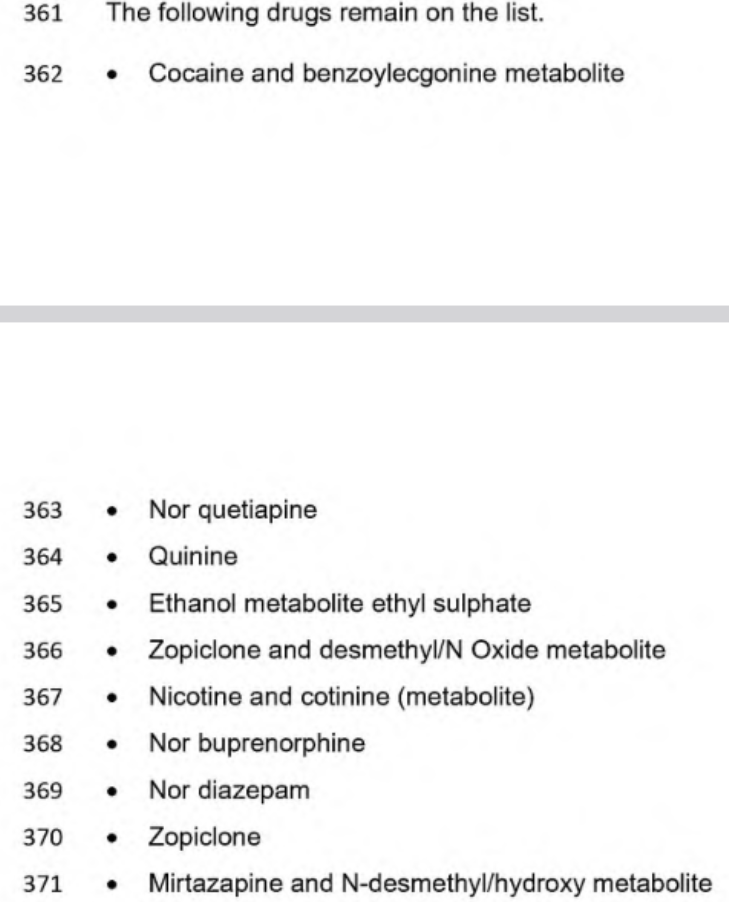
There were no questions from the audience, but afterwards one Russian student came up to me and asked how a person could verify truth from untruth in these difficult times. I stated it was very hard, but my advice was to be sceptical of official narratives. He then made it plain he did not accept what Yana had said about neo-Nazi influence in Ukraine. I told him that my take was that everything that Yana said was true, but of course it was not the whole truth on the subject. Research and an open mind are key.

We then wandered back into the youth festival again. I looked through the literature stall, and placed my left arm in a machine that was said to estimate your medical age. Mine came out somewhat improbably as 48, rather to the consternation of the young lady administering the test. It is good to know that while I am pretty knackered, my left arm still has many years ahead of it.

The next item on the agenda was to be in the audience for a talk Foreign Minister Sergei Lavrov was to give at the Festival, in the same venue that I had mentioned Palestine. The programme also stated that I would be seated in the audience with Yana Lantratova but, true to form, the enigmatic Yana had returned to Moscow. There was rather an anxious press of people hoping to get in. I met there three of the law academics I had met on the first day. They had just come from the university where they had waited much of the morning with hundreds of international law students who had been awaiting my lecture. They had not been told it was called off until well after its supposed time.

I apologised deeply and said I had no idea at all what had happened. I had been told the venue was switched. This was quite truthful. I do not know if the lecture was effectively cancelled because of me, or just as an administrative convenience for Yana’s programme. I felt very bad to have let the university down.

So I found myself sat in the front of the second row with the indefatigable Tatyana. I was immediately behind the equally formidable Maria Zakharova, foreign ministry spokesperson, and more to the point behind her still more formidable bank of hair.

Lavrov spoke for over an hour, and with the fluency one expects of him, on the arrival of a multipolar world. The Global South and East, he said, were no longer content to be extras in somebody else’s system; new centres of gravity in Eurasia, Africa and Latin America were insisting on their own interests and their own resources. The West treated this as an assault on a birthright rather than as history moving. Sanctions, pressure and the stirring of conflicts were the methods of a dominance that could feel itself slipping.

The UN Charter, applied in full and as a whole rather than picked over for convenient articles, already contained the only workable law of a world of equals: sovereign equality, non-interference, the settlement of disputes without the minority claiming the right to dictate. Reality, he suggested, was forcing even those who had never much believed in that equality back towards the Charter, because the alternative was a permanent emergency in which rules were what the powerful said they were.

Lavrov then answered questions for over a further hour. Unfortunately those asking the questions were the participants in an international seminar for young diplomats that, for some reason, was also taking place in Ekaterinburg. The questions were therefore achingly dull, from young careerists representing the interests of their countries. The tedium was broken occasionally by Lavrov losing patience, but there were a couple of points of real interest to me.

The first was that Lavrov went out of his way to mention Scottish Independence. He mentioned again, as he had to the Ambassadors two days earlier, that the Russian attitude to Scottish Independence was governed by the principle of self-determination as specified in the UN Charter, and that Russia rejected the hypocrisy of Western powers which asserted the principle of self-determination over Kosovo, but advanced the principle of territorial integrity against it when it came to Crimea.

Lavrov went straight on from this point to say that Russia thought UN structures were correct and in general opposed substantive UN reform, but the position of the P5 on the Security Council was interesting. The UK was obviously not the great Imperial power it had been in 1946, and Africa and Latin America were badly under-represented. He mused on this specifically in the context of his immediately preceding remarks on Scottish Independence.
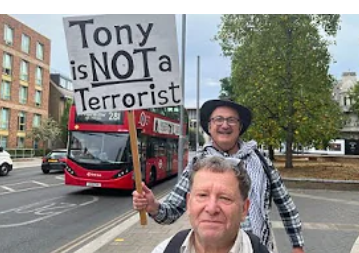
As I have spent the last two years briefing Russia’s most senior diplomats on the question of Scottish Independence and specifically its opening up the question of the UK security council seat, I was obviously thrilled to hear Lavrov voluntarily go there.

Lavrov also spoke of Western illegal interception of Russian oil, and of the legally empty use of the term “shadow fleet”. He narrated the story of the oil tanker seized after its Cameroonian registration was revoked under the pressure of Western powers, while the vessel was at sea. Margarita afterwards noted that Lavrov had spoken in the identical language to me just before on this incident. I said that we were both quoting my blog post. I had not merely published the story, it was I who had researched it and discovered what had happened in Cameroon regarding UK and French aid threats. Lavrov did not namecheck me, but he did separately namecheck John Mearsheimer, a sign that alternative media does count in Russia.

Yet again Yana and her team were hosting me for dinner, with Ilya having finally given up and Evgeny taking over the vodka toasting role. There was no reticence in talking about the misfortune of the cancelled university lecture and what had caused it; though nobody seemed to know much more than I did. Ulugbek drove me back for a relatively early night, while Irina and Margarita went off to buy another suitcase to pack the great volume of gifts I had been accumulating.

When Margarita and Irina arrived the next morning, we noted that the real work of the visit had been done. There were no more meetings or speeches planned. Our first stop was at the Urals Museum of Fine Arts – where yet again Tatyana was waiting for us.

The museum highlighted its collection of fine cast ironware, and particularly a tented pavilion which had won prizes at the Paris Exhibition of 1900. I was given a tour of this by the curator who explained every item in detail. We then looked at a number of other cast iron items, all finished in a charcoal-based black paint.

The sculpture and the casting really were remarkable, and I could fully appreciate the difficulty of achieving such extremely fine detail in cast iron – and was prepared to accept that this was a world best by the local foundries at the end of the 19th century. But what I could not understand was, why? The materials for making bronze were readily available, so why this determination to do something intricate and delicate with extremely difficult cast iron?

We proceeded to look at other items of which the curator was deeply proud, in stonemasonry and local gemcraft. It was indeed impressive and enjoyable.

We next moved on to the Church on the Blood, the cathedral built on the site of the murder of the Romanovs, after the Ipatiev mansion in the basement of which the murders had taken place was demolished in the 1970s.

The church was much prettier, and less heavy, inside than I expected, with a really pleasant colour palette throughout in light blues and yellows. The lower floor included some wonderful iconography and the actual site of the basement where they were shot, painted and illuminated in a lurid red. You could not enter this area but viewed it from a scarlet platform above. A priest intoned prayers for the dead, in which visiting women joined with wailed responses of Alleluia.

We then proceeded to the museum in the nearby Archbishop’s residence, where there were a number of interesting exhibits and photos, including an alleged telegram from Zinoviev in St Petersburg to Lenin in Moscow, which appeared shorter and more explicit than the famous Zinoviev telegram of 16 July 1918. Other items – family ration books, embroidery by the girls, a birthday card from the Tsarevich to his father – are affecting but less historically interesting.

I was left again pondering where all this Tsarism stands within Russian nationalism. The cult of the Royal Family is of course particularly centred on Ekaterinburg. Russia is not a secular society – in opinion polls around 80% of Russians describe themselves as religious, the large majority of them Orthodox but including a large Muslim minority. Religiosity is not declining, and the position of the Orthodox within Russian nationalism appears to have government support, including a strong emphasis on conservative family values. At a time when the nation is embroiled in a war and facing threats of much wider attack, that narrative is important.

I think we can say that official history designates the Bolsheviks as bad guys. When I last visited Russia I found the human rights community concerned at a possible rehabilitation of Stalin. That does not seem to have happened in any wide sense, though the achievements of the Second World War are still more central to the national narrative.
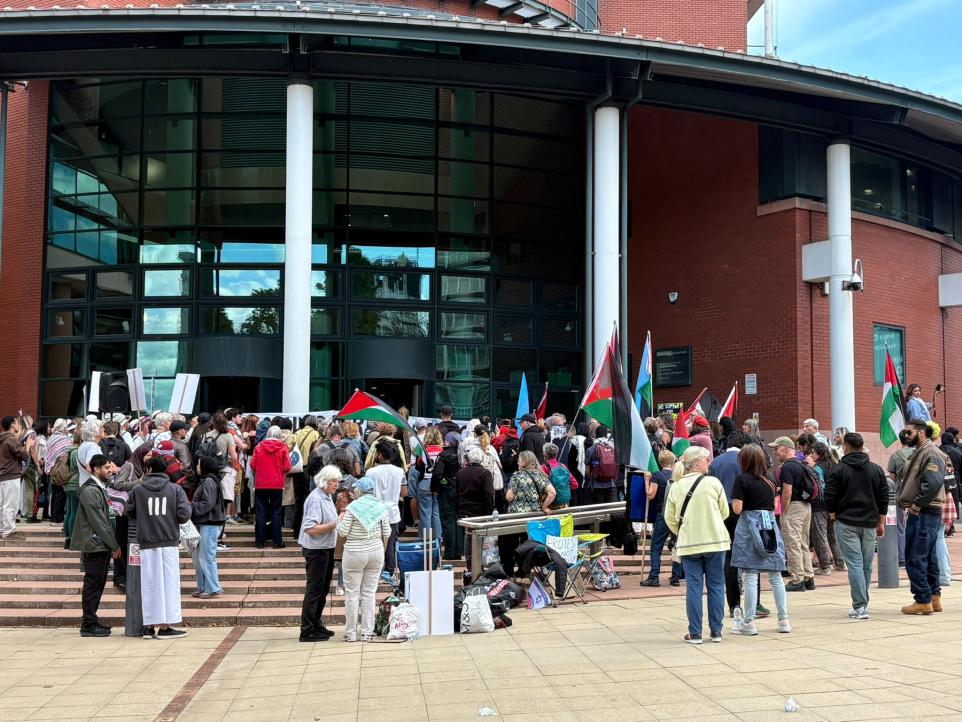
I had made one final request before departure, and that was to visit a supermarket. I wanted a normal supermarket for everyday Russians, and found one from a national chain that sits somewhere about the Morrisons market position. The car park was full, but not of new or high-end cars. I had deliberately avoided an elite supermarket.

I found it extremely well stocked, with everything that you would find in your local supermarket. Fruit and veg were priced lower than in the UK, and there was no shortage of imported exotic fruits. In dairy, there was a very good selection of locally produced fresh goods, again cheaper than the UK. Foreign brands like President and Parmalat were readily available, and seemed to me very slightly more expensive than in the UK.

There was no sign of any absences through sanctions – Lipton’s tea and soft drinks, Coca-Cola from Abu Dhabi or much cheaper Dobry Cola produced by the local ex-Coca-Cola bottler. Sanitary products and OTC medicine appeared perfectly normal. Wines were very similar to what you would find in your local supermarket, both in range and price. There were several blended and malt whiskies, a bit cheaper than in the UK. Beer ranged from 50 pence for 330 ml of a local brew, to £1.80 for a Grolsch.
The most startling exception was the meat counter, where again everything was available and very much cheaper than in the UK, perhaps half the price. In short, the majority of staples – milk, oil, cheese, meat, vegetables, local fruit – were substantially cheaper than in the UK, while other products were on balance a little cheaper.

It is also worth noting that eating out was far cheaper than in the UK. For the standard of restaurant we had been frequenting, prices were about half. It was also notable that we were, every single time, immediately offered Grey Goose vodka and French wine in restaurants. You had to positively request Russian.

It is often worth noting at this point that I witnessed absolutely no queues for fuel at garages. The streets were very clean. Housing and public buildings looked in excellent condition, with no signs of dilapidation, including in large public housing blocks. I saw no homeless person or beggar and encountered in four days of going all round the city and outside it, not one single bump or pothole. As a public good, the city appeared in far better condition than those of the UK.

We went on to an interview with a local television station, which was very enjoyable and overran from 15 to 40 minutes. We then had our final lunch together as a team, for which Tatyana rejoined us – she had been away most of the morning preparing election observation duties. I then returned to the hotel and changed into my kilt and full Highland rig. The final item on our agenda was a ballet Gala at the Opera House and performance of Le Corsaire.

Here I am arriving with Tatyana and Evgeny. I am sorry for the absence of Irina from all these photos – it was her taking them!

This was a world premiere of a new adaptation. I am afraid to say I did not find it terribly successful. It combined a radical new treatment, with a new score, elements of modern dance, container ships, supercars, people trafficking and very dodgy racial stereotyping of Arabs, with long segments of the original ballet with original costumes, music and choreography. The effect was dissonant and largely nonsensical. The second half was very largely from the original. The professional standards in all disciplines were high, though the prima ballerina in particular appeared more at home in the modern segments.

It was the season opening gala and therefore brought out the local elite in full fig, both the Bohemian artist set and the wealthy oligarch set, the latter with a stunning display of trophy wives and girlfriends and great glitter of jewellery. I did not feel in the least out of place in my kilt, and posed with a great many people for selfies in the reception. Byron of course was a Scot, so there is that excuse.

The kilt being a great icebreaker I had any number of enjoyable conversations. One that particularly stuck with me was with a clinical psychologist whose main practice is administering polygraph tests. She said that couples frequently come to her for joint testing over infidelity or marital dispute and she always tries to persuade them not to do it. It almost never helps and never ends well, if not over the suspected event then over something else. I am obliged to say I did not meet anybody who was more impressed by the ballet than I was; Russians tend to be refreshingly candid.

But here is a thought. Here with my nationality obvious from my attire, and throughout my visit when I had met scores of people in everyday situations, I received no hostility from anybody. On the contrary I received constant kindness, hospitality and consideration. This from a population which is acutely aware that it is under missile attack with missiles supplied from the UK, and where the Western powers, including the UK, are openly and regularly threatening war.

Yet in this circumstance I did not only encounter zero personal reserve or hostility, I did not hear a single threatening or aggressive posture. Officially, Lavrov spoke of a multipolar world, support for the United Nations, the rule of international law and the rejection of violence. Nobody at any stage, including injured veterans from the Ukraine War, spoke of a desire for war or made any threat against the West. The war in Ukraine itself was not glorified but viewed as an extremely unfortunate necessity which everybody wanted to end as soon as possible.

I returned to the hotel after the ballet and packed, before they drove me to the airport. Irina and Margarita stayed with me right until I boarded the plane approaching 3am. We drank malt whisky and camomile tea which Tatyana had called to order for me before the journey. I left with real regret at parting from newly made friends, and a feeling of astonishment at the drive to paint these people as enemies, barbarians and people we must kill.

I have given an honest account of what I saw and what I did. Yes, I was on an official programme, but I encountered scores of people, many of whom were not following an official narrative. I acknowledge that I did not have a chance to look at issues like conscription, or the ability of opposition political parties to contest the elections.

But then you do not need me to do that. The BBC, the Guardian, Reuters, CNN are all present and travel and report across Russia, and regularly bring you the propaganda picture. You can read it any time. But consider this. Russia Today and Sputnik Radio were closed down in the UK, totally. There are no Russian journalists free to operate in the UK unless they write the British government line, while British journalists, including the totally hostile, still operate in Russia. I could read the super-Russophobic Guardian in Russia anytime, with no VPN. Those facts in themselves are sufficient to destroy the simplistic narrative of “free West vs authoritarian Russia”, and should at least make you realise that there is more to see and hear than the Western narrative.

As Western elites struggle to hold the consent of their populations during a period of declining standards of living for ordinary people and a massively expanding wealth gap to the billionaire class, they need an enemy to focus hatred and resentment away from themselves. They use immigrants at home and Russians abroad. I just spent a few days with those Russians, and could not have met more warm, human, decent and well-motivated people. I met with kindness and consideration even when I didn’t fit entirely into their agenda. I encountered no xenophobia, no hate and no extremism, and absolutely no desire for war.

Russian people are like us. They want peace, happiness and a decent society for their children to grow up in. They have the same problems as the rest of us in facing up to the excesses of late stage capitalism. They too like us struggle against the authoritarian instincts of a political elite.

Russians are not our enemy. Do not let people try to convince you that they are.

Anybody is welcome to republish and reuse my work, including in translation.

My work has no funding at all except for your subscriptions. If you already, subscribe I would be grateful if you could check if your subscription is still active. Over 80% of my subscriptions lapse when debit or credit cards expire: the systems do not warn you.

Because some people wish an alternative to PayPal, I have set up additional new methods of subscription payment including Patreon account and a Substack account ; if you wish to subscribe that way. The content will be the same as you get on this blog. Substack has the advantage of overcoming social media suppression by emailing you direct every time I post. You can if you wish, subscribe free to Substack and use the email notifications as a trigger to come to this blog and read the articles for free.

I am determined to maintain free access for those who cannot afford a subscription.

Choose subscription amount from dropdown box:

Recurring Donations


PayPal address for one-off donations: [email protected]

Alternatively by bank transfer or standing order:

Account name
MURRAY CJ
Account number 3 2 1 5 0 9 6 2
Sort code 6 0 – 4 0 – 0 5
IBAN GB98NWBK60400532150962
BIC NWBKGB2L
Bank address NatWest, PO Box 414, 38 Strand, London, WC2H 5JB

Bitcoin: bc1q3sdm60rshynxtvfnkhhqjn83vk3e3nyw78cjx9
Ethereum/ERC-20: 0x764a6054783e86C321Cb8208442477d24834861a

View with comments

Dishonesty and Deceit 747

UPDATE We got an expedited date to “reclaim” (appeal) against the suspension of the case, on 25 September. We shall also be reclaiming against the decision not to send the case straight to the Inner House.

All parties seemed to agree there may just be time, if our appeal is successful, to finish the Scottish judicial review before the Supreme Court meets on 4 November to hear the English case.

While the UK government did not oppose the timetable for the appeal, they will be opposing the appeal itself. One argument they used again is that the closed (secret) process for “intelligence” evidence may need too much time for the hearing to go ahead.

In the course of this argument the UK government’s lawyers revealed that there is a five-day process after the Court of Session reaches its verdict, for the security services to vet the judgement before it is published. All the lawyers just took this as completely normal.

It is not normal. In a case about human rights and excessive power of the state, the security services get to vet what the judges can say? It is astonishing. What kind of society have we become?

Today was a win in that we have the quick appeal and still the possibility of a judicial review. Another way of looking at it is that it is yet more Lawfare and leads to yet another expensive hearing, still without having the actual review. But we will fight hard now because this is the crunch and I will very much be looking for people to come and support at court on the 25th.

UPDATE ENDS

I have never been so coldly angry as I am at Lord Young’s further suspension of the Scottish judicial review of Palestine Action, now until after the Supreme Court decision in the English case.

The grounds given – the public cost of the judicial review and the management of judicial resources – are ludicrous. The costs in Scotland alone of police time in arresting and charging hundreds of people as terrorists for supporting Palestine Action, the costs of the courts that will try them all, and the potential public cost of keeping scores of people in jail as terrorists, will run into many millions. This massively outweighs the costs of a three-day judicial review to decide the legality of all this.

Lord Young granted the judicial review on the explicit grounds that residents of Scotland whose human rights were being infringed in Scotland were entitled to seek a remedy from a Scottish court in Scotland’s separate jurisdiction. He ruled this was irrespective of the existence of proceedings down in London, in another jurisdiction. These were already well underway. Lord Young ruled this…

I am satisfied that it is appropriate to grant permission for this judicial review to proceed in Scotland notwithstanding the existence of English proceedings which are at a more advanced stage. As a matter of principle, a petitioner who has standing and whose petition sets out arguments of sufficient merit to satisfy s27B(2)(b) of the 1988 Act should not be refused permission because of the existence of parallel proceedings in another UK jurisdiction. The petitioner claims that his legal rights have been illegally circumscribed by the 2025 Order. He is entitled to look to the courts of his place of residence for a determination of that complaint…

Any decision in England could not found a plea of res judicata in Scotland. A Scottish court would not be required by precedent to follow any decision of the High Court in England. There had been a number of recent examples of important constitutional challenges proceeding in parallel in Scotland and England.

Since the granted permission for the judicial review in January, I have been five times in court trying to make the review actually happen. It has been postponed again and again in a deliberate delaying tactic. It has been postponed so that secret “intelligence” evidence might be heard in secret court sessions that I am permitted no information from. It has been postponed by a series of suspensions granted to the UK government by Lord Young pending developments in England.

Our petition for the judicial review was submitted last October. The review was granted in January. Dates were set for March. Since then it has been simply delayed and delayed and delayed.

At one stage the review was postponed by Lord Young for three weeks so that the Advocate General could appear in person to argue for a suspension – after he had initially refused two motions for suspension. The Advocate General made no new arguments, cited no new precedents, but in a sickening deference to executive authority Lord Young granted the suspension. In which Hell we have been stuck ever since.

We have spent over £200,000, raised from over 2,000 individuals, on multiple court appearances to try to get things moving. That is even without counting two costs awards looming over our heads from procedural motions to get things moving, which Lord Young ruled against and in the UK Government’s favour.

This is not just Lawfare by the government – an effort at constant delay, delay, delay and a deliberate tipping of the review into a procedural morass where no progress is ever made. It is Lawfare in which the judiciary is complicit with the executive. If Lord Young had no intention of allowing a Scottish judicial review before the English case is decided by the Supreme Court, he ought never to have granted permission in the first place. Instead they have exhausted our resources, financial, intellectual and emotional, by enmiring us in a process it is now clear there was never any intention of bringing to a conclusion.

Everybody already knew the English proceedings were at the Court of Appeal and going, either way, to end up at the Supreme Court, at the time Lord Young granted permission to proceed in January. Had he stated then that he was granting permission to proceed, but only after the Supreme Court had decided the English case, we might have given up and not spent £200,000 and nine months of my life. It has been a form of judicial entrapment in which Lord Young has been, at the kindest possible reading, extremely accommodating to the UK government and utterly indifferent to the ordinary Scots seeking to challenge them.

Tomorrow we appear before the Inner House of the Court of Session to discuss – only – whether an appeal against Lord Young’s suspension of the review can be heard on an urgent basis, or whether the appeal will take place in normal time – which would probably mean after the Supreme Court hearing anyway.

Here is Lord Young’s latest decision in full:

COS-P1017-25 Pet: Craig Murray for Judicial Review

Halliday Campbell WS Office of the Advocate General
25 August 2026 Lord Young

The Lord Ordinary, having resumed consideration of the opposed motion of the petitioner to recall the sist granted on 28 May 2026 and to invite the Lord Ordinary to report the whole cause to the Inner House; refuses same for the reasons set out in the note appended hereto; thereafter, sists the cause pending the outcome of the Supreme Court decision in Ammori v SSHD; and grants leave to reclaim the interlocutor of 25 August 2026.

Andrew Young

Note

  1. By any interlocutor of today’s date, I have re-sisted the cause on the respondent’s motion and have refused the petitioner’s motion to report the whole cause to the Inner House in terms of rule 34.1(1). As with a similar motion heard on 14 July 2026, I shall grant leave to reclaim against this decision.
  2. A summary of the procedural position is set out in the Note appended to the interlocutor issued on 14 July 2026. On that date, I refused the petitioner’s motion to recall a previous sist granted on 28 May 2026. That sist subsequently ended once the determination of the onward appeal in R (Ammori) v Secretary of State for the Home Department was determined by the Supreme Court. Miss Ammori was granted permission to appeal the decision of the Court of Appeal to the Supreme Court and the substantive hearing before the Supreme Court has been fixed for 4th & 5th November 2026.
  3. I was addressed by senior counsel for the petitioner and respondent on 20th August 2026 in relation to further procedure in this cause. At the request of the special advocates previously appointed, I allowed a period for written submissions to be made by the special advocates.

    The special advocates subsequently informed the court that they did not wish to make any submissions on further procedure.

  4. The petitioner opposed the respondent’s motion to renew the sist pending final determination of the Supreme Court’s decision in Ammori. It was submitted that these proceedings had been the subject of repeated delay instigated by the respondent which was contrary to the objective of speedy determination of judicial review proceedings. It was no excuse that these proceedings were delayed by the closed material procedures and need for special advocates. It was incumbent on the respondent and special advocates to act with alacrity to enable the speedy determination objective to be satisfied. There was no rule of court expressly allowing the sist of judicial review proceedings. The court should refuse the sist as incompetent.
  5. The petitioner renewed his motion, previously made in July, that this court should report the whole cause to the Inner House with a view to the Inner House hearing argument on the merits of the petition and answers. In this way, a Scottish appellate decision could be issued and would be before the Supreme Court when hearing the Ammori appeal. There was a distinct Scottish dimension since individuals in Scotland were being prevented from expressing support for Palestine Action. Differences could be seen in the approaches adopted by the police and prosecution authorities in Scotland compared to England. A main plank of the argument in favour of proscription had been sentencing remarks made in Sheriff Court proceedings. In the absence of an express “leap-frog” provision in Scotland, rule of court 34 should be utilised to enable Scottish input into the Ammori proceedings before the Supreme Court.
  6. The respondent sought a further sist until the issue of the Supreme Court’s decision in Ammori. The reasons for the sist had been articulated on previous occasions and remained valid. It was likely that many of the issues raised by the petitioner would be finally resolved by the Supreme Court. If the appeal was successful before the Supreme Court, that would bring these proceedings to an end as the respondent accepts that the decision would be given effect in Scotland. If the appeal to the Supreme Court was unsuccessful, it was still likely that several of the major issues would have been resolved leaving any residual issues to be dealt with in these proceedings. The efficient use of court time and the avoidance of unnecessary costs justified the further sist. The sist was competent under the inherent case management powers of the court.
  7. The motion seeking to have the case reported to the Inner House was opposed as being inappropriate. There was no precedent for a whole cause to be reported in order that the first substantive determination was by an appellate court. The petitioner was assuming that the Inner House would have the capacity to hear argument and issue a decision in advance of the Supreme Court hearing. Such indications as the respondent’s agents had from court administration was that court availability might be an issue. The petitioner was also assuming that the Supreme Court hearing, which had been fixed for two days on the assumption that it was only dealing with an appeal from the Court of Appeal, could accommodate input from a Scottish perspective.
  8. It was not the primary position of either party that the present proceedings should proceed at this stage to a substantive hearing before me.

    The petitioner’s request to have the whole cause reported to the Inner House was recognised by senior counsel to be innovative. I accept that the lack of a precedent should not exclude the benefits of such an approach being evaluated. Judicial review proceedings which do not generally involve significant disputed factual matters could, in theory, be more amenable to a leap-frog approach than other types of proceedings. However, the unique nature of this motion does cause me to hesitate. Unless and until there is guidance from the Inner House as to the situations in which the Inner House would be willing to hear causes in the absence of a decision of the Outer House, it is difficult for a Lord Ordinary to assume the role of gate-keeper for the Inner House. As the respondent pointed out, there are many practical issues which the Inner House are best placed to consider. I have decided that the appropriate course is to refuse the petitioner’s motion to report under rule 34.1 but to grant leave to reclaim so that the matter can be placed before the Inner House for its re-consideration, if the petitioner so wishes.

  9. I shall grant the respondent’s motion to re-sist until the Supreme Court issues its judgment in Ammori. This remains, in my view, the most expeditious way to resolve several of the critical issues. Any issues which remain to be resolved after that decision has been issued, can be focussed for determination in the present petition. I consider this course will minimise legal expense and the burden on the courts’ resources.

    Ultimately, this will secure the speediest final determination of the issues which the petitioner raises.

  10. I shall make no order in relation to the adjustments recently intimated by the petitioner. I anticipate that a further period of mutual adjustment may be required but that will depend on the terms of the Supreme Court’s decision.

Andrew Young

25 August 2026

So Lord Young’s plan is that the Supreme Court should consider the judgements of English courts only, and then decide for the whole United Kingdom, leaving any Scotland only issues to be considered by a subsequent Scottish judicial review.

His idea that a Scottish judicial review held after the Supreme Court judgement will be “speedier” than a review held before the Supreme Court judgement is an interesting defiance of the normal concept of time.

He has given up on his earlier justification of “comity” with the English courts now that he can claim he is acknowledging the superiority of the Supreme Court – but with no Scottish input. His argument boils down to this and this only. It will be cheaper not to have a Scottish judicial review. He has no other point.

In which case, why grant one in the first place?

The £200,000 we have spent on this case has been entirely eaten up by Lord Young and the UK government on procedural rubbish. The court has so far heard nothing of the Genocide in Gaza or of the arrest of respectable pensioners in Scotland just for opposing that Genocide.

The court appears determined to keep it that way. They are simply avoiding a confrontation with the British state. A Scottish court is not going to find the ban legal and proportionate. That woud set up a political and constitutional conflict which the Scottish judiciary do not want. So they find ways to avoid the question.

The Scottish government is also deliberately avoiding conflict with the UK over Palestine Action. The decision to charge the alleged Palestine Action activists as having a “terrorism connection” in spray painting Trump’s golf course in Scotland is sickening. The conflation of some spray paint with terrorism is simply ludicrous. The British state has distorted the word “terrorism” beyond all rational meaning.


But it has to be noted that this is not a UK government decision. It is a Scottish decision by the prosecution – the Crown Office, which is under the Lord Advocate. The Lord Advocate is not only appointed by the Scottish Government, he is a minister in John Swinney’s SNP cabinet. They have decided to press the terrorist connection.

It should be remembered that the SNP did not vote against the proscription of Palestine Action in parliament. They have not used their control of Police Scotland to instruct the police to deprioritise arresting old ladies for holding placards, when there is no shortage of more obvious crimes in Scotland, like burglaries which go uninvestigated.

One key point in our case is that the UK government consulted nobody – not one person – in Scotland before the proscription of Palestine Action. They did not consult the Scottish Government, Police Scotland or the Scottish Counter Terrorism Strategy Board (Contest). They consulted the Israeli Embassy, weapons manufacturers, Jewish groups and even a Lebanese Christian group – but no Palestinians. And not Scotland.

The papers in our judicial review have all been copied as it goes along to the Lord Advocate’s office, at his request. The Scottish government could have intervened to support us. The Scottish government is not arguing that it should have been consulted over the proscription, as it has responsibility for police, courts, prisons, and human rights in Scotland. It is not arguing that Scotland is a separate legal jurisdiction and there is a right to a separate Scottish judicial review.

It was open to the Scottish government to intervene to argue those things. They have declined to do so. It is plain to me Swinney supports the proscription of Palestine Action and has no interest in the independence of the Scottish legal system..

It was recently revealed that the Scottish Government has continued through Scottish Enterprise to funnel funds to the Israeli weapons industry in Scotland. We know that in past ministerial positions Swinney gave government money to Israeli settler company Eden Springs to compensate them for boycott losses, and ordered the removal of teaching materials on Palestine from Scottish schools. That is without mentioning the continued cover-up of the content of Angus Robertson’s Scottish government talks with the Israeli Deputy Ambassador.

Like all those trying to take any action against the Genocide in Palestine, I have run up against the all-encompassing resistance of an amorphous but suffocating Establishment. I had naively hoped to demonstrate that the corrupt nexus is less complete in Scotland. I have instead proven the opposite.

The institutions of western democracy are revealed as a sham. Justice is a lie. A court which will not defend the citizen against an authoritarian state, but defines its role as merely the will of that state, is not an instrument of justice. It is a mere instrument of state power.

I am not putting out a call for people to come to court tomorrow Tuesday, because it is only looking at the timetable and may only last five minutes, and we have no firm start time. However I shall be there from around noon and am not discouraging company if anyone wants to join me.

The fight goes on because the alternative is surrender to rampant authoritarianism. I shall let you know how we get on in court this time. I am not going to request more donations to the legal fund until this procedural hurdle is cleared.

Anybody is welcome to republish and reuse my work, including in translation.

My work has no funding at all except for your subscriptions. If you already, subscribe I would be grateful if you could check if your subscription is still active. Over 80% of my subscriptions lapse when debit or credit cards expire: the systems do not warn you.

Because some people wish an alternative to PayPal, I have set up additional new methods of subscription payment including Patreon account and a Substack account ; if you wish to subscribe that way. The content will be the same as you get on this blog. Substack has the advantage of overcoming social media suppression by emailing you direct every time I post. You can if you wish, subscribe free to Substack and use the email notifications as a trigger to come to this blog and read the articles for free.

I am determined to maintain free access for those who cannot afford a subscription.

Choose subscription amount from dropdown box:

Recurring Donations


PayPal address for one-off donations: [email protected]

Alternatively by bank transfer or standing order:

Account name
MURRAY CJ
Account number 3 2 1 5 0 9 6 2
Sort code 6 0 – 4 0 – 0 5
IBAN GB98NWBK60400532150962
BIC NWBKGB2L
Bank address NatWest, PO Box 414, 38 Strand, London, WC2H 5JB

Bitcoin: bc1q3sdm60rshynxtvfnkhhqjn83vk3e3nyw78cjx9
Ethereum/ERC-20: 0x764a6054783e86C321Cb8208442477d24834861a

View with comments

Nonsense Drones and Novichok 382

Europe urgently needs to re-establish access to Russian oil and gas. Gas prices are high – as all UK energy consumers know – and German gas storage is at a record low for September. Gulf production is degraded, supplies are cut off and its long-term strategic stability undermined.

German manufacturing already suffered a 9.5% production loss from 2022 to 2026 following the Russian gas shutdown, with the loss in energy-intensive manufacturing (inc petrochemicals, chemicals, metals, glass/ceramics/stone, paper, mineral oil etc.) at 15.2%.

Western Europe can regain access to Russian hydrocarbons either by accepting a negotiated peace in Ukraine, or by attempting regime change in Russia. The political class in Europe have evidently decided to go all out for regime change.

It would of course be much easier, and much safer, to settle the Ukrainian conflict. We can identify the following reasons the European political “elite” is not taking that path:

  • Loss of face and political capital by in situ leaders who have gone all in for conflict with Russia – von der Leyen, Kallas, Merz, Rutte, Stubb etc
  • Generational family and national hatred of Russia by those wanting to reverse World War II in Eastern Europe – von der Leyen, Kallas, Merz, Stubb etc
  • Deep common interests between the political personnel and the military-industrial complex

Note that none of these motives has anything to do with the welfare of their people, and still less “democracy.” I find it very hard to think of any occasion when a drive towards war had such little foundation.

Consider this. The United Kingdom, like many Western countries, is openly supplying the Ukraine with long-range missiles, manufacturing plans for long-range missiles, and personnel to service them, in the full knowledge that Ukraine is using those missiles in an attempt to devastate civilian infrastructure deep within Russia, killing many Russian civilians in the process.

Yet we are repeatedly told by both politicians and the media that Russia is the threat to the UK, when very plainly it is the opposite which is the truth. Until this year, Russia had in three hundred years of history never had any plans to invade or occupy the UK – while the UK invaded Russia in 1854 and 1917. I presume the Russians are currently working on defensive plans against the UK, given the disgraceful warmongering of our government.

The notion that the boundaries of a Ukrainian state, which had never existed in history until 1991, are so sacrosanct they cannot be adjusted to avoid World War III, is mad. They were only ever internal Soviet boundaries. Ukrainian is a new nationality, but the Ukrainians are entitled to a state if they wish one. What they are not entitled to do is insist on the old Soviet boundary, when they have:

  • closed Russian schools, universities, bookshops, theatres, cinemas, libraries, kindergartens, banks and churches
  • banned the Socialist Party, Communist Party, Left Party, eleven other parties and eight trade unions
  • continued the systematic glorification of Nazi and genocidal figures from Ukraine’s past – alienating Poland in the process.

The notion that nuclear war should be fought over who is Mayor of Lugansk has so little public support that Russophobia is being assiduously stoked by Western governments and the EU itself. The latest episode is the extraordinarily thin gruel of the “Leipzig airport attack” story. Yesterday we had the most incredible release of coordinated statements by Western European leaders all telling us that the evidence is plain of a “hybrid attack” by Russia.

All accompanied by no evidence whatsoever.

The German state of course has history with this sort of false flag. On the night of 31 August/1 September 1939 it staged false flag attacks by Polish forces on the German border post at Gliwice (Gleiwitz), and a couple of other locations. Murdered corpses of political prisoners were dressed in Polish uniforms and spread around. A radio broadcast was transmitted in Polish. This “attack” was the justification for the German invasion of Poland the next day.

Now the “Russian attack” on Leipzig Halle airport was on 4 August, and yet the carefully coordinated attribution to Russia, with identical statements from all western European powers, was not launched until 1 September. I have seen it suggested that this was deliberately on the anniversary of Gliwice. That seems to me unlikely, and yet not to have at least avoided the date of perhaps the most famous false flag in history – by the same state – is very curious, when the date was so obviously voluntary for an attack that occurred four weeks before.

If you reject the warmongers’ logic for a moment, the actual scandal is that there were Ukrainian aircraft in Leipzig stacked with German weapons to kill Russians, not that an amateur toy drone allegedly tried to stop them.

To be told that this is a Russian attack by precisely the same set of goons who lied to us that it was Russia that blew up the Nord Stream gas pipeline, is testing not just the gullibility of the public, but its patience.

In the UK the purveyors of Russophobia – including government ministers – fall back repeatedly on the farcical “Russian novichok on Salisbury” story to explain why we should prepare for war with Russia.

Nobody has ever even pretended to answer the dissection of the official line I published in my article Pure – Ten Points I Just Don’t Believe. I am now able to add a further point I was not aware of at the time, thanks to Tim Norman and his coverage of the Sturgess Inquiry. The use of a judicial inquiry to determine official cause of death, rather than a coroner’s court which exists for that specific purpose, is almost always a sign of a government cover-up – see also the Hutton Inquiry and the murder of David Kelly.

But one thing the inquiry did receive was the toxicology report on Dawn Sturgess from the NHS central toxicology lab in Birmingham. This is what it found in Dawn Sturgess’ blood.

It is worth noting that fentanyl was also found, but this was removed from this list presented to the inquiry as she had been given fentanyl in hospital. That does not, of course, mean there was, or was not, already fentanyl in her bloodstream. But what you do have for sure is cocaine, plus a synthetic opioid given by the NHS to heroin addicts, plus gin and tonic, plus two different antidepressants, plus sleeping tablets.

What you don’t have is novichok. The idea that the NHS central toxicology lab cannot detect organophosphate poisoning, or was not testing for it in the blood of someone in Salisbury when the entire media was already screaming novichok, is arrant nonsense.

Only the Ministry of Defence laboratory at Porton Down claimed to find novichok – and controlled the samples which the OPCW (an equally corrupt institution) got.

Dawn Sturgess was a frail, known long-term drug addict. The combination in her bloodstream could kill anybody – of course depending on the quantities. The astonishing thing is that the pathologist at the inquiry stated he had been given no quantities or concentrations for these substances. He was therefore in no position to say they did not kill her.

This is incredible. There is no such thing as a toxicology report which does not quantify concentrations. Otherwise the information is clinically meaningless. I have spoken with three doctors, two nurses and a senior NHS administrator. All say it is impossible the toxicology report came without quantification. I assume the pathologist was not lying; so they must have been deliberately deleted. Only government can do that, and the obvious motive is to cover up the actual cause of death.

Let us face it: from that list of substances in her blood the actual cause of death is extremely obvious.

The great structural weakness of the inquiry was that nobody had the job of scepticism about the official story. The only non-governmental representative was Michael Mansfield, who represented Dawn Sturgess’ family, and his brief was to argue that Dawn Sturgess was not a drug addict. That – I am sorry to say, completely untrue – version of events fitted the story which both the government and Sturgess’s family wished to be put forward.

I am genuinely upset to have to relate unpleasant things about a dead woman who was a victim of circumstance in her life, in order to tell the truth, but you don’t get cocaine and buprenorphine in your blood by accident. We therefore had the farce of the police apologising at the inquiry for having called Dawn Sturgess a drug addict.

So we have alleged novichok in Salisbury which killed nobody, and an explosive drone, or possibly two, in Leipzig which did not explode. To counter this massive threat, we need to push an entire continent to nuclear war. As a first step, we need to cut health and social spending to give trillions more to arms manufacturers, and prepare our children for conscription, to die on the battlefield.

Forgive me if I am not convinced.

Anybody is welcome to republish and reuse my work, including in translation.

My work has no funding at all except for your subscriptions. If you already, subscribe I would be grateful if you could check if your subscription is still active. Over 80% of my subscriptions lapse when debit or credit cards expire: the systems do not warn you.

Because some people wish an alternative to PayPal, I have set up additional new methods of subscription payment including Patreon account and a Substack account ; if you wish to subscribe that way. The content will be the same as you get on this blog. Substack has the advantage of overcoming social media suppression by emailing you direct every time I post. You can if you wish, subscribe free to Substack and use the email notifications as a trigger to come to this blog and read the articles for free.

I am determined to maintain free access for those who cannot afford a subscription.

Choose subscription amount from dropdown box:

Recurring Donations


PayPal address for one-off donations: [email protected]

Alternatively by bank transfer or standing order:

Account name
MURRAY CJ
Account number 3 2 1 5 0 9 6 2
Sort code 6 0 – 4 0 – 0 5
IBAN GB98NWBK60400532150962
BIC NWBKGB2L
Bank address NatWest, PO Box 414, 38 Strand, London, WC2H 5JB

Bitcoin: bc1q3sdm60rshynxtvfnkhhqjn83vk3e3nyw78cjx9
Ethereum/ERC-20: 0x764a6054783e86C321Cb8208442477d24834861a

View with comments

Dr David Halpin and David Kelly 192

Dr David Halpin, a redoubtable campaigner over the murder of Dr David Kelly, and a friend of this blog for over twenty years, has died. He will be missed.

His sister Mary was for many years an invaluable commenter here and occasional researcher for me. Unfortunately about ten years ago I banned her for comments which I considered anti-semitic. Three months ago David told me he was visiting her in a care home. I asked him to tell her on my behalf that she had been right, and I had been wrong.

Anybody is welcome to republish and reuse my work, including in translation.

My work has no funding at all except for your subscriptions. If you already, subscribe I would be grateful if you could check if your subscription is still active. Over 80% of my subscriptions lapse when debit or credit cards expire: the systems do not warn you.

Because some people wish an alternative to PayPal, I have set up additional new methods of subscription payment including Patreon account and a Substack account ; if you wish to subscribe that way. The content will be the same as you get on this blog. Substack has the advantage of overcoming social media suppression by emailing you direct every time I post. You can if you wish, subscribe free to Substack and use the email notifications as a trigger to come to this blog and read the articles for free.

I am determined to maintain free access for those who cannot afford a subscription.

Choose subscription amount from dropdown box:

Recurring Donations


PayPal address for one-off donations: [email protected]

Alternatively by bank transfer or standing order:

Account name
MURRAY CJ
Account number 3 2 1 5 0 9 6 2
Sort code 6 0 – 4 0 – 0 5
IBAN GB98NWBK60400532150962
BIC NWBKGB2L
Bank address NatWest, PO Box 414, 38 Strand, London, WC2H 5JB

Bitcoin: bc1q3sdm60rshynxtvfnkhhqjn83vk3e3nyw78cjx9
Ethereum/ERC-20: 0x764a6054783e86C321Cb8208442477d24834861a


View with comments

Of Judges, Juries and Fascism 104

We still don’t have a decision on whether the Scottish judicial review of Palestine Action can proceed. Lord Young is thinking about it. Last Thursday’s hearing went about as well as it could go. The UK government produced no written argument and barely seemed to be trying. They moved in court for the Scottish judicial review to be suspended until after the decision of the Supreme Court in the English case. They said it was on the same grounds as they won the suspension before: the use of judicial resources and that a Scottish judicial review would be too expensive.

I have to say this made me furious. It is not too expensive to deploy the police to arrest and charge hundreds of people, to drag them all before the courts for hundreds of hearings, and potentially to keep thousands of these “terrorists” in jail in the UK. Unlimited resources are available for all of that. But a three-day court hearing in Edinburgh, to determine whether any of that is legal, would be too expensive.

The UK government also argued there is not enough time, the Court of Session is too busy, and there are not enough clerks with the necessary security clearance to service closed sessions to hear secret evidence from the security service.

A number of the objections the UK government had put forward at the last hearing were not advanced again. They dropped res judicata – the claim that the English decision is binding on Scotland. They dropped the claim that the court was not competent to refer the case to the Inner House of the Court of Session for speedy decision. They also did not object that our amendments to the petition amounted to substantive change that would need new permission to proceed.

In short, the UK’s government’s objections were so half-hearted and flimsy we were rather bemused by it. I am afraid that my own interpretation is that they are so confident that the judge is fixed that they don’t need to try.

The problem is that the government had no convincing arguments the last two times they won and maintained a “sist” or suspension. There was no argument in court about the fact that that suspension had now ended – the UK government was asking for a new one. I still have not the slightest inkling what was the rationale behind that suspension, which was terminated by the Supreme Court deciding to hear the Ammori appeal, but equally would have been terminated by the Supreme Court deciding not to hear the Ammori appeal.

Having been refused twice before, the sist had been granted when the Advocate General, a UK government minister, turned up in person to argue for it. The arguments had not changed, it was simply deference to the UK government by Lord Young. It appears they are confident that will still hold.

In England we have multiple court decisions over Palestine activism and for the most part they give enormous concern about the willingness of judges to bow to extreme executive authoritarianism. The most egregious example may be Judge Sarah Plaschkes and her egregious attempts to have Tony Greenstein jailed over alleged support for Hamas – which carries up to 14 years imprisonment.

Tony Greenstein’s acquittal is a wonderful victory, echoing that of Natalie Strecker in Jersey in establishing that support for the Palestinian legal right of armed resistance to occupation cannot be equated to support for Hamas, Hezbollah or any other proscribed organisation. That Tony’s acquittal was unanimous is very important.

It is also notable that the acquittal occurred in affluent Kingston – and juries are local – not in an area where you might expect we would get natural sympathy from UK minority communities.

Tony himself wrote on his blog:

Judge Sarah Plaschkes Spewed Bile & Venom as Her Determination to Have Me Convicted was Thwarted

Numerous other observers were shocked during the trial by her continued efforts to hamper the defence. All context was forbidden, both in terms of Tony’s large body of writings and in terms of any discussion of the Genocide in Gaza or the history of Israel/Palestine, or what really happened on October 7. Even Greenstein’s police interviews were redacted so that the jury could only see those parts of the transcripts which the prosecution wished them to see – which when you think about it is deeply shocking. Plaschkes demanded to see questions for cross-examining the police in advance.

As is common now, the judge explicitly barred the jury from being told that they have an absolute right to acquit according to their conscience, and being aware of the potential sentencing consequences.

As is becoming common, Greenstein dismissed his lawyer temporarily and did his own closing speech, so he could say things in opposition to the judge’s rulings, including outlining what the jury had not been allowed to see, which his lawyer could not do without risking professional disbarment.

Plaschkes could not control her hate and fury at the end, once the jury returned with their verdict. She described Greenstein’s closing speech as “the ramblings of an old man”. His speech was cogent and evidently compelling, and Tony Greenstein is a substantially greater intellectual than the Zionist functionary Plaschkes.

Plaschkes stated that she had considered finding Greenstein in contempt of court and encouraged the prosecutor to report him for contempt of court. The prosecuting barrister, embarrassed by Plaschkes’s open venom, refused to do so.

What is plain is that juries are the only area of hope in the “justice” system. There was a very significant development in the second Filton case, where eight people were tried as alleged “organisers” of the attack on the Israeli mass-murder factory. In the first Filton case, MI6 client judge Johnson had given extremely harsh sentences through his post-verdict avocation of a “terrorist connection”.

This is an extraordinary new legal strategy by which the sentencing for ordinary criminal charges may be radically increased if the judge, and the judge alone, decides there is a terrorist link post verdict. The jury has no say on whether there is a terrorist connection or not, and the judges hide from the jury the possibility of this happening at all.

But the public are not stupid and do not live under a rock. The jury sent a note in the second Filton case to the judge Patrick Field asking him whether there would be sentencing under “terrorist connection”. Field replied to the jury that this was “not your concern”.

We do not know what drives individual juries, but it is very probable that the jury’s refusal to convict seven of the accused of anything, and bringing in just one single count of criminal damage, was influenced by knowledge of the lengthy and disproportionate prison sentences the judge could impose under terrorism connection.

This is just one particular example of juries being repelled by the draconian persecution of activists by the state, in order to maintain complicity in a Genocide. The refusal of juries to convict is the only real defence the people have left at the moment. It is notable that the charges levied against placard holders supporting Palestine Action have been restricted to those carrying a jail sentence of up to six months – and therefore not allowing a jury trial.

Here is something astonishing which Judge Field did allow. The first case charged six people who entered the factory at Filton with violent disorder. None was convicted. The second case charged eight people who were not present at all with violent disorder, as a matter of “joint enterprise”. But how could they have participated as “joint enterprise” in something another jury had already decided did not happen? What “joint enterprise”?

I can give you one solitary example of a decent judge. In Preston, Judge Robert Altham said he would not be adding a “terrorist connection” to charges of criminal damage of paint sprayed and windows broken on a Barclays Bank, who provide Elbit with financial services. He ruled that the extent of damage was not sufficient. That is however the limit of the good news I can bring you from Preston as seven people were arrested outside the Court and charged with supporting Palestine Action.

Do read Tony Greenstein’s blog about the extraordinary series of judicial rulings before he got to the courtroom and in front of a jury. It is an incredible tale of judicial and ministerial bias and corruption that deserves a book in itself. The dice are hugely loaded against us, but the fight continues.

I am afraid we do desperately need more funds to get through this. All the delay and procedural trickery set out above is designed to bleed us dry and, to be honest, it is working.

Please do not contribute if it causes you difficulty. If you know people who are able to afford to help and likely to be sympathetic, please do contact them and ask their assistance. We are trying to keep a lot of very good people out of prison.

You can donate through the link via Crowd Justice, which goes straight to the lawyers, or through this blog.

https://www.crowdjustice.com/case/scottish-challenge-to-proscription/

Alternatively by bank transfer:

Account name
MURRAY CJ
Account number 3 2 1 5 0 9 6 2
Sort code 6 0 – 4 0 – 0 5
IBAN GB98NWBK60400532150962
BIC NWBKGB2L
Bank address NatWest, PO Box 414, 38 Strand, London, WC2H 5JB

Or crypto:

Bitcoin: bc1q3sdm60rshynxtvfnkhhqjn83vk3e3nyw78cjx9
Ethereum/ERC-20: 0x764a6054783e86C321Cb8208442477d24834861a


View with comments

Scottish Judicial Review Hearing Tomorrow 132

After eight months of obstructionism from the Labour Friends of Israel government of the UK, tomorrow is the day on which the Scottish Court of Session will finally decide whether to go ahead with the judicial review it granted in January, or kowtow to Downing St.

I publish below two of the three main papers we have submitted for the hearing. The UK government has submitted nothing in advance, obviously confident it has it stitched up. The third main paper, the amended petition, I don’t have in clean form at the moment but will upload later.

It is unlikely anyone reading this in the next 11 hours of night time in Scotland will be able to get to Court Number 1 of the Court of Session in Parliament Square by 8.30am tomorrow, but if you can I should be most grateful for the moral support.

I am stating in my affidavit baldly a direct challenge to the government’s honesty. Whether this is a sensible legal strategy I do not know, but it has the virtue of being the truth.

The “paper apart” giving the argument for this hearing from the legal team makes the point very clearly that in acceding to the UK government’s continued sidelining the Scottish case the court is behaving in an unprecedented way and breaking its own rules. I have removed at least as much footnote from the Paper Apart as text remains, for the sake of readability. If anyone wants a full copy let me know.

Wish me luck. I am sleepy.

IN THE COURT OF SESSION
SUPPLEMENTARY AFFIDAVIT OF CRAIG MURRAY
IN THE
PETITION
of
CRAIG MURRAY, residing at Edinburgh, EHl0 
PETITIONER
For judicial review of the Terrorism Act 2000 (Proscribed Organisations) (Amendment) Order
2025
At EDINBURGH on the NINETEENTH day of AUGUST 2026, in the presence of DAVID
JAMES FINLAY HALLIDAY, solicitor and notary public, Halliday Campbell WS,
solicitors,

COMPEARED CRAIG MURRAY,
residing at Edinburgh, EHl0 who being solemnly sworn hereby
DEPONES as follows:-

1. I was a member of the Diplomatic service from 1984 to 2005 including six years as a
member of the Senior Civil Service.

2. One of the positions I held in my career was Head of the FCO section of the Embargo
Surveillance Centre, a cross Whitehall and armed forces body, whose objective was the
enforcement of sanctions on Iraqi weapons procurement.

3. To the best of my knowledge and belief, as a result of my work on Iraq, I held the highest
possible levels of security clearance within the UK government system, including some
which entailed a specific visit to Washington to obtain.

4. Although at the time of the publication of the government dossier on Iraqi weapons of
mass destruction I no longer held this position, then being ambassador designate to
Uzbekistan, I knew a great deal of background and many of the individuals concerned
with Iraqi weapons monitoring across Whitehall.

5. When the government dossier on Iraqi WMD was published, to my certain knowledge at
the time much of it was factually incorrect. I was on training within the FCO at the time
and spoke with several officials including some who had been directly involved in
production of the dossier.

6. I therefore know for certain that many of the individuals involved were well aware that
the dossier, which they were involved in producing or agreeing, was factually wrong. One
senior official directly concerned with the production cheerfully and cynically
acknowledged to me that it was “bollocks”. A member of FCO Research and Analysis
Department, a year after the publication, told me that people in that department had
been in tears at the pressure put on them to agree the dossier.

7. The hard truth is that officials will produce the narrative which ministers want, in order
to justify the policy which ministers wish to implement. Many civil servants take the view
that the ministers are elected democratically and make the policy, and it is the civil
servants’ job to fix the facts around the policy.

8. The policy that ministers wish to follow is gleaned by civil servants from official minutes,
from ministerial pronouncements in public or in parliament, from conversations with the
Minister’s private secretary, from the Permanent under Secretary, from remarks made by
the minister in public or private meetings with others, and a variety of different routes.

9. The Chilcott report stated that:
The judgements about Iraq’s capabilities in that statement, and in the dossier published the
same day, were presented with a certainty that was not justified
and
It is now clear that policy on Iraq was made on the basis of flawed intelligence and
assessments. They were not challenged, and they should have been.

10. I can testify that challenging the government’s desired version of the truth on that
occasion was extremely difficult and civil servants felt intimidated from doing so. The
pressures were sharply illustrated by the death of Dr David Kelly, whom I knew slightly.

11. We know from Iraq that the UK government sometimes promotes a narrative which is
factually false in order to justify its policy.

12. That is the case in the prescription of Palestine Action, with a narrative of an escalating
pattern of violence, much relied upon by the Home Secretary. It was also relied upon by
the English Court of Appeal as a predictor of Palestine action’s future behaviour. Yet it is
an entirely false narrative.

13. In matters of intelligence and national security the government can in particular not be
relied upon to produce an honest narrative of the facts, and the civil service cannot be
relied upon to act with integrity in the service of government.

14. I have given, from personal knowledge, the example of Iraqi weapons of mass
destruction. Let me also give the example of torture and extraordinary rendition, also
from personal knowledge.

15. I gave evidence on complicity in torture and extraordinary rendition, appearing in person
for questioning before the Joint Human Rights Committee of the UK Parliament, the
Intelligence and Security Committee, and committees of the European Parliament and
the Council of Europe.

16. I am a whistleblower and I do not believe there is any longer any serious denial of my
testimony on torture and extraordinary rendition, which is widely cited and a key source
on the subject. But the government denied it at the time.

17. My purpose in this affidavit however relates to one key aspect of the governmental
behaviour on torture and extraordinary rendition. This illustrates the willingness of civil
servants to hide the evidence of what policies are being pursued and why, at the
instruction of or in pursuit of the perceived wishes of ministers.

18. I refer to the report of the Parliamentary Intelligence and Security Committee on
Detainee Mistreatment and Rendition 2001-2010 HC 1113, under the chairmanship of
the Rt Hon Dominic Grieve KC. Paragraphs 130 and 131 of this report are crucial to my
evidence.
” 130. This was not unique to the Agencies. Their sponsoring Departments appear to have
adopted the same approach. We heard evidence from a former FCO official, Craig Murray,
who suggested that “there was a deliberate policy of not committing the discussion on
receipt of intelligence through torture to paper in the Foreign Office”. In July 2004, when
he was Ambassador to Tashkent, he raised concerns about the use of Uzbek intelligence
derived from torture in a formal exchange of telegrams with the FCO. Mr Murray drew our
attention to FCO documents from the same time, which we have seen, one of which
referred to “meetings to look at conditions of receipt of intelligence as a general issue”. He
told us that the meetings specifically discussed the receipt of intelligence under torture
from Uzbekistan and were absolutely key to the formation of policy on extraordinary
rendition and intelligence. Mr Murray told us that, when he had given evidence to the
Foreign Affairs Select Committee about this, they sought the documents from the FCO
which replied that the “meetings were informal meetings and were not minuted”. He went
on to say:
the idea that you have regular meetings convened at director level, convened by the
Director of Security and Intelligence, where you are discussing the receipt of intelligence
from torture, and you do not minute those meetings is an impossibility, unless an actual
decision or instruction not to minute the meetings has been given . … Were it not for me
and my bloody-mindedness, … you would never know those meetings had happened.
Nobody would ever know those meetings had happened.
131. We note that we have not seen the minutes of these meetings either: this causes us
great concern. Policy discussions on such an important issue should have been minuted.
We support Mr Murray’s own conclusion that were it not for his actions these matters may
never have come to light.”

The footnotes are essential as they detail evidence including documentary evidence, not
available to the public, which supported my testimony.

“229. Craig Murray was the British Ambassador to Uzbekistan from August 2002 to July
2004, during which time he raised concerns about the UK’s use of intelligence derived from
torture. He had been in contact with the Gibson Detainee Inquiry, with a view to appearing
as a witness. He contacted the ISC in August 2014 for the same purpose and gave evidence
to the Committee in 2016.
230. Mr Murray gave the example of photos of a torture victim in Uzbekistan that he had
sent to the FCO, which sent them to a Professor of Pathology at the University of Glasgow,
who is said to have reported that the victim had been beaten about the face and neck, and
eventually had died of immersion in boiling liquid.
231. Oral evidence – the former FCO official, 20 October 2016; FCO telegram from the
Director General, Defence and Intelligence, to the British Embassy in Tashkent, 22 July 2004
(‘Receipt of intelligence obtained under torture’).”

19. The Government response to the committee made no challenge to this account.

20. So the government machinery, especially in matters concerned with intelligence and
national security, demonstrably can produce a false narrative. The fact it comes from
government should not imbue their narrative with a false authority. Not only that, but
the written record from government can deliberately conceal inconvenient facts, policies
or other information.

21. I can testify to the truth of both these assertions from direct personal experience. They
should be borne in mind when considering the government’s assertions about Palestine
Action.

22. We have a blatant example of deliberate concealment before us. As a result of the closed
session process in Scotland, a number of redacted phrases in a Proscription Advisory
Group document have been unredacted and introduced into the open sessions.
(Respondent’s 6th inventory of productions, 7 /103 to 7 /106 of process)

23. None of these phrases was redacted because its revelation would impact UK national
security. I state that as a former expert practitioner in the field. What is obvious on the
face of these redactions is that every single one of them tends to strengthen the case
against proscription. That is why they were redacted by civil servants anxious to conceal
truth in order to forward the agenda of government.

24. This is one small example of the much bigger picture.

25. In an earlier hearing, the Advocate General stated that the reason the Scottish Counter
Terrorism Strategy Board (CONTEST) found that Palestine Action was not close to
meeting the bar for proscription, is that CONTEST is a mere “local board” without full
knowledge of the facts.

26. In fact, to my experienced eye the much more probable explanation is that CONTEST
Scotland is remote from the political desires of London ministers – in this case
particularly to please Israel – while JTAC and the Proscription Advisory Group operate
under their direct influence. The Scottish view is the less distorted view.

27. The government’s narrative of an escalating pattern of violence is simply untrue as a
matter of fact. I have been closely following all trials of Palestine Action activists and to
my knowledge there has been only one single conviction for violence against the person,
and even in that one instance the specific charge of intent was rejected by the jury.

28. The government’s claims of the escalating pattern of violence were heavily based on two
cases, usually called the Filton and Thales cases.

29. In the Thales case, in Scotland, there were no convictions for violence. In parliament
introducing the proscription and in subsequent media statements, the Home Secretary
relied on rather florid sentencing remarks by a Scottish sheriff without mentioning that
key fact.

30. I view it as relevant that the Sheriff Appeal Court in Scotland recently overturned a
decision of the same Sheriff McCormick in another case of a pro-Palestine activist; and
the court’s remarks called into question the fairness of McCormick’s proceedings.

31. In the Filton case, I attended in person two days of the trial of six activists, plus the
sentencing hearing. I carefully read detailed reports of the case every day, both trial and
retrial.

32. In an effort to substantiate its claims of violence against Palestine Action, the State
brought six charges of aggravated burglary, and six charges of violent disorder. There was
also one charge of grievous bodily harm with intent.

33. I believe these are the main “serious charges” to which the Advocate General referred in
response to my petition.

34. All six charges of aggravated burglary failed before a jury, returning not guilty. So did the
six charges of violent disorder, returning three not guilty and three no verdicts. These
charges were not attempted again by the prosecution at retrial. GBH with intent also
failed. GBH with no intent was found guilty.

35. So there is simply zero factual basis for the narrative of an escalating pattern of violence.
There is no charge of violence at Brize Norton.

36. The extent to which the state ‘s case for proscription rested on this false narrative of
violence is vividly illustrated by the bloodcurdling list of charges in the third paragraph of
page 5 of the gisted report of the Proscription Review Group in the respondent’s 6th
Inventory of Productions:

“The criminal offences of Aggravated Burglary (s.10 Theft Act 1968) and Violent Disorder (s.2 Public
Order Act 1986) have been applied to the majority of offenders identified as being directly involved in
each of these incidents, while more specific criminal offences have been applied to individual subjects
for: Administering a Noxious Substance (s.24 Offences against The Person Act 1861); Threats to Kill
(s.16 Offences against The Person Act 1861); Actual Bodily Harm (ABH) (s.47 Offences against The
Person Act 1861); Grievous Bodily Harm (GBH) with intent (s.18 Offences against The Person Act
1861); and Participating in Activities of an Organised CrimeGroup (s.45 Serious Crime Act 2015).”

37. I understand from contact with defendants across a number of cases that the state has
failed to obtain a single conviction on any one of the specific charges identified in that
long list. Today 19 August the state has failed yet again, as the jury in the second batch of
eight defendants in the Filton trial did not convict on any of eight charges of violent
disorder.

38. The state has now brought charges of violent disorder against 14 individuals and
achieved zero convictions.

39. This is a narrative which proved entirely false.

40. I find it a reflection on the honesty of the government and of its legal representatives
that these jury verdicts, which are a matter of fact, and the collapse of this narrative has
not been admitted in these proceedings and the false narrative has not been withdrawn.

41. They may of course be relying on concocted evidence from the security services in closed
proceedings, on which I am unfortunately unable to comment.

42. Similar caution needs to be exercised in relation to the claims of the extent of property
damage. In the Filton trial, the damage was not evidenced. The jury was given an
inventory of the tools the defendants had taken to break or damage Israeli weapons, but
no account at all of what was actually damaged.

43. It is my understanding from trial reports that concealing what was damaged from the
jury was a ruling by the judge, in pursuit of his further ruling that the motives of the
defendants in acting to prevent genocide must not be put to the jury.

44. Only after the verdicts in the second trial was an alleged account of the damage from
Elbit Systems given to the court. The defence lawyers attempted to question this
account, but this was not permitted by the judge. He accepted a figure of £1.1 million
from an insurance claim. As this was not open to interrogation I do not know if it
includes consequential loss.

45. Similarly the extent of property damage at Thales has not been subject to scrutiny. The
Sheriff also referenced £1.1 million and it is not clear if this includes consequential loss.
The aircraft leased by the RAF under the Private Finance Initiative which were sprayed
with water based paint at Brize Norton were reported to have been back flying within
ten days. Whether they would otherwise have flown earlier I do not know.

46. It is unique to designate an organisation involved in damage to property only as a
terrorist group. The least that might be expected is a serious explanation of the property
damage, which is subject to some ability to scrutinise.

47. There is no serious effort by government to itemise property damage by Palestine Action
in a transparent way. Let alone to give comparison to property damage by similar direct
action groups like Just Stop Oil and Extinction Rebellion which have not been proscribed.

48. The JTAC documents reveal no effort to quantify property damage or to make the
relevant comparisons. Again, I question the fundamental evidence base of the
proscription.

49. That property damage alone, which does not endanger life, is capable of being classified
as terrorism is an unusual feature of UK legislation. As opposed, for example, to property
damage to an air traffic control facility which obviously might result in deaths.

50. Some actions of other direct action groups in, for example, closing down railways and
major motorways for substantial periods, have had far greater economic effect on the UK
than actions of Palestine Action. They have been dealt with by ordinary criminal law.

51. As there is no escalating campaign of violence, and the property damage is not life
endangering nor on a massive scale, that feeds directly into the question of whether
proscribing this kind of “terrorism” is having disproportionate effects in constraining
human rights.

52. I have met personally with scores of people over the age of 70 years old who have been
charged with terrorism offences for no more that speech and assembly. All of them are
entirely respectable members of society, often from distinguished professions. Many are
pacifists, and Quakers. We do not have a consolidated figure from the Crown Office for
how many face charges in Scotland.

53. Across the UK I understand over 3,500 are charged. Recently 1,855 were listed in a single
day at Westminster Magistrate’s Court. While the simultaneous listing was explained as
an error, a further 152 were arrested, the vast majority for speech offences, outside the
courtroom.

54. Being charged with a terrorism offence is life changing. Not only do they face possible jail
sentences, they face serious international travel restrictions. On 9 August 2026 in
Glasgow I met one who told me that, as a consequence of being charged with a terrorist
offence, his home and car insurance premiums had gone up by over £600 a year in total.
I had previous met a lady who suffered debanking.

55. None of those that I have met charged with speech offences including placards was
previously a member of Palestine Action or participant in their direct action. At the last
hearing it was claimed on behalf of the Advocate General that I effectively represent
Palestine Action in this case. In my own view I do not. I represent myself as a resident of
Scotland whose human rights are curtailed in Scotland, and insofar as I can be said to
represent a group, I would view that group as the ordinary citizens of Scotland whose
human rights are being curtailed by this proscription, who usually had no past
connection to Palestine Action.

56. That all of this is proportionate is an absurd contention and the heartlessness of the
state apparatus and those who control it fill me with dread.

57. I am a resident of Scotland. I believe the direct action campaign of Palestine Action was
necessary, proportionate and in general well conducted. I should like to be able to say so
here, in Edinburgh, where I live. I apply for protection of my human rights to the court of
my own jurisdiction.

58. Where there is obviously a major and widespread effect on human rights of ordinary
citizens, a “margin of appreciation” that assumes the executive violating people’s rights
to be undeniably beneficent, truthful and well-intentioned is not reflective of the real
world.

59. I have a perspective that gives weight to that fact from relevant personal experience. I
am particularly keen to put this testimony before a judicial review in my own jurisdiction.
It is not a perspective available in the English case.
All of which is truth as the deponent shall answer to God.
Signed:

This: NINETEENTH day of AUGUST 2026
At: EDINBURGH
before me DAVID JAMES FINLAY HALLIDAY, Solicitor and Notary Public


~

PAPER APART FOR THE PETITIONER

1. THE PETITIONER’S MOTIONS
1.1 The petitioner moves the court:
(1) to recall the sist granted on 28 May 2026
(2) to invite the Lord Ordinary to report the whole cause to the Inner House for a ruling
under and in terms of rule 34.1(1) of the Rules of the Court.

2. RECALL OF THE SIST
2.1 On 28 May 2026 the court sisted this cause till such time as the Court of Appeal gave its
judgment in Ammori v SSHD (Appeal No. CA-2026-000583) “and the question of onward
appeal to the UK Supreme Court being resolved”.

2.2 On 30 July 2026 the UK Supreme Court granted its permission for the claimant in the
English proceedings to appeal against the decision of the Court of Appeal of England and
Wales in her Judicial Review Ammori v SSHD [2026] EWCA Civ 721. The Supreme Court
has fixed a two day diet (4 and 5 November 2026) for the hearing of this appeal
https://supremecourt.uk/cases/uksc-2026-0099.

2.3 The question of onward appeal to the UK Supreme Court now being resolved, the sist falls
to be recalled.

3. THE RESPONDENT’S MOTION TO RENEW THE SIST

3.1 On 19 August 2026 the respondent advised the petitioner that the position of the UK
Government is that it will be moving this court to “renew the sist” (sine die ?) and that the
UK Government will oppose the reporting of this cause to the Inner House.

3.2 Neither the legal nor factual bases upon which the UK Government will argue that the
court should adopt these positions has not been vouchsafed to the petitioner.

3.3 As is clear from the repeated applications made by the respondent to sist these proceedings
– as well as the respondent’s previous reliance on (misplaced) claims concerning “judicial
comity” and (it may be anticipated, given remarks by the respondent’s counsel at an
earlier hearing) fanciful and wholly unfounded submissions concerning res judicata
/issue estoppel – the UK Government’s position in relation to these Scottish proceedings
is to seek to try and avoid (or at the very least delay) the UK Government having to defend
in open court its policy of the proscription of Palestine Action on two fronts in two separate
jurisdictions.

3.4 The Advocate General’s motion for a new sist to be imposed in this case is of a piece with
that overall aim. It is not however open to this court to accede or facilitate any such aim
of the respondent further to delaying matters in the progress of this case, as we have noted
above. Instead, the only orders which this court may competently pronounce as regards
further procedure following the lifting of the 28 May 2026 sist are orders which ensure the
speedy determination of the petition”.

3.5 In seeking a further sist of these post-permission judicial review proceedings the Advocate
General has failed to identify or specify any specific Rule of Court on which she relies as
the source of the court having power to renew this sist.

3.6 That is because there is no such Rule of Court. The relevant Rules of Court applicable to
judicial review proceedings are set out in Chapter 58. This Chapter contains the principles
which are the court is obliged to apply within the context of procedural decision within
judicial review procedure, as a distinct form of recourse to the courts in public law matters.
These Chapter 58 rules make it clear that the principle of “speedy determination” applies
to the procedure to be adopted in judicial review application, both before (per Rule of
Court 58.4(4)) and after permission has been granted (Rules of Court 58.11(2) and
58.12(2)).

3.7 Whatever legal basis upon which the Advocate General now seek this court to renew and
continue a sist in this case, it clear that ex facie an order for sist does not constitute “an
order for further procedure which is “appropriate for the speedy determination of the
petition.” The Advocate General has therefore to satisfy that the principle of speedy
determination of judicial review application should be disapplied in the circumstances of
this case. She has to date failed to specify any such ground.

3.8 When acceding to the Advocate General’s motion to sist these on 28 May 2026 this court
stated that “a sist of proceedings, whether on an agreed or opposed basis, is a regular
feature of litigation” in explanation/justification for the sist. In so stating the court
misdirected itself, and acted per incuriam. This is because judicial review proceedings
are not “regular litigation”. And sists are not a regular feature within the context of judicial
review proceedings.

3.9 A search for cases in which a sist has been pronounced in judicial review proceedings
(whether in the Outer or Inner House) reveals only two Outer House case, in both of which
a sist was pronounced in highly unusual circumstances. In Craig v. Parole Board [2013]
CSOH 110, 2013 SLT 953, because of a formal written undertaking given to the court on
behalf of the Scottish Parole Board, that if two conjoined pending NI and E&W UKSC
decisions found against the Parole Board on a Convention rights issue (re Article 5(4)
ECHR and the need for oral hearing in parole cases) the UKSC decision would be followed
by it in Scotland. This meant that the Lord Ordinary, Lord Pentland, did not have to deal
with this ground of challenge and so after dismissing the common law case simply agreed
to sist the remaining aspect of the JR challenge pending the UKSC decisions.

3.10 In Greenpeace Ltd v Advocate General for Scotland [2025] CSOH 10, 2025 SLT 303,
three JRs had been raised in Scotland to beat the 3 month time bar and got first orders.
Before the case reached the permission stage, parties agreed to sist the JRs pending UKSC
decision. Again the sist was done by agreement In any event, given that permission had
not been considered or granted by the time the sist had been pronounced, so the provisions
of Rule of Court 58.11(2) on which we rely – and which provides that “(2) When permission
is granted, the Lord Ordinary must make such orders for further procedure as are
appropriate for the speedy determination of the petition” – did not come into play.

3.11 So in both the cases in which a sist was pronounced the court was simply endorsing the
prior agreement of the parties, and so no argument was put before the court as regards the
competency of such a course. And there are simply no cases (other than this court order
of 28 May 2026) in which a sist of judicial review proceedings was pronounced by the court
in the face of opposition by any of the parties.

3.12 As we have noted judicial review proceedings – unlike ordinary litigation – are
proceedings characterised by the principle of “speedy determination”. This is the key
principle for judicial review procedure. The aim of judicial review procedure is
“to focus the issues so that the court can reach a decision upon them, in the interests
of sound administration and in the public interest, as soon as possible”
3.13 Rule of Court 58.11(2) specifies that
“when permission is granted, the Lord Ordinary must make such orders for further
procedure as are appropriate for the speedy determination of the petition” (emphasis
added).

3.14 The only express mention of the possibility of the court pronouncing a sist within the
context of Chapter 58 judicial review procedure is within the context of the pre-permission
procedure for intimation, service and advertisement of the petition, the lodging of answers
and relevant documents, and notification of intention to contest. Rule 58.4(5)(h) allows
that the court might sist the cause for legal aid, but only, per Rule of Court 58.4(4), after
having “regard to the need for the speedy determination of the petition” (emphasis
added).

3.15 Rule 58.12(2) again specifies that “at the procedural hearing the Lord Ordinary may
make such order for further procedure as is appropriate for the speedy determination of
the petition and in particular may make any of the orders listed in rule 58.11(2)” (emphasis
added).

3.16 Yet Rule of Court 58.11(2) does not list the sisting of the cause as being a possible option
in terms of the court’s procedure in judicial review application where permission has been
granted.

3.17 In this, the judicial review rules are to be contrasted with various Rules of Court
applying to procedures other than judicial review, where express provision is made
regarding the possibility of the court pronouncing a sist.

3.18 Against the general principle of statutory construction that expressio unius est exclusio
alterius, the legal basis upon which the Advocate General for Scotland purports now to
rely, as she would have it, to give this court the power to pronounce a further sist in these
post-permission judicial review proceedings, is unclear, given that the possibility of
pronouncing a sist is not listed among the particular orders which may be pronounced by
the court in relation to the speedy determination of a judicial review petition once
permission has been granted for it to proceed, and there is nothing in the Rules of Court
applicable to judicial review procedure which would allow for it.

3.19 In these circumstances the primary position of the petitioner is that this court should
refuse on grounds of competency the respondent’s motion for a new sist to be placed in
this case on the grounds that:
– to grant a sist at this stage of these proceedings would be incompatible with the
principle of speedy determination which applied to the present judicial review public
law proceedings; and
– there is no applicable Rule of Court (nor any inherent power compatible with the
principle of speedy determination) under reference to which a sist might properly be
pronounced.

4. PROCEDURE TO DATE

4.1 Permission was granted for this judicial review to proceed as long ago as 26 January
2026. By interlocutor pronounced on this date the following timetable and case
management orders were made:
– parties to adjust their pleadings until 9 February 2026 being two weeks prior to the
date of the procedural hearing fixed for 23 February 2026
– final versions of parties’ pleadings to be lodged no later than 16 February 2026,
being one week prior to the procedural hearing fixed for 23 February 2026
– affidavits to be lodged in respect of those facts founded on by a party at the substantive
hearing no later than 16 February 2026, being one week prior to the procedural
hearing fixed for 23 February 2026
– statements of issues to be lodged no later than 16 February 2026, being one week
prior to the procedural hearing fixed for 23 February 2026
– notes of argument to be lodged no later than 16 February 2026, being one week
prior to the procedural hearing fixed for 23 February 2026
– parties to confirm whether they are ready to proceed to the substantive hearing no later
no later than 16 February 2026, being one week prior to the procedural hearing fixed
for 23 February 2026
– 23 February 2026 at 10am being fixed as the date for the procedural hearing;
– parties to lodge a list and bundle of authorities, marked up to indicate the parts the
party intends to rely on no later than 7 March 2026, being 10 days prior to the
substantive hearing.
– 17 and 18 of March 2026 at 10am fixed as the dates for the substantive hearing;

4.2 This original timetable appears to have slipped and was not adhered to.

4.3 Instead by interlocutor of 26 March 2026 the court – after granting a declaration under
section 6 of the Justice and Security Act 2013 that these proceedings are proceedings in
which a closed material application may be made to the court and refusing in hoc statu the
respondent’s motion for the proceedings to be sisted – set out the following timetable for
further procedure:
– by 4pm on 9 April 2026 for the respondent to lodge with the court and serve on the
Special Advocates, any application in terms of section 8 of the Justice and Security Act
2013, together with any material subject to any section 8 application;
– by 4pm on 15 April 2026 for the Special Advocates to advise the respondent
whether they object to any section 8 application, and intimate to the Respondent any
submissions in response to any section 8 application,
– by 4pm on 29 April 2026 for the respondent to intimate to the Special Advocates
any response to the Special Advocates’ said submissions,
– by no later than 6 May 2026 for the Special Advocates and counsel for the
respondent to meet in order to narrow any outstanding section 8 issues;
– by 4pm on 13 May 2026 for the Special Advocates and Counsel for the respondent
to notify the court whether a hearing to consider the section 8 application is required,
– no later than 4pm on 15 May 2026, if a hearing is considered to be required,
appoints for the Special Advocates and Counsel for the respondent to lodge with the
court a Joint Minute in terms of RCS 104.9(5) identifying the issues which cannot be
agreed between them, together with any CLOSED Notes of Argument and/or CLOSED
affidavits that they wish to rely upon,
– on Wednesday 27 May 2026 at 10am for a CLOSED court hearing to be held before
the Hon. Lord Young;
– within seven days of the hearing of 27 May 2026 for the respondent to provide,
if required, any further disclosure to the petitioner, to do so;
– for the Special Advocates and Counsel for the respondent to agree, if possible, a date
for a CLOSED substantive hearing together with a procedural timetable for the
respondent and Special Advocate to intimate to each other and to lodge with the court
any CLOSED Note of Arguments and any CLOSED affidavits that they wish to rely
upon at the CLOSED substantive hearing;
– no later than 10 days prior to the substantive hearing for parties to lodge a list
and bundle of authorities, which should be marked up to indicate the parts the party
intends to rely on
– by no later than 4pm on 2 June 2026 for parties to adjust their pleadings and to
lodge final versions
– appoints notes of argument, statements of issues, productions and affidavits to be
lodged no later than 4pm on 9 June 2026;
– assigns 10 June 2026 at 9.30am as the date for a further continued procedural
hearing in respect of open procedure at which the petitioner might participate

4.4 Again, this timetable was not adhered to.

4.5 By interlocutor dated 28 May 2026 orders with the following effect, among others were
pronounced by the court:
– permission granted to the respondent under sections 8 and 11(4) of the Justice and
Security Act 2013 for:
(i) the respondent to withhold sensitive material otherwise than to the Court and
the Special Advocate, for the purpose of the respondent’s section 6 application;
(ii) the sensitive material lodged by the respondent in relation to the section 6
application to be kept separately from the process by the Deputy Principal
Clerk;
(iii) for the sensitive material lodged by the respondent in relation to the section 6
application not to be borrowed or inspected by any party other than by a legal
representative of the Secretary of State or by any Special Advocate; and
(iv) the requirements of RCS 4.5(1)(b), 4.6 and 4.11 to be disapplied in respect of
the sensitive material lodged by the Respondent in relation to the section 6
application
– sists the cause until 30 July 2026 (being the date when the question of onward appeal
to the UK Supreme Court from the decision 15 June 2026 of the Court of Appeal of
England and Wales in Ammori v SSHD [2026] EWCA Civ 721 had been resolved)
(which occurred on 30 July 2026).

4.6 There has already been significant (and frankly unacceptable) delay in the progress of this
judicial review application since permission was granted on 26 January 2026 for the
matter to proceed to a substantive hearing and decision.

4.7 The delays in progressing this matter may largely be attributed to litigation tactics adopted
by the respondent in this case, which run contrary to the requirements properly to be
expected of public authorities when faced with public law based challenges to the
lawfulness of their actions.

5. THE LITIGATION STRATEGY OF THE UK GOVERNMENT IN THE ENGLISH PROCEEDINGS

5.1 In the Ammori proceedings before the English courts the UK Government has appeared
to conduct their defence to these challenges as if a “war of attrition”. In the English
proceedings the UK Government has taken (ultimately ill-founded) procedural points and
has pursued procedural appeal wherever possible.

5.2 Its overall aim in adopting such tactics appears to be to delay as much as possible any final
reckoning before and by the court as to the lawfulness of the policy to proscribe Palestine
Action in England and Wales and perhaps also seeking to deplete the financial resources
available to the claimant to fund the prosecution of this challenge.

5.3 Thus:
– the UK Government first of all opposed permission being granted to the applicant in
the English proceedings: R (Ammori) v. Home Department [2025] EWHC 2013
(Admin) (per Chamberlain J. judgment handed down on 30 July 2025).
– the UK Government then unsuccessfully appealed against the grant of permission to
take the judicial review: R (Ammori) v. Home Department [2025] EWCA Civ 1311
[2026] WLR 1000 (per Lady Carr CJ, Lewis LJ, and Edis LJ judgment handed down
on 17 October 2025).
– the UK Government lost in the substantive hearing of the judicial review application
before the Divisional Court: R (Ammori) v. Home Department [2026] EWHC 292
(Admin) [2026] HRLR 9 (per Dame Victoria Sharp President of the King’s Bench
Division, Swift J and Steyn J handed down on 13 February 2026).
– the UK Government then sought and obtained an expedited hearing of its appeal to the
Court of Appeal with hearing dates between 28 to 30 April 2026.
– as noted above some 6 week later, on 15 June 2026 a 5 judge Court of Appeal (Lady
Carr CJ, Sir Geoffrey Vos MR, Edis LJ Vice President of the Criminal Division of the
Court of Appeal, Lewis LJ and Whipple LJ) handed down its decision upholding the
UK Government appeal.
– once the EWCA judgment was handed down the UK Government then immediately
filed a motion with the Court of Appeal requiring that the applicant apply to that court
for permission to appeal to the UK Supreme Court by 22 June 2026 (i.e. just seven
days of that court’s substantive decision upholding the UK Government appeal).
– an application for permission to appeal to the UK Supreme Court was duly put before
the Court of Appeal by the applicant on 22 June 2026. But the UK Government then
opposed the grant of permission, which was then refused by the Court of Appeal.
5.4 Had the concern of the UK Government truly been for there to be a final authoritative
decision applicable across the UK on the lawfulness of the proscription of Palestine Action
it would have supported the applicant’s PTA application.
5.5 In any event, notwithstanding the UK Government opposing permission to appeal from
the decision of the Court of Appeal of England and Wales in its favour, the UK Supreme
Court granted the Ammori applicant such permission and the matter is now, as we have
noted above, going to a substantive hearing before the UKSC on 4 and 5 November 2026.

6. THE SCOTTISH DIMENSION TO THE JUSTIFICATION FOR THE PROSCRIPTION OF
PALESTINE ACTION

6.1 The Advocate General appears to be proceeding on the basis or assumption that if the UK
Supreme Court on an appeal from the Court of Appeal of England and Wales upholds the
lawfulness under English law of its proscription as a terrorist organisation in England and
Wales, this this ruling will apply equally to and for Scotland (and to and for Northern
Ireland).

6.2 And if the UK Supreme Court says that Palestine Action cannot properly be proscribed
under English law then – on the Advocate General’s analysis at least – it must follow it
cannot have been properly proscribed under Scots law or under Northern Irish law, again
on the assumption there are no principles specific to English law, Scots law or Northern
Irish law that might allow for a different approach on this issue to be taken across the
internal national jurisdictions of the UK.

6.3 But as we have seen from the UKSC decision in Jwanczuk that is to approach matters from
completely the wrong way round. What Jwanczuk tells is that the courts in each of the
jurisdictions of the UK have to reach their decision independently of how courts in other
UK jurisdictions have reached them.

6.4 One of the central planks offered by the Home Secretary in justification of her decision to
proscribe Palestine Action as a terrorist organisation was an incident in Scotland in June
2022. In her written statement to the House of Commons made on 23 June 2025 (over 3
years after the Glasgow incident) she said this of it:
“During Palestine Action’s attack against the Thales defence factory in Glasgow in
2022, the group caused over a million pounds worth of damage including to parts
essential to submarines.
The Sheriff, in passing custodial sentences for the attackers’ violent crimes, spoke of
the panic among staff who feared for their safety as pyrotechnics and smoke bombs
were thrown in the area where they were evacuating.
He further recorded the extent of damage to legitimate business activities which
included ‘matters of nationwide security’ and disputed the groups’ claims its actions
were non-violent.”

6.5 But it is important to bear in mind that in the English proceedings no challenge is made to
the Home Secretary’s statement made in justification for the order at issue that what
occurred during a protest incident at Thales SA, in Glasgow on 1 June 2022 constituted
acts of terrorism on the basis that they involved the use or threat of action which was said
to “serious damage” to, and only to property and was “designed to influence a government
to advance a political, religious or ideological cause” such as to fall within the ambit of
section 1 of the Terrorism Act 2000.

6.6 Because the Claimant’s application for permission for judicial review on this ground was
refused in the Administrative Court below (see R (Ammori) v Home Secretary [2025]
EWHC 2013 (Admin) at [77]-[80]), the retrospective characterisation of what is said to
have happened in Glasgow on 1 June 2022 at Thales SA as “terrorism” is not a matter
which can be disputed in the English proceedings. Indeed the Court of Appeal (in its
judgment at para 150) relies heavily on what it understands from the sentencing sheriff’s
reported remarks as happened in Glasgow on 1 June 2022 in support of its finding in
favour of the lawfulness of the Home Secretary proscription of Palestine Action as a
terrorist organisation.

6.7 This is a matter which can however usefully and properly be examined in the present
Scottish proceedings. So too is the issue of consultation with actors in Scotland. A court in
Scotland is in a far better position to understand and situate the relevant actors in the
Scottish context; and separately, the circumstances of the June 2022 protest action at
Thales SA in Glasgow in respect of which the five individuals charged all pled guilty to
charges of breach of the peace. Two of these five also pled guilty to “damaging property”
in gluing their hands to the edge of the roof. And one of the five, in addition, pled guilty to
behaving in a threatening or abusive manner when police arrive to de-bond her hands from
the roof when she was obstructive and required to be restrained using leg restraints. The
first four accused were sentenced by the Sheriff to serve a total of 12 months incarceration
and the fifth who resisted arrest received a total sentence of 14 months imprisonment.

6.8 Much was made by the Home Secretary and by the courts in England and Wales that the
sheriff mentioned in his remarks the setting off of “pyrotechnics including smoke bombs”
at the start of what turned out to be a day long occupation of the premises. The sheriff
noted in his sentencing that “in one criminal justice social work report it is said that ‘the
offence is non-violent in nature and was planned as well as intended to cause disruption’”.
He then comments in passing that “throwing pyrotechnics into areas where people are
being evacuated could hardly be described as non-violent”.

6.9 But the reality is that fireworks are not firearms. The throwing of smoke bombs was
charged as and only as “breach of the peace”. None of the individual was charged with any
form of terrorism offences. The justification for the Home Secretary to found on the
circumstances of this case as a primary basis for the proscription in Scotland, as well as
the rest of the UK, of Palestine Action can therefore usefully be considered and determined
by the courts in Scotland in the present proceedings. So too can the issue of consultation
with relevant Scottish actors, a matter not considered by the courts of England and Wales.

7. FURTHER PROCEDURE: REPORTING THE CAUSE TO THE INNER HOUSE

7.1 The only question which is therefore before this court is what procedural orders should
now be pronounced in this case (given the history slipping timetables and frankly
unwarranted delays) which will best allow for the “speedy determination” of the petition.

7.2 The reality of this situation is that the present challenge to the proscription in Scotland
will not be finally resolved by the decision of this court at first instance.

7.3 Whatever decision may be taken by the Lord Ordinary – whether to uphold or refuse the
challenge to the proscription in Scotland of Palestine Action – will be reclaimed against to
the Inner House.

7.4 Neither will any decision by the UK Supreme Court on the Ammori appeal finally and
authoritatively determine the question of the lawfulness of the proscription in Scotland of
Palestine Action, because the UK Supreme Court will be exercising its jurisdiction as a
court of England and Wales rather than as a Scottish court and its decision on this matter
will bind neither this court nor the Inner House. 9 Section 41 of the Constitutional Reform
Act 2005, so far as relevant, as follows:
“41. Relation to other courts etc
(1) Nothing in this Part [3 concerning the UK Supreme Court] is to affect the
distinctions between the separate legal systems of the parts of the United Kingdom.
(2) A decision of the [UK] Supreme Court on appeal from a court of any part of the
United Kingdom, other than a decision on a devolution matter, is to be regarded as the
decision of a court of that part of the United Kingdom.”

7.5 In these circumstances it is clear that the most expedient course for this court to take in
order to ensure the speedy final and authoritative determination of the present challenge
is for this court to report the whole cause to the Inner House, without the matter going to
a substantive hearing and determination by the court.

7.6 The Inner House will be properly placed to hear and determine – without the benefit of
the view of the Lord Ordinary – the substantive challenge to the proscription in Scotland
of Palestine Action because it will have the advantage of knowledge of two reasoned
decision from the English courts – on the equivalent proscription in England and Wales –
at this stage of proceedings.

7.7 The petitioner now invites the Lord Ordinary to report the whole cause to the Inner House
for a ruling under and in terms of rule 34.1(1) of the Rules of the Court.

7.8 Rule of Court 34.3(2) provides that “the decision of the Inner House on a report to it
under rule 34.1(1) shall be final”: qv Davidson v. Scottish Ministers (No 3): incidental
application re Leave to appeal to House of Lords, 2005 1 SC (HL) 1 at §13.

7.9 This means that any decision of the Inner House, on the court’s Chapter 34 report to it, is
habile to be appealed to the UK Supreme Court (see subsection 40(2)(a) of the Court of
Session Act 1988), provided that the necessary permission to appeal has been granted by
the appropriate court (subsections 40(1) and/or 40(3) of the Court of Session Act 1988).

7.10 The petitioner submits that, instead of considering the petition and answers at a
substantive hearing and reaching his own determination on it, the option of reporting the
case to the Inner House is the most appropriate procedure to be adopted by the court in
all the circumstances of this case.

7.11If this proposed course of action is followed then it will at least allow the possibility of: the
Inner House making a decision on the Scottish challenge; and then for the UK Supreme
Court to have the benefit of the decision of two appellate courts, respectively determining
at the same time under Scots law and separately under English law, the lawfulness of the
proscription of Palestine Action. The UK Supreme Court will then be able to determine
this matter finally and most importantly authoritatively both in and for Scotland, and in
and for England and Wales.

7.12 The UK Supreme Court indeed welcomes the opportunity of being able to hear at the
same time appeals from the decisions of the (intermediate) appellate courts in relation to
legislation which applies across the United Kingdom. The resolution of any differences in
approach as between the Scottish and English intermediate appellate court is indeed said
in Jwanczuk to be one of the justifications for the UK Supreme Court’s existence.

7.13 What hearing appeals from Scotland and from England together means is that the UK
Supreme Court to get the benefit of the views of experienced appellate judges from both
sides of the border: see for example: R (Cart) v. Upper Tribunal [2011] UKSC 28/Eba v.
Advocate General for Scotland [2011] UKSC 29; and Cherry v. Advocate General for
Scotland/Miller v. Prime Minister [2019] UKSC 41. Indeed, standing that a powerfully
constituted bench of three in the Divisional Court (including the President of the King’s
Bench Division) reached one conclusion on the lawfulness of proscription; and a (very
unusual) bench of five in the Court of Appeal reached a different conclusion, the Supreme
Court would perhaps be assisted to an even greater extent than normal by also having the
reasoned determination of the Inner House available to it.

7.14 This course of hearing Scottish and English appeal together ensures, too, that a final
authoritative ruling can be handed down by the UK Supreme Court which unequivocally
applies to both sides of the border and thereby enhances and achieves the legal certainty
required to ensure compatibility with and respect for the Convention rights of all those
many individuals, north and south of the border, affected (including in relation to its
chilling effect) by the decision of the Home Secretary to list Palestine Action as a proscribed
terrorist organisation. Such an authoritative determination affording legal certainty is
needed in the present context, given that individuals in Scotland have been arrested and
prosecuted, and continue to face the risk of arrest and prosecution, for offences grounded
in the proscription of Palestine Action.

7.15 Against that background it is clear that the proper course to be followed in this case is
for the Lord Ordinary to report this case to the Inner House.

7.16 Accordingly, once the sist has been lifted in accordance with the first part of this
motion, the petitioner moves that the court – acting under and in terms of Rule of Court
34.1(1) – report the cause as a whole to the Inner House for its ruling on the substance of
this judicial review challenge.

7.17 Any suggested alternative course which may be anticipated from the Advocate General
on behalf of the UK Government – for example that the present proceedings remain sisted
pending the determination by the UK Supreme Court of any appeal against the decision of
the Court of Appeal of England and Wales, leaving the petitioner with the possibility simply
of applying to intervene in any English appeal in the UK Supreme Court – would be wholly
inappropriate, for at least the following reasons, among others:
(1) Any resulting decision of the UK Supreme Court in a solely English appeal would not
be binding as a matter of precedent in and for Scotland.
(2) The UK Supreme Court might choose to deny outright any application for the
petitioner to intervene.
(3) Even if the UK Supreme Court allowed the possibility for an intervention by the
petitioner, that court might determine that it will allow limited intervention only on
particular aspects or arguments, rather than the full range of the argument which the
petitioner might wish to present.
(4) Any arguments which the UK Supreme Court might allow to be heard from the
petitioner would be considered and determined against a background of there being
no independent Scottish court consideration of these arguments.
(5) It is particularly important for the UK Supreme Court to hear the views of the Scottish
courts because one of the main justifications on which the Court of Appeal of England
and Wales relied upon in deciding that Palestine Action was engaging in and
advocating for terrorism is a decision and sentencing remarks of a sheriff in a
criminal case at Glasgow Sheriff Court and how the Scottish authorities (the police,
the Crown and the sheriff) dealt with it (Ammori, [2026] EWCA Civ 721 paras 53,
150). Therefore, it is crucial that there is a complete and full understanding of the full
details and circumstances of that decision (and all other Scotland related decisions),
which only the Inner House can bring.
(6) In any event, there is no identity of parties (or arguably interests) between the
English and Scottish proceedings. Ms Ammori, the applicant in the English
proceedings, is a co-founder of Palestine Action and may be said to be a
representative of that organisation. But membership of an association is not to be
conflated with a desire to express support for the organisation and its action and
aims. The petitioner in the present Scottish proceedings is in no sense a
representative of the proscribed association. He is not its agent, or alter ego, nor
can he bind it in any way, nor does he in any sense act for it. He seeks to review the
proscription order because he is not, in Scotland, ‘able to freely express his political
support for the organisation’. It is on that basis that he has standing to pursue the
present challenge as a concerned and politically involved citizen and Scot.

7.18 In the whole circumstances the petitioner renews the second part of his motion and
once more invites the Lord Ordinary to report the whole cause to the Inner House for a
ruling under and in terms of rule 34.1(1) of the Rules of the Court.

8. CONCLUSION

8.1 The petitioner in the present proceedings accepts that that the UK Supreme Court should
be afforded the last and authoritative word on the lawfulness under Scots law of Palestine
Action in Scotland. That is a separate question in law from the issue of the lawfulness
under English law of the proscription of Palestine Action in England and Wales. There are
undoubtedly some common background factual and legal issues as between the two
challenges. It is accordingly expedient that the two appeals be heard and determined at
the same time before the same bench of the UK Supreme Court.

8.2 This aim can only be achieved by the court following the course of action which the
petitioner urges on the court.

8.3 The UK Government’s position by contrast seems to be one of impeding or delaying the
final authoritative resolution of these matters in Scotland. That course should not be
permitted it by this court.

8.4 In all these circumstances the petitioner renews his motion as enrolled and moves the
court to grant both parts of that motion.
AIDAN O’NEILL KC
MARK BONI, ADVOCATE
TONY CONVERY, ADVOCATE

I am afraid we do desperately need more funds to get through this. All the delay and procedural trickery set out above is designed to bleed us dry and, to be honest, it is working.

Please do not contribute if it causes you difficulty. If you know people who are able to afford to help and likely to be sympathetic, please do contact them and ask their assistance. We are trying to keep a lot of very good people out of prison.

You can donate through the link via Crowd Justice, which goes straight to the lawyers, or through this blog.

https://www.crowdjustice.com/case/scottish-challenge-to-proscription/

Alternatively by bank transfer:

Account name
MURRAY CJ
Account number 3 2 1 5 0 9 6 2
Sort code 6 0 – 4 0 – 0 5
IBAN GB98NWBK60400532150962
BIC NWBKGB2L
Bank address NatWest, PO Box 414, 38 Strand, London, WC2H 5JB

Or crypto:

Bitcoin: bc1q3sdm60rshynxtvfnkhhqjn83vk3e3nyw78cjx9
Ethereum/ERC-20: 0x764a6054783e86C321Cb8208442477d24834861a


View with comments

A Tide in the Affairs of Men 323

Between ten and five years ago, specifically in the light of Brexit, it was not in the least unusual for Scottish Independence supporters to discuss a declaration of Independence as the way forward. Debate more often centred on who should make the declaration – the Scottish parliament or some form of national convention or assembly. Very few Independence supporters considered the idea outrageous.

On the day that the UK left the European Union, contrary to the referendum vote of every region in Scotland, Sturgeon called a set-piece speech and summoned the whole SNP party hierarchy to be there, as were all the Scottish and UK media. Nobody knew what she was going to say. The belief she may be about to declare Independence, or give an imminent date for it, was widely shared.

In the event, to everyone’s great puzzlement, she said nothing meaningful at all and made no effort to make the break with the EU a decisive moment in taking forward Scotland’s Independence.

In 2020 I stood for President of the SNP and my published manifesto included this passage:

As I was a British diplomat for over 20 years, including six years as a member of the Senior Management Structure of the Foreign and Commonwealth Office, I can assure you that MI5, GCHQ and the other organs of the UK security state are targeted on us. Scottish Independence supporters are rightly perceived as the biggest threat to the UK state.

My intention is to ensure that we are indeed the biggest threat to the UK state. Anybody who believes that the security services are not already targeted on us is a fool. The security services would not be doing their declared job otherwise. This new legislation is a threat to us. Remember Pat Finucane. Remember David Kelly. Above all, remember Willie McRae.

All the more reason to strike now for Independence and get out of the UK.

Let us use the economic powers of an independent nation to build a fair and just society with no billionaires, no foodbanks and no children living in poverty. Let us build a nation with a foreign policy not dictated by the interests of the USA, dedicated to human rights, international development and support for the United Nations.

Let us move quickly to secure an Independent Scotland. Let our descendants be proud of us.

Nobody accused me of being some kind of unrepresentative outsider. The SNP leadership were so panicked that, the day before nominations closed, the sitting President was told he was retiring and being replaced by the extremely popular Mike Russell MP as the party establishment candidate.

Voting was restricted to Conference delegates, where the party leadership had a huge payroll vote. Even so I came second out of four candidates, with 25% in the final round.

In those days we had AUOB marches for Independence of hundreds of thousands of people. One in Edinburgh I timed as taking three hours to go past. We had marches which, as a percentage of Scotland’s population, were bigger than the equivalent two million person march in London against the Iraq war.

It says a very great deal about how far the Independence movement has come – and all of it downhill – that my article last week caused pearl-clutching and fainting fits in the Independence movement, for daring to suggest that Scotland should announce that it will declare Independence if Westminster continues to block a referendum.

The SNP leadership-aligned newspaper, the National, even accused me – on its front page, no less – of aiming to start a war with the UK.

Nicola Sturgeon had never been on a single one of those AUOB marches. We were told that, as First Minister, it would be too divisive for her to attend Independence marches.

It was, it transpired, not too divisive for her to attend trans-rights events and attempt to push extreme and uncompromising trans-rights legislation through the Scottish parliament that went way beyond what public opinion would currently bear. It was not too divisive for her to attempt to abolish juries in sexual assault cases.

Sturgeon led the SNP down a cul-de-sac marked “identity politics” and left it there. Naturally, anyone who queried this was a misogynist.

Remember, I was never an opponent of the gender reforms. I thought they could have been improved, notably by Michelle Thomson’s amendments. But I was never against them. What I was entirely against was the prioritisation of this issue over Independence. The debate should have been left until after Independence. An independent Scotland could sort out these issues on its own terms.

Instead the issue was used deliberately and entirely successfully to split the Independence movement.

The SNP is still in the identity politics cul-de-sac.

The SNP is now absolutely wedded, as a matter of doctrine, to staying loyal to UK domestic legislation. That course was set by Sturgeon; the Scottish government brought a case for an Independence referendum to the London Supreme Court in the certain knowledge they would lose, and deliberately argued the case in a way that was bound to lose.

The Lord Advocate even stated in terms on behalf of the Scottish Government the British nationalist doctrine that Scotland had permanently ceased to exist on the coming into force of the Treaty of Union.

The SNP of Sturgeon, Humza and Swinney is the only instance in post-1918 world history of an Independence movement which does not advance its case for national self-determination as a right in international law. It really is.

The notion of an Independence party which swears unshakeable allegiance to the legal system and political diktats of its occupying power is so obviously risible, it astonishes me, truly genuinely astounds me, that some people still do not see it.

The harsh truth is this: Independence for Scotland will only happen against the opposition of the UK government and by doing things which UK law and its Supreme Court consider illegal.

The enacting of Independence itself will – as the UK Government explicitly stated in its intervention in the Kosovo ICJ hearing – by definition almost always be illegal in terms of the legislation of the state being seceded from. But as the UK also stated, that is not a determining factor.

By abandoning the possibility of disobedience to the UK state, the SNP has doomed itself to waiting for London agreement which will never, ever come. London is highly dependent on Scottish resources. It needs the UK to stay together to retain its permanent member status at the United Nations. It is never going to agree to lose Scotland.

My own view is that the SNP leadership is riddled with MI5 agents, and that the rest are careerists who love the big fat pay packets they get from their privileged position as administrators within the British state. They will never risk all their personal material success for Independence. Their unswerving allegiance to the laws of the UK state is reinforced by their extremely well-feathered position within it.

Their plan for achieving Independence always boils down to this: if you vote us into our highly paid jobs again, we will actually do something about Independence this time. This time. This time. This time. This time. This time. Astonishingly, decent well-motivated Independence supporters still fall for it.

In 2014, at the start of the referendum campaign, support for Independence was somewhere between 29 and 32%. That is why Cameron agreed to the referendum – he thought the result would kill off Independence. Over several months of campaigning support leapt and finished at 45% – despite massive media bias against us, on an incredible scale, in a referendum which met no international standards.

Since then, nothing has happened. Alex Salmond resigned, Nicola Sturgeon took over and she deliberately took all momentum out of Independence campaigning.

This was Sturgeon’s speech at the Aberdeen conference in 2015. Members failed to grasp the import of what she was saying:

I don’t just want to win the votes of independence supporters. I want to inspire people who voted No last year to vote SNP too. I want them to vote SNP because they know we are the best party, with the best ideas and the best people to lead Scotland forward. Everyone, from the strongest supporter of independence to the stoutest advocate of the Union, has the right to know we will continue to govern well with the powers we have at any given time.

Independence support has gone up very slightly over the 12 years since the referendum and now hovers around or just over 50%. Nothing has been done to replicate the months of campaigning, enthusiasm and hope which permanently raised support in a 20% step change during the referendum campaign.

If you do nothing, nothing happens.

The SNP has done nothing. It almost never mentions Independence outside elections. SNP MPs never participate in Westminster by saying how the subject under debate will be handled in a post-Independence Scotland; they operate entirely within the UK framework. At Holyrood, if the word “Independence” is ever heard, other than in a taunt from a Unionist MSP, it is a certain sign that an election is shortly pending.

You cannot increase active popular support for an event which its own supposed advocates accept is subject to a veto by a power you cannot control, and which is determined permanently to veto.

“Sign up to surrender to Westminster” is not an inspiring slogan.

I sympathise greatly with those, like my good friend Robin McAlpine who have been so disillusioned and demoralised by the SNP that they have tipped into the slough of despond and – ironically – joined the ranks of the very gradualists they despise, because they cannot see a way out.

Momentum is important in politics. If you accept to stay stuck behind a barrier you will never achieve momentum. The only way forward is to say that the people of Scotland will refuse to be bound by the laws of the UK state if they offer no democratic option for Scotland to leave the union.

That is the only effective pressure Scotland can bring. My own proposed solution remains to threaten to declare Independence unilaterally if London does not agree a proper, international-standard referendum subject to international norms on media, franchise, vote security etc. And then to declare Independence if our demand for a referendum is not met.

This last week I have heard other proposals to defy London – holding an “illegal” referendum, ways of withholding revenue, ceasing government cooperation in various areas. They are all worth exploring.

Support for Independence will leap up another step change when we actually do something about it. Leadership sweeps people along with it. No country which ever became Independent did not have a substantial number of sceptics among its own population. History shows us that such sentiment soon dies following Independence.

You will look very hard indeed for an example of any country that went Independent and then wanted to go back.

There is a tide in the affairs of men which, if taken at the flood, must lead on to success. That remains today a crucial insight. Momentum is vital and to build momentum you have to surge forward.

It is equally true that stagnant water starts to stink. That is the lesson the Scottish Independence Movement must learn from the dead end of the Sturgeon years and from what then happened to internal governance and probity in the SNP. The answer is to abjure stagnation and to embrace the urgent need to move forward.

No nation ever achieved Independence without leaps of faith and acts of courage. I am sorry if that shocks people. There is no safe, agreed path to Independence, and never will be. The Independence movement needs to shake the parasites who hold us back.


————————————————————————————-

Anybody is welcome to republish and reuse my work, including in translation.

My work has no funding at all except for your subscriptions. If you already, subscribe I would be grateful if you could check if your subscription is still active. Over 80% of my subscriptions lapse when debit or credit cards expire: the systems do not warn you.

Because some people wish an alternative to PayPal, I have set up additional new methods of subscription payment including Patreon account and a Substack account ; if you wish to subscribe that way. The content will be the same as you get on this blog. Substack has the advantage of overcoming social media suppression by emailing you direct every time I post. You can if you wish, subscribe free to Substack and use the email notifications as a trigger to come to this blog and read the articles for free.

I am determined to maintain free access for those who cannot afford a subscription.

Choose subscription amount from dropdown box:

Recurring Donations


PayPal address for one-off donations: [email protected]

Alternatively by bank transfer or standing order:

Account name
MURRAY CJ
Account number 3 2 1 5 0 9 6 2
Sort code 6 0 – 4 0 – 0 5
IBAN GB98NWBK60400532150962
BIC NWBKGB2L
Bank address NatWest, PO Box 414, 38 Strand, London, WC2H 5JB

Bitcoin: bc1q3sdm60rshynxtvfnkhhqjn83vk3e3nyw78cjx9
Ethereum/ERC-20: 0x764a6054783e86C321Cb8208442477d24834861a 


View with comments

The Hard Right Packing of the UK Supreme Court 124

Unlike the USA, where it is obsessively watched, the UK has no political culture of scrutinising the political composition of its Supreme Court. This is a big mistake.

The UK Supreme Court has been deliberately and openly, even ostentatiously, packed with hard-right judges selected on the specific criterion that they will not oppose the will of the government.

This is neither a crank theory nor a secret. It is much discussed in the most respectable of specialist law journals, though couched in the jargon of jurisprudence. It has not reached a wider audience because the Establishment is entirely in favour. Just like all recent authoritarian legislation, it is supported by New Labour, Reform, Conservative and Liberal Democrat branches of the Uniparty and favoured by the entire mainstream media – indeed it is openly framed as responding to the mainstream media, of which more follows.

In 2019 the Supreme Court ruled that the suspension (prorogation) of Parliament by Boris Johnson to get Brexit through was illegal. This outraged conservatives.

Lord Reed of Allermuir, President of the Supreme Court, was appointed by Tory Lord Chancellor Robert Buckland specifically to push back against the notion that the court should be a limitation on the power of the Executive. As Reed stated in evidence to the House of Lords Constitution Committee:

The challenges really came in the earlier part of my presidency… One was the aftermath of the prorogation judgment. I became President a matter of a few months after that judgment was given. It would be fair to say that the judgment had been regarded by the Government and many people in Parliament as an example of judicial activism. I think it was, if you like, the straw that broke the camel’s back. It and other cases no doubt prompted initiatives to push back against judicial review, the Human Rights Act and specifically the Supreme Court, with some briefings suggesting that the court would be abolished.

The challenge was to rebuild trust and build a relationship with the Government and Parliament in which our role was understood.

Reed thus began a crusade against what he called “judicial activism” – a crusade which included blocking, as Chair of the Judicial Appointments Committee, any judge from promotion who believed the Courts and the Human Rights Act should be used to constrain the actions of Government. As he said to the same Lords Committee meeting:

“we ask the shortlisted candidates to give us a presentation and we have very often chosen one on that very topic. I can remember asking something along the lines of, “Do you think that the relationship between the courts and Parliament has been damaged by an overenthusiastic interpretation of the Human Rights Act?”. If the candidate says, “No, there’s no problem. We had a wonderful relationship with Parliament, and the Human Rights Act had no impact on that whatever”, you wonder, “What planet has this person been on?”.

…So long as I am chairing the selection commission, I would be looking for people with a better awareness of constitutional realities.”

So here Lord Reed states openly that any judge who believes the executive is constrained by the provisions of the Human Rights Act will not get on to the Supreme Court.

The vital point to note here is that the appeal to the Supreme Court which has been granted to Huda Ammori on the Palestine Action proscription is on exactly this point. It is on, and indeed limited by the Supreme Court precisely to, whether the actions of the government in proscribing Palestine Action are a disproportionate limitation of ECHR rights enshrined in the Human Rights Act.

So Huda Ammori in the Palestine Action case has been granted leave to appeal to a court which specifically and openly disbars from membership any judge who might find in her favour.

In case you think I am selectively quoting or am twisting Lord Reed’s meaning, here he is delivering the Peter Taylor Memorial lecture, in which he mentions issues for which the courts face public criticism:

The first is judicial overreach or activism: that judges do not know their place in the constitution, and interfere unwarrantably in the democratic process. As it was put in an editorial in the Daily Telegraph earlier this year, under the headline “Judicial reform is long overdue”: “Roughly 29 million people cast their votes, elect their representatives to Parliament, those representatives pass laws, and, at the end of this process, a group of judges appear to then decide what the law should actually be instead”. This is not a new criticism. In 2006 an editorial in the Daily Express stated: “Britain’s out-of-touch judges are increasingly using the Human Rights Act as a means of asserting their will over our elected representatives”.
As I will explain, a concern that judges do not understand their constitutional role is not confined to a section of the press, but is also felt by some members of Parliament.
The second concern is that judicial decisions are based on the application of values which are not shared by Parliament or the general public. The same editorial in the Daily Telegraph cited tribunal decisions in asylum and immigration cases as demonstrating “the extent to which the values held by this country’s judiciary have diverged from both those held by the general population, and those held by the legitimate legislature in Parliament”. This too is not a new criticism. A Daily Mail editorial in 2003 asserted that “Britain’s unaccountable and unelected judges are openly, and with increasing arrogance and perversity, usurping the role of Parliament, setting the wishes of the people at nought and pursuing a liberal, politically correct agenda of their own…”

While Reed frames these as merely noting outside criticism of the courts, and “balances” them with a single unreferenced claim of left-wing criticism of the court over trans rights, the whole lecture makes entirely clear that Reed sympathises with these right-wing criticisms. He repeatedly quotes the viewpoint of the Telegraph, Express and Mail but shows very little awareness of other viewpoints. He nowhere – not just in this article, nowhere – indicates that he thinks liberal criticism need be similarly heeded.

He carries on in this lecture:

…we should not deceive
ourselves into thinking that the reasons for the distrust have nothing to do with the courts. Cases in which, for example, judges have said that they might disapply an Act of Parliament which they regarded as contrary to the rule of law, or in which they have interpreted ouster clauses so narrowly as to render them ineffective, have left a legacy. The courts’ approach in recent years has been more attentive to the separation of powers; but the more ambitious decisions and dicta of the past have not been forgotten.

If it is desirable for politicians to understand the judiciary better, it is also desirable for the judiciary to understand politicians better. It is important that a sense of proportion is maintained and that we do not cry “wolf” in response to every proposed statutory intervention in the work of the courts. It needs to be recognised that not all proposals for the modification of judicial review, or sentencing policy, or the protection of human rights, are constitutionally improper.

That is not the easiest paragraph to parse, but he is stating that proposals for the modification of judicial review or the modification of human rights are not constitutionally improper. He is asserting the government’s right to limit judicial review and human rights. Which rather puts a shade on the Palestine Action proscription judicial review on the grounds of human rights.

The ultra-conservative think tank Policy Exchange was extremely influential during the Conservative administration which appointed Reed. It published in 2019 a series of papers arguing that judges must be prevented from overruling the executive, particularly on human rights grounds.

The same year, Conservative Lord Chancellor Buckland appointed Reed to carry out this project.

In December 2021 Policy Exchange’s Head of its Judicial Power Project, Oxford University right-wing ideologue Richard Ekins, was in a Conservative Home article praising Lord Reed for judgments moving the law in their direction:

In deciding if a state has breached the ECHR, the Strasbourg Court often recognises a “margin of appreciation” within which the state is free to decide how best to limit rights. Lady Hale and others reasoned that within the margin of appreciation, the UK courts should develop and apply their own understanding of Convention rights.

…In its Wednesday judgment, the Supreme Court disapproves the 2008 judgment that began this line of reasoning, as well as one of the most high-profile subsequent cases. Lord Reed, giving judgment for the court, rather understates the extent to which his colleagues had been willing to go beyond Strasbourg, but his judgment firmly restates the understanding of the 1998 Act for which Policy Exchange’s Judicial Power Project has argued now for many years.

Buckland himself in 2022 also praised the work of his appointed agent:

the current Supreme Court, under Lord Reed’s leadership, has in the last year demonstrated the appropriate degree of restraint. It is essential that this continues and that we remain blessed with sensible judges like Lord Reed.

Again this is exactly the argument in the Palestine Action case, where Lady Carr in the English Court of Appeal ruled that the proscription of Palestine Action was lawful because a “wide margin of appreciation” had to be given to Yvette Cooper in deciding to proscribe Palestine Action.

Court of Appeal judges frequently aim for promotion to the Supreme Court. There is an appointment process open now. Lord Reed has made absolutely plain that one unavoidable criterion to become a member of the Supreme Court is to agree with his doctrine that government ministers must be given “a wide margin of appreciation” in relation to the application of the Human Rights Act.

We therefore have a situation where the English Court of Appeal has ludicrously ruled that, for 85-year-old grannies to be jailed as terrorists for holding a placard, falls within the “wide margin of appreciation” to be given to Yvette Cooper and Shabana Mahmood in judging what is necessary for “national security”.

Well, it would certainly not have been in the Appeal Court judges’ career interest to have decided otherwise.

You can find small areas of specialist commentary where all this has been noted. Here, for example, on The Justice Gap:

Under Lord Reed, the Court has retreated into itself, becoming less confident and more deferential. No longer are decisions of the executive subject to searching scrutiny, but instead there is a focus on the ‘democratic credentials’ of an act, such as whether it was introduced after a ‘manifesto commitment’ or subject to ‘vigorous debate’ in the House of Commons.

The last two weeks alone have seen the Court hand down decisions that approved the cuts to child-tax credit despite their discriminatory consequences on women, and which allowed children to be kept in solitary confinement. In the former decision, Lord Reed even saw fit to condemn charities and campaigning organisations for trying to use the courts, as he sees it, as a way of compensating for their failures in the political arena. Not only does this show a hopeless naivety about how politics is conducted, but it ignores the reality which is that in a modern liberal democracy, there is no bright-line boundary between ‘legality and the political process’.

The consequences of this naivety are all too clear to see. Alongside last week’s troubling decisions, Lord Reed’s presidency has seen the Supreme Court permit the Home Secretary to unilaterally strip British citizens of their nationality without due process; while a decision handed down at the end of last year allowed ministers to sidestep their pledges and international commitments to engage with the threat of climate change. In this latter case, the UK’s Supreme Court seems especially out of step with its brethren across the globe, who are doing much to emphasise the existential threat that climate change poses to human rights, and are also more adroitly balancing the need to respect both democratic decision-making and fundamental rights.

Here is a tremendous graphic, from an article seeking to quantify the change under Reed. It shows the percentage of Human Rights cases which succeed before the Supreme Court. Remember the Court only takes cases which are well-founded with a good prospect of success. Under Reed the percentage of successful human rights appeals has fallen from 60% to 15%.

Reed has done what he was openly put there to do.

The Palestine Action case is being rushed through by the Supreme Court in November, before Lord Reed retires in January having successfully reduced human rights in the UK.

The UK has passed a whole raft of extremely authoritarian legislation recently, including the National Security Act, the Online Safety Act and the National Security (State Threats) Act. To institute extreme authoritarianism, you must have judges prepared to enforce it.

Let me however caveat this. Nobody is totally malign, not even Lord Reed. In the Rwanda case he presided over the unanimous Supreme Court judgment against the government, showing that when the executive do something totally bonkers and argue plainly untrue fact, he has the intellectual self-respect not to endorse it. Or possibly he has the desire to maintain credibility and authority among his fellow judges. Whatever the exact workings, it is not impossible for Lord Reed to find against the government.

On top of that there has been a discernible shift in the position of some Conservatives – precisely the ones that Lord Reed will see in his newspapers of choice. Both Andrew Neil and Daniel Hannan expressed dismay at the latest arrests of protestors outside Westminster Crown Court “for expressing an opinion”, to quote Neil.

Neither of these two had previously any problem with the arrest for expressing an opinion of priests, people in wheelchairs, or ladies in their 80s, but when Sir Jonathon Porritt, knight of the realm and a close personal friend of King Charles, was arrested again, it began to dawn on them that this was not perhaps really terrorism.

A court which refuses to shield the citizen against an authoritarian government, is not an instrument of justice.
It is a mere instrument of power.

As it stands the Supreme Court starts with the decision that the Palestine Action proscription was lawful, made by the High Court of England and Wales. We need to seek to counter that with a decision by the Scottish Court of Session that the proscription was unlawful. I am very optimistic that the Scottish court will come to this conclusion.

In the proscription case, the English courts decided that Johnson’s suspension of parliament was lawful whereas the Scottish courts ruled it unlawful. The Supreme Court agreed with the Scottish courts.

The Scottish judicial review has been suspended or “sisted” by Lord Young after a whole series of horribly expensive procedural motions in view of lawfare tactics by the UK government to delay, delay, delay and either time out the Scottish judicial review or make us run out of money to pursue it.

The suspension or “sist” falls now the Supreme Court has decided to hear the appeal. Indeed the sist was designed to end as soon as the Supreme Court decided on whether to allow an appeal, and the sist ended if they decided to allow an appeal or if they decided not to allow an appeal. In which case, there was no possible logical reason for the sist, except to agree to the Government’s attempt to time out the Scottish judicial review.

Rather to my amazement, the UK government has agreed that the sist is now over. There will be a hearing on timetabling we hope next week. At which point, doubtless the UK government will apply for another suspension on the grounds there is no time for a Scottish judicial review before the Supreme Court hearing in mid-November.

That however is simply not true. The Scottish courts do not have a summer break and we have longer than the English judicial review took. I don’t think the court will dare to suspend the Scottish judicial review yet again. I am very optimistic indeed it is going to go ahead and we will win a real victory against this absurd and unprecedented proscription of a non-violent direct action group as “terrorist”.

But I am afraid we do desperately need more funds to get through this. To answer a slur, I do not get a single penny from it, not even my expenses. The money is all for legal fees and nothing else.

Please do not contribute if it causes you difficulty. If you know people who are able to afford to help and likely to be sympathetic, please do contact them and ask their assistance. We are trying to keep a lot of very good people out of prison.

You can donate through the link via Crowd Justice, which goes straight to the lawyers, or through this blog.

https://www.crowdjustice.com/case/scottish-challenge-to-proscription/

Alternatively by bank transfer:

Account name
MURRAY CJ
Account number 3 2 1 5 0 9 6 2
Sort code 6 0 – 4 0 – 0 5
IBAN GB98NWBK60400532150962
BIC NWBKGB2L
Bank address NatWest, PO Box 414, 38 Strand, London, WC2H 5JB

Or crypto:

Bitcoin: bc1q3sdm60rshynxtvfnkhhqjn83vk3e3nyw78cjx9
Ethereum/ERC-20: 0x764a6054783e86C321Cb8208442477d24834861a


View with comments

Scottish Independence: Set the Date! 278


The Scottish Government urgently needs a bold and radical approach to achieving Independence in spite of the firm London veto on a referendum. It is plain that there is no plan at present.

The Scottish Parliament has a pro-Independence majority and government. This is how to achieve Independence consistent with international law and practice.

1) Set a Date for Independence

The First Minister should write to the Prime Minister informing him that a referendum is preferred, but if there is no prior referendum then he will invite the Scottish Parliament to declare Independence on a specified date (I suggest 14 September 2029).

State that an Independent Scotland will then hold a confirmatory plebiscite in February 2030.

2) Canvass the International Community and Tee Up a UN General Assembly Vote

Independence is not primarily a matter of domestic law. It is existence as a state recognised by other international states. What actually makes you a state is not any domestic act, but recognition by other states, expressed formally through recognition by the UN General Assembly and obtaining a seat at the United Nations.

As part of a team from Liberation Scotland and Salvo, I have been lobbying diplomatic missions of the UN to this end for 18 months now. We have found enormous support for Scottish Independence and literally no outright hostility. What we have repeatedly met is astonishment that the Scottish government and/or the governing party the SNP, has made no effort to carry the case to the international community.

At the time of writing to the Prime Minister, the First Minister should write to the Foreign Ministers of all UN states and say the following:

  1. The Scottish Government will invite its majority in the Scottish Parliament to declare Independence on 14 September 2029.
  2. Scotland is a clear nation state which existed as a fully independent nation state for over 700 years, with all the formal features of a state including extensive diplomatic relations with other states. It has a clear and uncontested border with England.
  3. The Scottish Government now wishes to recover the Sovereignty of the nation through the abrogation of the Treaty of Union of 1707. A supposed voluntary union can by definition be dissolved. The self-determination of peoples is an inalienable Charter right.
  4. The Scottish Parliament is democratically elected. A referendum would have been preferred but the UK government refuses to agree to one, because it knows there has been a consistent pro-Independence majority for some time.
  5. Scotland is ready to play its full part as a member of the international community, joining the 15 European states that have gained or regained independence since 1990, and the 65 states that have gained independence from the United Kingdom.
  6. The Government of Scotland will establish clear control of its territory as of the date of Independence.
  7. Scotland will welcome the support of the international community in reclaiming its sovereignty, and requests assistance in obtaining a vote on recognition at the UN General Assembly in October 2030.

This should be followed up with extensive in-person lobbying of member states, at the UN and other international organisations, including but not limited to the Council of Europe, OSCE, BRICS, African Union and other regional organisations.

If the Courts block expenditure this activity can be carried on without public expense but with Scottish Government endorsement, or if that is blocked with SNP/Greens endorsement. Liberation and Salvo have already proved that other nations are prepared to engage with Scottish Independence representatives right up to senior Ambassadorial level. I have done it myself. Representatives from or credentialed by Scotland’s governing parties will be still better received.

3) Planning to Secure Scotland

There needs to be a strategy in place for carrying through the Independence declaration. The single most important criterion that states take into account in deciding whether to accord recognition of a state, is whether its government actually has de facto control of its territory.

This is where Catalonia failed. Its referendum was disrupted by brutality to which it had no answer. Scots must be prepared to stand for Scotland.

Advance preparation must be needed for the following, to be immediately implemented on declaring independence:

1) Oaths of allegiance.

On Independence all public servants must immediately be asked to sign oaths of allegiance to the government and community of Scotland, renouncing any previous allegiance. The alternative is immediate suspension during a two-week grace period to reconsider pending dismissal.

The allegiance to Scotland of public servants is essential, particularly those involved in law enforcement. Judiciary, police and security services are of the highest importance. All national civil servants, whether employed by the UK or Scottish governments, should also be required to take the oath.

2) Establishment of central bank accounts.

The Inland Revenue is already established separately in Scotland and should be instructed to pay all revenue, both personal and corporate, into Scotland’s accounts. Other revenue-collecting departments, principally customs and excise, should act similarly with all necessary arrangements planned in advance.

3) Institution of Key Ministries

Establish embryo Defence, Foreign and Home Affairs ministries with prepared key personnel.

4) Institutional Arrangements for Cross Border Public Bodies

Devolution has limited the number of cross-border regulatory and other bodies with authority in Scotland, but any UK ones should be told immediately they no longer have authority in Scotland and need urgently to identify their Scottish operations for full autonomy in cooperation with the Scottish government.

5) Physical Control of Public Buildings

This needs to be a popular movement to regain Independence. The people should be mobilised to take physical control of all UK government buildings in Scotland, and of key institutions like the law courts and the BBC, to guard against any attempt at physical retention by unionist holdouts.

6) Blockading of the armed forces

Scottish units should be asked to take the new Oath of Allegiance. In the immediate term to avoid any repeat of tanks in George Square, military establishments containing troops not loyal to Scotland should be subject to peaceful and friendly civilian blockade, not allowing armed forces to leave base with their weapons.

It is worth a side note that Independence support is strongest in what we historians call the fencible section of the population: where indeed it is overwhelming. The Scottish government has three years to prepare this activity: again legal challenges may mean some work has to be done outside Government structures. There is no shortage of ability or willingness in the SNP itself and the Independence movement, if the Scottish Government will seek to collaborate rather than to exclude.

Effect of This Approach

There is currently no pressure whatsoever on Andy Burnham to agree to a referendum, and every sign that the Scottish Government are content to pick up their pay checks for another five years, having pulled up their armchairs comfortably to the referendum roadblock.

By announcing a date for a declaration of Independence if there is no referendum, immediate pressure would be put on Burnham to avert a constitutional crisis and a situation with potential to turn violent.

Burnham would be in a politically very weak position – all he is being asked for to avert this serious crisis is a democratic vote. There is no compelling reason to refuse the democratic vote other than naked retention of power over Scotland, but nothing is being done to highlight the issue and make it important.

Lobbying which will bring a focus on Scotland’s national status and the denial of the right to self-determination will also be very uncomfortable for the UK internationally. The UK is very unpopular, not least over Gaza. Breaking up the UK as a means for opening up UN reform and the membership of the security council P5 is very desirable to much of the world. Scotland also benefits from a widespread international understanding and sympathy that it has done remarkably little to exploit.

The British government position is internationally indefensible – not least because it is the opposite of the position the British government has adopted in relation to the rest of the world.

These quotes are from the British government’s intervention before the International Court of Justice in the Kosovo hearings:

“In most cases of secession, of course, the predecessor State’s law will not have been complied with: that is true almost as a matter of definition.”

And the still stronger formulation:

“Nor is compliance with the law of the predecessor State a condition for the declaration of independence to be recognised by third States, if other conditions for recognition are fulfilled. The conditions do not include compliance with the internal legal requirements of the predecessor State.”

Every Scottish nationalist should have these British government quotes hardwired into their brain. The British government argues one position abroad and a different position at home.

Being Serious About Independence

It is a logical impossibility to believe both that Scotland is a nation with the right of self-determination, and that Independence requires permission from London. The Scottish government’s attempt to hold both these incompatible positions has resulted in its current impotence.

The only way to make progress is to make plain to Andy Burnham that a straight veto of democracy and the rights of the Scottish nation will not be accepted. Ultimately Scotland will take its Independence – preferably with London’s cooperation, but if necessary without it.

Let me put it this way. If, in the end game, you are not prepared to stand unarmed in front of a British army tank to achieve Independence, you are not actually a supporter of Scottish Independence at all.


————————————————————————————-

Anybody is welcome to republish and reuse my work, including in translation.

My work has no funding at all except for your subscriptions. If you already, subscribe I would be grateful if you could check if your subscription is still active. Over 80% of my subscriptions lapse when debit or credit cards expire: the systems do not warn you.

Because some people wish an alternative to PayPal, I have set up additional new methods of subscription payment including Patreon account and a Substack account ; if you wish to subscribe that way. The content will be the same as you get on this blog. Substack has the advantage of overcoming social media suppression by emailing you direct every time I post. You can if you wish, subscribe free to Substack and use the email notifications as a trigger to come to this blog and read the articles for free.

I am determined to maintain free access for those who cannot afford a subscription.

Choose subscription amount from dropdown box:

Recurring Donations


PayPal address for one-off donations: [email protected]

Alternatively by bank transfer or standing order:

Account name
MURRAY CJ
Account number 3 2 1 5 0 9 6 2
Sort code 6 0 – 4 0 – 0 5
IBAN GB98NWBK60400532150962
BIC NWBKGB2L
Bank address NatWest, PO Box 414, 38 Strand, London, WC2H 5JB

Bitcoin: bc1q3sdm60rshynxtvfnkhhqjn83vk3e3nyw78cjx9
Ethereum/ERC-20: 0x764a6054783e86C321Cb8208442477d24834861a 


View with comments

Narratives of Moral Conflict: Karim Khan and Delcy Rodriguez 193

Social media is not conducive to nuance. In the interest of reach, cut and dried positions are more effective and binary moral judgement expected. This leads to over-simplification of complex issues, and to skipping over facts inconvenient to your chosen narrative.

There are issues affecting two high-profile people where it is worth considering the detail before coming to a firm view – and in doing so perhaps acknowledging that we may not have sufficient information to make that view more than provisional.

I want to look at the furores around Karim Khan and Delcy Rodríguez.

Karim Khan has been dismissed as Chief Prosecutor of the International Criminal Court, by the Bureau of the Court (consisting of the diplomatic representatives of its member states). This follows a lengthy investigation in which three judges found there was no evidence that met the standard of criminal proof, set against member state committee reports that argued in effect that in cases of workplace harassment, the standard of criminal proof is not applicable.

The essential background is that Khan had requested and obtained arrest warrants for Benjamin Netanyahu and two Israeli ministers, pursuant to charges of war crimes against them.

The allegations against Khan did not emerge until after the Netanyahu arrest warrant.

The effort to remove Khan was undoubtedly promoted within the ICC structures by those governments aligned with Israel. The Israeli government itself appears to have been actively pushing for Khan’s removal.

The very well-connected Israeli journalist Guy Azriel, from right-wing Israeli TV channel i24NEWS, has posted that a team of Israeli diplomats was involved in promoting the allegations against Khan. Azriel is a former Israeli diplomat himself and well plugged in.

The ICC has of course suffered from massive pressure from Israel and the United States, with sanctions applied to its judges and personal threats made directly against both judges and staff.

Karim Khan has stated that his family were threatened by Israel. But just as I noted that the allegations against Khan only emerged after the obtained arrest warrants against Netanyahu, we should note that Karim Khan only spoke about this after the sexual allegations.

Yet none of this makes the allegations against Karim Khan automatically untrue. All of that could be true, but the sexual harassment genuine.

That is the viewpoint of Em Colquhoun in this opinion piece in the Canary. Colquhoun also notes correctly that the ICC has a long history of pro-Western narrative bias in its targets for prosecution, and ludicrously targeted Hamas figures for prosecution as “balance” to the Israel warrants.

On December 3 2023 I wrote extremely critically of Karim Khan:

I saw the prosecutor of the International Criminal Court shuttled around Israel and the West Bank in a fleet of armored Toyotas, looking like the most arrogant of VIPs, while refusing to act against Israel and seeking to “bothsides” the genocide unfolding before our eyes.

I realised that Karim Khan KC, brother of an ex Tory MP, himself should by rights be charged with complicity in war crimes.

Karim Khan is not a standout crusader for justice who sought to redress the balance of ICC prosecutions. He only sought the Netanyahu charges when the war crimes of the Israelis in Gaza became so blatant that they could no longer be avoided. The limited number of warrants in circumstances where the entire Israel cabinet and senior IDF command are plainly implicated in Genocide, alongside thousands of soldiers, is glaring. But Khan did appear assiduously to be pursuing the warrants against Netanyahu, Smotrich and Ben Gvir, and Israel was sufficiently worried to actively seek to displace him, with eventual success.

I part with the Canary article where it argues that where the truth of the sexual abuse allegations is not plain, the appearance of impropriety is sufficient to warrant dismissal.

What? This is extraordinary. “It doesn’t matter if you did it, it looks like you could have done it” is an extraordinary measure of guilt. What does it mean in practice?

In my diplomatic career, I frequently travelled in many countries and to many conferences with female staff who often were subordinate to me, and we would quite normally stay in neighbouring hotel rooms. I never had any non-professional relationship with any of the staff concerned and no allegation was ever made against me. But if one had been, I don’t see how I could have avoided Colquhoun’s appearance test.

What would be the consequences in practice? A man could never be alone in a room with a junior colleague, could never travel for work with one? Otherwise there is the appearance of impropriety?

This is nonsense. It is not just nonsense, it is nonsense of a return to Victorian societal standards and actually a threat to the advances in women’s professional status.

The problem with the conveniently timed allegations against Khan is that we have seen the playbook often. The state weaponises sexual allegations, and the agency of apparently left-wing commentators like Colquhoun, to undermine and even destroy those whom the state sees as a threat – as Khan had somewhat unexpectedly become.

Let me give you a personal anecdote.

When I was attempting to stop the acceptance of intelligence from torture by Western intelligence services in the War on Terror, I was suddenly faced with 18 disciplinary charges. They were sprung on me at a meeting in FCO personnel department, where I was told that they would be investigated if I did not accept reassignment to a less controversial Ambassadorship.

I did not accept and an investigation commenced.

One of the charges was that I had extorted sex from visa applicants. I was astonished by this accusation. After months of investigation I was eventually faced with a visa application form as the evidence against me. It had written on it – I do not know by whom, but not by me – “Ambassador says approve”.

The application form was for a young lady named Albina Safarova – a person I had never met in my life. Furthermore it eventually transpired Ms Safarova had not made any complaint against me and had not claimed I had ever met her. The only “evidence” of any kind was “Ambassador says approve”, written by an unknown hand on an application form.

There is more. I started to get messages from many people who had worked for me. It became obvious the FCO was systematically contacting all the women I had worked with in my 22-year career with them, and was encouraging them to make accusations against me.

They could not find one person to accuse me. Many of those contacted still worked for the FCO. It was made plain that their employer would like them to make complaints, yet none did.

In my own case, I know for certain that the state fabricated a sexual abuse accusation against me because I was seen as having become a threat.

This happened to me in 2003. I suspect in today’s peculiar atmosphere the state may have had more success in getting me completely cancelled, despite the complete lack of relevant evidence and the absence of any woman actually accusing me of anything. Doubtless there were situations where Em Colquhoun could have discerned an appearance of impropriety, even though nothing actually happened.

I was eventually cleared of all 18 charges. It is impossible accidentally to make 18 separate accusations against somebody, all of which turn out to be untrue. I was disciplined for having revealed the allegations existed, and eventually forced out.

I subsequently saw sexual allegations weaponised against close personal friends of mine, each of whom was seen as a threat to the State – including Julian Assange and Alex Salmond. I know that I was innocent, and everything I know of their cases makes me believe those two were also. Otherwise, you have to believe that people who have dedicated their lives to anti-imperialist causes are routinely, sexual psychopaths. This is akin to believing Jeremy Corbyn is an anti-Semite.

You would also have to explain why Murray, Assange and Salmond have faced formal investigation when nobody on the Epstein list has – and then further explain why all the resources of the Deep State, fully deployed, were unable to convict the anti-Imperialists.

We do not know how events in the ICC will play out. There is no doubt whatsoever that the UK, EU and allies will seek to obtain the appointment of a Zionist prosecutor who will deprioritise or even drop action against Netanyahu. I expect they will succeed; but we shall see.

I do not know the truth about the Karim Khan allegations. It is important to repeat that. But I am deeply, deeply suspicious of their timing. Any abuse of power imbalance at work, if it existed, is very bad. It has come to be a part of the narrative surrounding the ICC’s actions against Netanyahu. We also have the facts of the Genocide in Gaza and Lebanon, and the scale of the everyday sexual abuse of Palestinian detainees.

So we have potentially two wrongs, the just resolution of which has come into conflict through circumstance and timing.

The first potential wrong is an individual instance of sexual abuse in the workplace by Karim Khan. I do not know if this is true or not. But I do know it has been weaponised by those seeking to stymie the investigation of the second wrong. The second wrong is Genocide and war crime on a mass scale. I do know for certain that this is real.

If pursuing the first alleged wrong does indeed come to prevent justice for the definite crime against humanity, it is difficult to see that as a desirable outcome.

Now, gentle reader, I give you an elegant segue. Let nobody think I do not work at my writing.

Just as Karim Khan was removed as prosecutor of the International Criminal Court, Venezuela announced it was withdrawing from it. Left-wing commentators immediately seized on this as further evidence that Venezuela is under Trump’s direct control. Yet the withdrawal decision was pronounced by new Foreign Minister Felix Plasencia, a man of impeccable left-wing credentials who survived Chávez’s extremely thorough purge of the diplomatic service and earlier served as Foreign Minister under Maduro. The reasons Plasencia gave were impeccably left-wing and entirely valid, relating to the ICC’s Western bias and disproportionate action against leaders from the Global South.

If Venezuela had done this a year ago, it would have seemed a move consistent with the values of the Bolivarian revolution. But happening now, it all seems too convenient that it aligns, in practical effect if not in expressed motivation, with Donald Trump’s campaign against the ICC. It does so at a time when US and Israeli troops have been in the country providing earthquake relief.

The presence of the Israelis had sparked the first demonstration in Caracas by hitherto loyalist Chavista elements against a policy of Delcy Rodríguez’s government.

There has been much written recently about the appropriation of Venezuelan oil revenues by the Trump administration. This remains an entirely illegal arrangement, with no founding agreement by the Venezuelan government and based on straight military force. The US still has naval ships off the Venezuelan coast to intercept any tanker not carrying oil to a US Treasury-approved destination.

The USA has been illegally selling Venezuela’s oil. It has not physically occupied the oilfields, but Venezuela has been filling tankers with oil for which the US Treasury has collected the payment. Trump has boasted repeatedly of the huge amounts of money his administration has made from Venezuelan oil. The Financial Times this week ran an article on Venezuela’s missing oil money.

The answer to this question is a prime example of the truth taking us away from the simple narrative that gives a comfortingly clear picture. The answer will surprise you. I have direct first-hand knowledge of this from my time in Venezuela and from access to the highest levels of government there.

The US Treasury has been paying Venezuela its oil revenue regularly and promptly. It has been paying 97.5% of it into the Venezuelan treasury within one week of receipt. 2.5% of it has been retained by the US Treasury as a “fee”. The idea of a transaction fee for illegal military seizure of control of the asset is a blatant racket, but that is the extent of the American depredation.

So the total amount the USA has stolen from Venezuela is about $300 million to date, not the billions Trump has claimed. In fact the US naval operation to blockade Venezuelan tankers (and kidnap President Maduro) will have cost much more than the money the US has made from its illegal venture. It is however not in anybody’s interest to say so, of which more in a moment.

There had been an initial period when the money was going to a personal account in Qatar rather than the US Treasury, and no doubt at that time Trump was considering what he could get away with. But that only lasted a couple of weeks, and that money was recovered quickly into the new arrangement.

I can only state for certain that 97.5% was being paid over within a week for the first four months of the period, until I left Venezuela. But it is my understanding that it has continued smoothly.

There is more. The US has been selling the Venezuelan oil at a 5% discount to the world price. How you calculate a benchmark price for Venezuelan crude before applying the discount I am not sure, as the stuff is quite particular. But – and here we get into the realms of inconvenient facts a lot of my audience will not wish to hear – this compares to the 15% discount that China was imposing when it was the main recipient of Venezuelan crude.

On top of which, China was making payment not within a week, but with a delay of months and sometimes years. Plus China was deducting money at source for repayment of Chinese loans to Venezuela. These loans were genuine and for excellent infrastructure projects, but obviously the deduction of repayments from oil revenues hit Venezuelan government fiscal flexibility hard.

So the truth is that Venezuela is (even apart from the price bonanza from the Hormuz closure) getting a great deal more revenue from the United States than it was from China (and Russia) and getting it much quicker. That is an inconvenient fact if ever I heard one.

The Rodríguez government does not trumpet this, as it does not wish to appear complicit or happy with a client relationship that is imposed on it and illegal. The Trump Administration does not trumpet this, because it wishes its base to believe it is making billions out of Venezuela, not engaged in a military-led venture that is actually costing billions.

That is why the whereabouts of Venezuela’s money is a mystery. I know the answer because I was told and shown at the highest levels of government. I actually both phoned and emailed the Financial Times to try to tell them the answer to their front-page question, but they did not reply to me.

However, the basic and rather dull answer is that Venezuela’s money is in Venezuela.

I would add to this a point which Delcy Rodríguez made to me personally. Venezuela had never voluntarily stopped selling oil to the United States. The USA imposed sanctions on Venezuela, not the other way round. In a free world, the United States would be the largest destination for Venezuelan oil and is the country’s most obvious economic partner – a point made by Anya Parampil in her excellent book Corporate Coup: Venezuela and the End of US Empire.

The difficulty is the United States’ unwillingness to engage in fair trade with anyone.

What Venezuela desperately wants is the normal ability to trade fairly with any other country, including the ability to supply Cuba. It has been prevented from doing so because the Western powers are desperate to destroy any state running an alternative economic model – which if capitalism were genuinely an economically superior system, they would have no need to do. China did not impose the sanctions on Venezuela, but exploited its advantage from them.

The USA has imposed a classic Imperialist resource-extraction operation.

The imperial extraction does not lie primarily in the headline price paid for the crude. The oil can only be sold through and to US-approved companies, which capture the larger margins in trading, refining, shipping, financing and marketing. Venezuela receives payment for the raw commodity (minus the small fee), but is locked out of the higher-value stages and denied the freedom to sell to other buyers. That is how classic resource imperialism frequently works: control of commodity access, logistics and the value-added chain rather than simple open seizure of the export revenue.

There was a stunning Freedom of Information release last week of a CIA note that indicated that the CIA did not believe that the Venezuelan elections from 2006 to 2020 were significantly affected by election fraud. So the imposition of the vast bulk of Western sanctions which crippled Venezuela over that period – and at one point caused devastating famine and mass emigration – were knowingly based on a lie.

My own investigations in Venezuela led me to believe that opposition claims that they won the 2024 Presidential election – claims promoted by all the Western powers – were equally untrue and the “evidence” incomplete and often forged.

Venezuela has obtained very little by way of sanctions relief from the Trump administration, and appallingly it has received no sanctions relief at all from Western nations to help it cope with the devastating earthquake. This has made it difficult for the relief charities to pay for anything, move goods and equipment to Venezuela or operate there at all. The Western media has delighted in making claims of government inefficiency in earthquake response, while never mentioning the crippling effect of decades of sanctions on government supply chains.

In truth, the resilience of Caracas has been extraordinary. I am in contact with the team I assembled in Caracas and a score or so of other friends and contacts. Mobile phone contact was never cut to the large majority and only for a few hours to those who did lose access. Electricity has been almost constant, and so has potable water supply.

What is more, the massive Russian- and Belarusian-built social housing blocks – which I had greatly feared would have collapsed with huge loss of life – withstood the earthquake comparatively well. It was the modern glass and steel blocks in the wealthier areas which proved most prone to disaster. That may be due to those areas being on flatter alluvial land more prone to shake.

Of all the decisions for which Delcy Rodríguez has been criticised from the left, the one with which I struggle most has been the acceptance of an Israeli earthquake relief team, with accompanying IDF PR personnel. For Israel, which buried tens of thousands of children under rubble, to be parading its assistance in digging people out of rubble, is too much for me.

But consider this. You are Delcy, and your capital has just suffered as much catastrophic damage and loss of life in an hour as Gaza did in many months. You have thousands of people potentially alive and desperate to be dug out. Could you turn down any offer of specialist relief in those circumstances? It was an agonising decision to be forced to make. I received a personal assurance from the Venezuelan government that the Israeli deployment was temporary and had a time limit which, if true, means they have already gone.

I have struggled with this. But ask yourself this question before you condemn, as I asked myself:

If your own children were buried under rubble, and an Israeli rescue team to hand, would you forbid them to dig your children out? When you have considered that question, then you can condemn the Venezuelan government.

I would not, I think, have allowed the Israelis to come and conduct an exercise where I suspect propaganda value to them was in the event greater than any real help: but I am not on the ground to verify what they really did.

It is worth noting here that repeated speculation that Venezuela is about to normalise diplomatic relations with Israel is so far unfounded. I was told in person by the recently departed foreign minister that Venezuela had made plain to the Trump administration that, in its new enforced relationship with the United States, a red line on the Venezuelan side was the anti-imperialist alignment of its foreign policy. That appears to be the case, as reflected at the UN, where Venezuela has not switched to the US camp. [This paragraph was amended on 28 July to reflect the fact that, while it participates in all committees and debates at the UN, Venezuela is currently suspended from voting in the General Assembly due to arrears].

Delcy Rodríguez’s point that Venezuela never voluntarily stopped trading with the USA is also relevant to its position with the IMF. Venezuela never left the IMF. Chávez said that he would, but then changed his mind. Maduro also did not leave the IMF.

Contrary to much disinformation, Venezuela has therefore not rejoined the IMF. Nor has Venezuela accepted an IMF loan, a Structural Adjustment Programme, or any IMF budget-monitoring mechanism. What Venezuela has done is to take some 500 million dollars in Special Drawing Rights to which Venezuela was entitled. Access to these had been blocked by financial sanctions, which were voided by the slight easing under Trump.

The money was Venezuela’s share of a general release to assist developing countries through the COVID years. Venezuela was simply blocked from its share. It was, in effect, Venezuela’s own money. To portray taking this as some “betrayal” of socialist values is ludicrous.

I have no reason to adjust the assessment of Delcy Rodríguez that I reached after careful study. In fact I have the strongest reinforcement, in that I now know with absolute certainty that Delcy Rodríguez did not betray Maduro. I have had direct access to documentary, eye-witness, audio and visual evidence that conclusively showed me that:

  • Maduro was aware of his likely kidnap and stood down armed resistance.
  • In the preceding weeks Rodríguez had been approached to cooperate with Maduro’s removal and had adamantly refused.
  • On the night of his kidnap Rodríguez was present, furious, refusing US overtures and seeking every avenue for Maduro’s immediate release.

I believed these things to be true from first-hand accounts before I wrote my last major article on Venezuela: I am now absolutely certain they are true.

Venezuela abjured the path of armed resistance to the poised US forces. Venezuela is a quarter the size of Iran, has far weaker armed forces and is within direct bomber range of the United States. It is a pacific country and has chosen to try to ride out the Trump storm, while maintaining the key benefits of the Bolivarian Revolution – especially free and universal education, free healthcare, widespread pensions and the commune system.

The Chavista system already drew much criticism from the international Left for simply aiming to spread these social benefits from oil revenues, while allowing capitalists to dominate the rest of the economy. Communal ownership of means of production and distribution was growing organically, particularly through the communes, but there has been no fundamental change to the capitalist sector in a mixed economy. It is this factor which makes accommodation with US capitalist firms possible.

This is dependent on the Venezuelan government tolerating US predator capitalism and the US government tolerating Venezuelan wealth distribution. This is the basis on which Rodríguez has been avoiding war and waiting for Trump to pass. It is the basis on which Trump has been exerting no pressure for regime change in Caracas, where he said again this week that Venezuela was “not ready” for early elections.

Where there is room for genuine criticism from the Left is that this approach effectively cooperates with imposed American imperialism in key economic sectors; that the US is seeking to expand its monopoly into other Venezuelan mineral resources; and that imagining this is temporary and the Democrats would now be any better is probably illusory.

But a devastating war is the only currently available alternative, and that definitely would destroy Chávez’s social achievements.

There is no plain right or wrong answer. All of Rodríguez’s options are bloody awful, compounded by the rightward shift of Latin American governments and the new US-backed electoral fraud next door in Colombia. Those who have romantic notions of wearing bandanas and brandishing AK-47s in mountains and jungles have for the most part not seen children die in agony. This is not easy.

I have addressed two apparently disparate topics. What unites them is simple. In both cases the available facts are messy, the moral weights pull in more than one direction, and the political incentives of powerful actors are obvious. Social media, and much of what now passes for political commentary, cannot tolerate that. It demands a clear good guy, a clear villain, and the suppression of any fact that complicates the story.

That demand is not moral clarity. It is intellectual laziness dressed up as principle. It produces the spectacle of people who will not look at the timing of the allegations against Khan, or at the actual flow of Venezuelan oil money, or at the evidence of Rodríguez’s conduct on the night Maduro was taken, because those facts make the preferred narrative less comfortable.

There are truths that conflict. There are sometimes choices in which every available option is bad. Facing that reality, weighing what is known against what is only alleged, and then deciding, is the actual work of political and moral judgement. Declaring the complexity itself illegitimate, and treating those who acknowledge it as morally suspect, is the opposite of seriousness.
The age we are in rewards the opposite. That is not a reason to join in. An important concomitant of this viewpoint is that I absolutely have no claim always to be right. If I have guided you through the facts and some key issues around them, and helped stimulate you to form your own opinions, then I am very happy.


————————————————————————————-

Anybody is welcome to republish and reuse my work, including in translation.

My work has no funding at all except for your subscriptions. If you already, subscribe I would be grateful if you could check if your subscription is still active. Over 80% of my subscriptions lapse when debit or credit cards expire: the systems do not warn you.

Because some people wish an alternative to PayPal, I have set up additional new methods of subscription payment including Patreon account and a Substack account ; if you wish to subscribe that way. The content will be the same as you get on this blog. Substack has the advantage of overcoming social media suppression by emailing you direct every time I post. You can if you wish, subscribe free to Substack and use the email notifications as a trigger to come to this blog and read the articles for free.

I am determined to maintain free access for those who cannot afford a subscription.

Choose subscription amount from dropdown box:

Recurring Donations


PayPal address for one-off donations: [email protected]

Alternatively by bank transfer or standing order:

Account name
MURRAY CJ
Account number 3 2 1 5 0 9 6 2
Sort code 6 0 – 4 0 – 0 5
IBAN GB98NWBK60400532150962
BIC NWBKGB2L
Bank address NatWest, PO Box 414, 38 Strand, London, WC2H 5JB

Bitcoin: bc1q3sdm60rshynxtvfnkhhqjn83vk3e3nyw78cjx9
Ethereum/ERC-20: 0x764a6054783e86C321Cb8208442477d24834861a

View with comments